Quick Summary
- Best overall: Victorinox Fibrox Pro 6″ curved, semi-stiff — the barbecue standard.
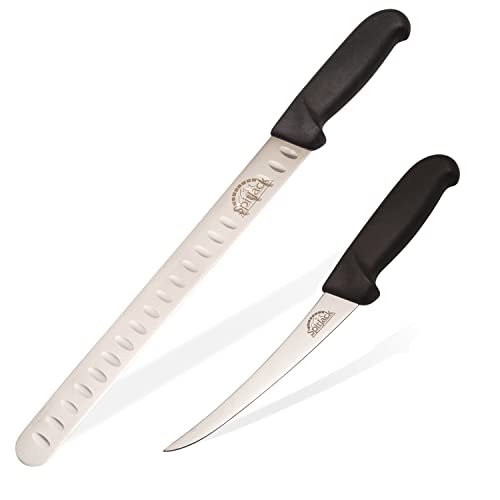
- Best BBQ-brand pick: SpitJack 6″ curved brisket trimming knife.
- Best forged: Hammer Stahl 6″ boning knife for a heavier feel.
- For serving: pair your trimmer with a 12″ Granton slicer.
- Ideal trimmer: 6 inches, curved, semi-stiff, with a grippy handle.
Knives Task is reader-supported: if you buy through a link on this page, we may earn a small Amazon commission at no extra cost to you. That never changes which knives we recommend.
Trimming is one of the most important steps in smoking a great brisket. Removing hard fat, silver skin and thin edges helps the bark form evenly and stops the thinnest parts from drying out.
A good trimming knife makes that job quicker, safer and more precise. The best ones are curved, semi-stiff boning knives with secure handles.
Our Picks at a Glance
| Pick | Best for | Blade |
|---|---|---|
| Victorinox Fibrox Pro 6″ Curved, Semi-Stiff | Best overall | 6″, curved, semi-stiff |
| SpitJack 6″ Curved Brisket Trimming Knife | BBQ-focused option | 6″, curved |
| Hammer Stahl 6″ Boning Knife | Forged, heavier feel | 6″, forged |
| Mercer Ultimate White 6″ Curved | Best budget | 6″, curved |
| Victorinox Fibrox Pro 12″ Granton Slicer | Slicing the finished brisket | 12″, Granton |
How we chose: we haven’t lab-tested these knives side by side. We compared blade length and shape, steel, construction (forged or stamped), handle design and the makers’ published specifications, and we favored models with a long track record and consistent owner feedback over newer, unproven listings.
The Best Knives for Trimming Brisket
1. Victorinox Fibrox Pro 6-Inch Curved, Semi-Stiff — Best Overall
Best for: almost every pitmaster, from first brisket to competition prep.
This is the knife you’ll see in a huge number of barbecue kits, and for good reason. The curved, semi-stiff blade glides under fat caps and silver skin while still having enough backbone for the deckle.
The textured handle stays secure even when it’s coated in fat. It’s inexpensive, easy to sharpen, and you can own two for the price of one premium knife.
It’s just as useful for pork butt, ribs and chicken, so it won’t sit in a drawer between briskets. If you buy only one trimming knife, buy this.
What we like:
- Ideal shape and stiffness for brisket
- Secure grip when greasy
- Excellent value
What to consider:
- Plain looks
- No sheath for transport
Check the current price of the Victorinox Fibrox Pro curved boning knife on Amazon →
2. SpitJack 6-Inch Curved Brisket Trimming Knife — Best BBQ-Brand Pick
Best for: barbecue fans who like gear designed specifically for smoking.
SpitJack makes barbecue and butchery tools, and this curved 6-inch knife is aimed squarely at trimming brisket and pork shoulder. The curve follows the contours of the meat as you remove fat.
It’s a sensible alternative if you want something built for the job rather than a general kitchen knife. It also makes a good gift for someone getting into smoking.
SpitJack sells several brisket knives, so double-check you’re choosing the curved trimming knife rather than a long slicer. The listing title should mention trimming and a 6-inch curved blade.
What we like:
- Designed for brisket trimming
- Curved for following the fat cap
- Good gift
What to consider:
- Less widely tested than the Victorinox
- Check sheath and handle details on the listing
Check the current price of the SpitJack curved brisket trimming knife on Amazon →
3. Hammer Stahl 6-Inch Boning Knife — Best Forged
Best for: cooks who prefer a heavier, forged knife.
A forged, German high-carbon steel boning knife with a solid, weighty feel. The extra mass helps when pushing through the thick fat between the point and the flat.
It also works well as a general kitchen boning knife. If you like forged German knives, you’ll feel at home with it.
For very long trimming sessions, though, a lighter stamped knife may be less tiring. Weight is a matter of preference.
What we like:
- Solid, forged build
- Good for thick fat seams
- Doubles as a kitchen knife
What to consider:
- Heavier and more tiring than stamped knives
- Costs more than the Victorinox
Check the current price of the Hammer Stahl boning knife on Amazon →
4. Mercer Ultimate White 6-Inch Curved — Best Budget
Best for: occasional smokers or a spare knife for the barbecue box.
A simple, inexpensive curved boning knife with a textured handle. It trims fat and silver skin well for very little money.
It’s a good backup so you can swap knives instead of stopping to sharpen. Expect to hone it more often than pricier knives.
The white handle also makes it easy to spot on a busy cook-day table. Keep it in a guard in your barbecue box.
What we like:
- Very low price
- Curved blade
- Grippy handle
What to consider:
- Edge dulls faster
- Basic finish
Check the current price of the Mercer Ultimate White boning knife on Amazon →
5. Victorinox Fibrox Pro 12-Inch Granton Slicer — Best for Slicing
Best for: slicing the finished brisket after the rest.
Trimming and slicing are different jobs. This long, flexible slicer crosses the whole flat in one stroke, and the Granton hollows help slices fall away.
Its rounded tip is safer for long strokes across a cutting board. Pair it with any trimming knife above for a complete brisket kit.
What we like:
- Slices a whole flat in one stroke
- Granton edge reduces sticking
- Great value
What to consider:
- Not a trimming knife
- Needs a long storage slot or guard
Check the current price of the Victorinox Fibrox Pro 12″ slicing knife on Amazon →
How to Choose a Brisket Trimming Knife
| Feature | Look for | Why |
|---|---|---|
| Length | 5–6 inches | Long enough to reach under the fat cap, short enough to control |
| Flex | Semi-stiff | Bends slightly to follow the meat but doesn’t wander |
| Shape | Curved | Follows contours and lifts fat away cleanly |
| Handle | Textured, non-slip | Brisket fat makes handles slippery |
| Steel | Easy to sharpen | Fat dulls edges quickly; you’ll hone often |
Why Not Use a Chef’s Knife?
A chef’s knife is too wide and stiff to slip under the fat cap and follow the meat’s curves. It tends to take off meat along with the fat.
A narrow, curved boning knife gives you much more control and much less waste.
Know Your Brisket: Point, Flat and Deckle
A whole packer brisket has two muscles: the lean, rectangular flat and the thicker, fattier point that sits on top of it. A seam of fat runs between them.
The deckle is the hard fat on the side of the point, which doesn’t render well during cooking. Knowing where each part sits makes trimming far easier.
| Part | What it’s like | How to trim |
|---|---|---|
| Flat | Lean, even thickness | Leave an even fat cap; square off thin edges |
| Point | Thicker, well marbled | Trim loose fat; keep the marbling |
| Deckle / fat kernel | Hard, waxy fat | Remove as much as practical |
| Fat cap | Soft fat on one side | Trim to an even layer |
Step-by-Step: How to Trim a Packer Brisket
1. Start Cold
Trim straight from the fridge. Cold fat is firm and cuts cleanly, while warm fat smears and slips.
2. Square Up the Edges
Remove thin, ragged edges and any dried or discolored areas. Thin edges burn and dry out long before the rest of the brisket is done.
3. Trim the Fat Cap
With the fat side up, trim the fat cap down to an even layer — many pitmasters aim for about a quarter inch. Keep the blade nearly flat and use long, smooth strokes.
4. Remove the Hard Fat
Find the hard, waxy fat between the point and flat, often called the deckle or fat kernel. Remove as much as you can without cutting deeply into the meat, since it won’t render during the cook.
5. Remove Silver Skin on the Meat Side
Flip the brisket and remove silver skin and loose fat from the meat side. Slide the tip under the membrane, angle the blade slightly up, and pull it taut as you cut.
6. Shape for Even Cooking
Aim for an aerodynamic shape with no thin flaps or sharp corners. Rounded edges cook more evenly and form a better bark.
7. Save the Trimmings
Lean trim makes excellent burger or sausage meat, and fat trim can be rendered into beef tallow. Keep both cold until you use them.
Choice vs. Prime: Does It Change the Trim?
Higher grades of brisket usually have more marbling inside the meat, which is good. They may also carry more external fat, so you might remove a little more from the cap.
The steps are the same whatever the grade. Trim to an even fat layer, remove the hard fat and round off the edges.
How Long to Keep the Trim Cold
Keep lean and fat trimmings refrigerated and use them within a day or two, or freeze them. Render fat slowly over low heat to make tallow for searing or seasoning.
Brisket Trimming Mistakes to Avoid
- Trimming warm meat: fat smears and the knife slips.
- Removing all the fat cap: an even layer protects the meat during a long cook.
- Leaving the hard fat kernel: it won’t render and stays chewy.
- Using a dull knife: it tears meat and needs more force, which is when slips happen.
- Rushing: slow, deliberate strokes give a cleaner shape.
Using the Same Knife for Other Barbecue
A curved, semi-stiff trimmer is just as useful for pork shoulder, where you’ll remove excess fat and loose bits before seasoning. It’s also the right tool for peeling the membrane off the back of ribs.
For ribs, slide the tip under the membrane at one end, lift a corner, then grip it with a paper towel and pull it off in one piece.
Building a Simple Brisket Knife Kit
- A 6-inch curved, semi-stiff boning knife for trimming.
- A 12-inch slicer for serving.
- A honing rod to keep edges keen during long trims.
- A large board with a juice groove and a damp towel underneath.
- A cut-resistant glove for your guiding hand.
How to Slice a Finished Brisket
Rest the brisket before slicing — at least an hour, wrapped, is common. Then separate the point from the flat along the fat seam.
Slice the flat across the grain about pencil-thick, then turn the point 90° and slice it across its own grain. For more, see our best carving and slicing knives.
Safety at the Trimming Board
- Put a damp towel under the board so it can’t slide.
- Wear a cut-resistant glove on your guiding hand.
- Wipe your hands and the handle often to remove fat.
- Cut away from your body wherever possible.
Keeping Your Trimming Knife Sharp
Beef fat dulls edges quickly, so hone every few minutes during a big trim. Sharpen on a stone when honing no longer brings the edge back.
See how to sharpen kitchen knives for the basics, and our best boning knives for other boning jobs.
Frequently Asked Questions
What knife is best for trimming brisket?
A curved, semi-stiff 6-inch boning knife, such as the Victorinox Fibrox Pro.
How much fat should I leave on a brisket?
Many pitmasters leave an even layer of about a quarter inch on the fat cap, but preferences vary.
Should I trim brisket cold?
Yes. Cold fat is firm and much easier to trim cleanly.
Do I need a separate knife to slice brisket?
It helps. A long slicer gives cleaner slices than a short trimming knife.
How long does it take to trim a whole brisket?
Expect 20–40 minutes for a first-timer with a packer brisket. With practice and a sharp knife, it gets much faster.
Should I trim the brisket the night before?
You can. Trimming ahead lets you season early and keeps your cook-day schedule simple; just keep it well chilled.
Can I use a fillet knife to trim brisket?
It works, but most fillet knives are too flexible for thick beef fat. A semi-stiff boning knife is easier to control.