
Learning how to clean a butcher block knife holder properly keeps your knives hygienic and your block free of crumbs, odors and mold. The method is simple: empty it, clear the slots, wash and sanitize without soaking, dry it upside down and oil the wood.
Table of Contents
Quick Summary
- Empty and shake: remove every knife, turn the block upside down and tap out the crumbs.
- Clear the slots: use a thin brush, pipe cleaner or skewer wrapped in cloth.
- Wash, don’t soak: wood swells and cracks if left in water.
- Dry upside down: let it air-dry completely, for a day if possible.
- Finish: rub the outside with food-safe mineral oil every few months.
A knife block keeps blades safe and handy, but the slots quietly collect crumbs, dust and moisture. Over time that can lead to odors, mold and dirty knives.
Cleaning a wooden block takes about 15 minutes of work plus drying time. The key is to clean it thoroughly without soaking the wood.

How Often Should You Clean a Knife Block?
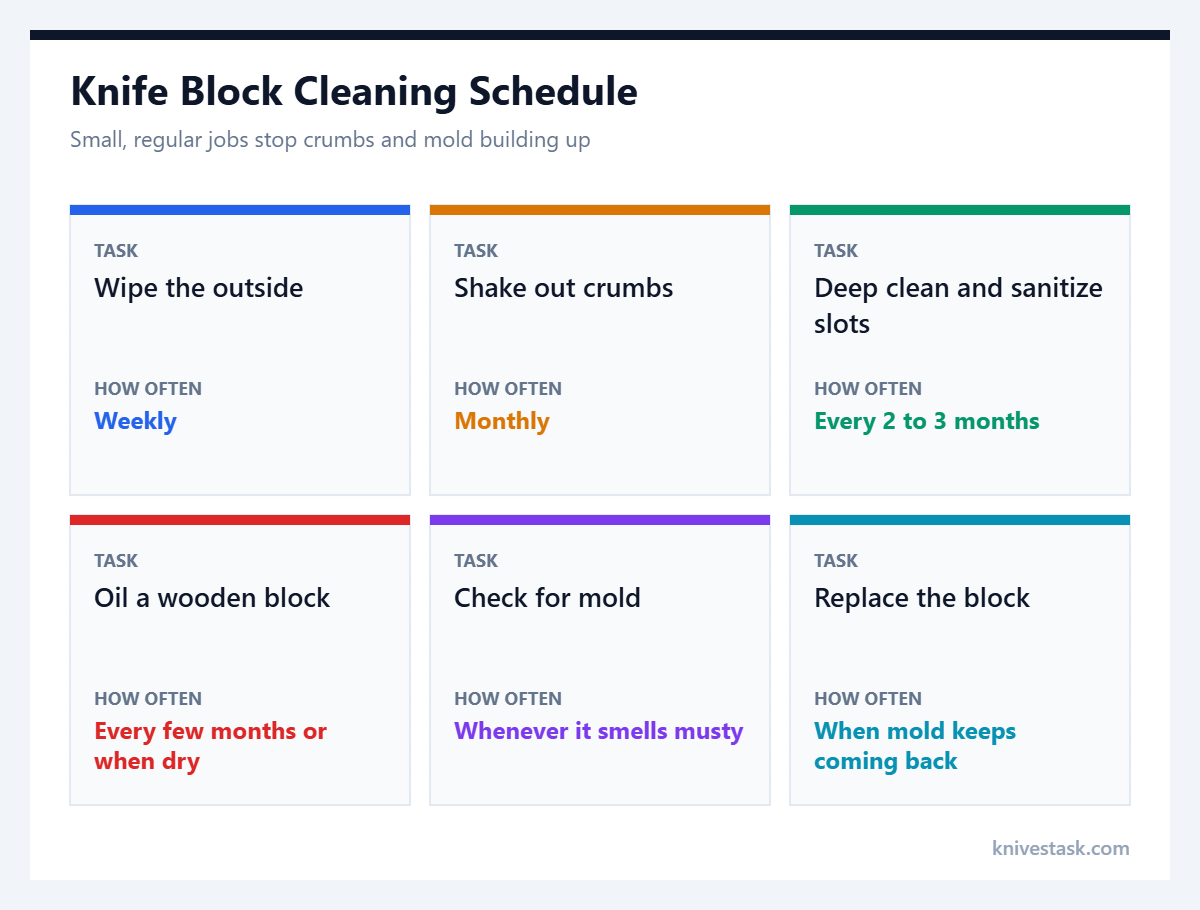
| Task | How often |
|---|---|
| Wipe the outside | Weekly |
| Shake out crumbs | Monthly |
| Deep clean and sanitize slots | Every 2–3 months |
| Oil a wooden block | Every few months, or when it looks dry |
| Check for mold | Whenever it smells musty |
Signs Your Block Needs a Deep Clean
- Crumbs or dust fall out when you tip it over.
- Knives come out with specks or a film on the blade.
- A musty or sour smell from the slots.
- Dark spots inside the slot openings.
- Sticky patches on the outside from cooking splashes.
Are Knife Blocks Hygienic?
A block holding clean, dry knives is perfectly safe. Problems start when knives go in damp or dirty, because the dark, enclosed slots trap moisture and food particles.
Regular cleaning and drying keeps a block hygienic. If you’d rather avoid slots entirely, a magnetic strip is easier to clean.
What You’ll Need
These basic supplies cover everything in this guide on how to clean a butcher block knife holder:
- Mild dish soap and warm water.
- A thin bottle brush, pipe cleaners, or a bamboo skewer wrapped in cloth.
- A sanitizing solution (see below) or diluted white vinegar for odors.
- Clean towels.
- Food-safe mineral oil or a board cream.
- Optional: a can of compressed air or a hairdryer on its cool setting.
Step-by-Step: How to Clean a Butcher Block Knife Holder
Step 1: Remove All the Knives
Take every knife out and set them aside safely. This is a good time to wash and hone the knives too. Our guide on how to sharpen kitchen knives covers honing and sharpening.
Step 2: Shake Out the Crumbs
Turn the block upside down over the sink or bin and tap it firmly. Compressed air or a vacuum crevice tool helps lift out stubborn debris.
Step 3: Scrub the Slots
Dip a thin brush or a pipe cleaner in warm, soapy water and work it into each slot. For narrow slots, wrap a damp cloth around a bamboo skewer.
Use only a little water. You’re cleaning the surfaces, not filling the slots.
Step 4: Wash the Outside
Wipe the outside with a soapy cloth, then with a cloth dampened in clean water. Pay attention to the base, where spills collect.
Step 5: Sanitize
Mix 1 tablespoon of unscented liquid chlorine bleach in a gallon of water, the ratio recommended by the USDA Meat and Poultry Hotline. Wipe the outside and brush the solution into the slots, let it stand a few minutes, then wipe again with clean water.
The CDC’s bleach safety guidance is clear: never mix bleach with ammonia or any other cleaner, and open a window while you work. Never mix bleach with vinegar either. If you prefer not to use bleach, diluted vinegar helps with odors but is a less reliable sanitizer.
Step 6: Dry It Properly
Dry the outside with a towel, then stand the block upside down so water can drain from the slots. Leave it for several hours, ideally overnight.
A hairdryer on a cool setting can speed things up. Don’t use high heat, which can crack wood.
Step 7: Oil the Wood
Once it’s completely dry, rub a little food-safe mineral oil over the outside with a soft cloth. Wipe off the excess after 20–30 minutes.
Step 8: Return Clean, Dry Knives
Only put knives back once both they and the block are fully dry. Inserting damp knives is the main cause of mold in slots, so this final check matters as much as any other part of how to clean a butcher block knife holder.
Removing Stains and Sticky Residue
For greasy or sticky marks on the outside, rub gently with a paste of baking soda and a little water, then wipe clean. Avoid harsh scouring pads, which scratch the finish.
Light water stains on oiled wood often fade after a fresh coat of mineral oil. Deeper stains can be lightly sanded with fine sandpaper and re-oiled.
Why You Shouldn’t Soak a Wooden Block
Wood absorbs water, swells and then shrinks as it dries. Soaking or running a block through the dishwasher can warp it, open up joints and cause cracks.
Trapped moisture inside the slots also encourages mold. When you are working out how to clean a butcher block knife holder, remember that light, careful cleaning and long drying is much kinder to the wood than soaking.
How to Remove Mold From a Knife Block
Small spots of surface mold can often be treated. Scrub the area with the bleach solution above, let it stand for a few minutes, then rinse lightly and dry thoroughly.
The EPA’s mold cleanup guide stresses that the key to mold control is moisture control, so a block that sits by the sink will keep growing mold until you move it. If mold is deep inside the slots, keeps returning or the block smells musty after cleaning, replace it. You can’t reliably clean deep inside narrow slots.
Cleaning Other Types of Knife Blocks
Plastic or Composite Blocks
Many plastic blocks can be washed more freely, and some have removable inserts. Check the maker’s instructions, wash with warm soapy water, sanitize, and dry thoroughly.
Universal Blocks With Bristles or Rods
Pull out the bristle or rod insert if it’s removable and wash it in warm, soapy water. Some inserts are dishwasher safe; check the instructions.
Let the insert dry completely before reassembling, since damp bristles can grow mold quickly.
Magnetic Blocks
Magnetic blocks have no slots, which makes them much easier to keep clean. Wipe the surface with a damp, soapy cloth, sanitize, and dry.
Bamboo Knife Blocks
Bamboo is technically a grass, but a bamboo block needs the same care as wood. Clean the slots with a little soapy water, never soak it, dry it upside down and give the outside a light coat of mineral oil when it looks pale or dry.

Natural Ways to Clean and Deodorize a Knife Block
If you’d rather not use bleach, there are gentler options. They are good for routine cleaning and odors, but bleach remains the more reliable sanitizer for a block that has been neglected.
- Diluted white vinegar: brush a 50/50 mix of vinegar and water into the slots to cut grease and odors, then wipe and dry.
- Baking soda: pour a little into each slot of a dry block, leave it overnight to absorb smells, then tip it out and brush away the rest.
- 3% hydrogen peroxide: the pharmacy-strength solution can be brushed into the slots, left for a few minutes, then wiped and dried.
Use one product at a time, and rinse or dry between them. Even natural cleaners should never be combined with bleach in the same session.
Common Mistakes When Cleaning a Knife Block
- Soaking it or using the dishwasher: the wood swells, warps and cracks.
- Drying it upright: water stays trapped at the bottom of the slots.
- Putting damp knives back: the most common cause of mold.
- Using cooking oil: olive and vegetable oils can go rancid and smell.
- Drying with high heat: a hot hairdryer or oven can split the wood.
- Mixing cleaners: bleach plus vinegar or ammonia releases harmful fumes.
Tips to Keep Your Block Clean Longer
- Only store knives that are clean and completely dry, following the clean step in FoodSafety.gov’s four steps to food safety.
- Keep the block away from the sink and stove, where it gets splashed.
- Shake it out monthly before crumbs build up.
- Slide knives in gently so the edge doesn’t drag against the wood, which dulls it and wears the slot.
- Consider a magnetic strip if slot cleaning becomes a chore — see how to store kitchen knives.
When to Replace a Knife Block
- Mold that returns after cleaning.
- Cracks or split joints.
- A persistent musty smell.
- Slots so worn that knives wobble or scrape. If you need a new one, see our picks for the best knife block set under $100.
For knife hygiene in general, see when a knife must be cleaned and sanitized.
The Bottom Line
Knowing how to clean a butcher block knife holder comes down to a few habits: shake it out monthly, deep clean the slots every few months without soaking the wood, sanitize carefully, dry it upside down and oil the outside. Store only clean, dry knives, keep the block away from the sink, and replace it if mold keeps coming back.
Frequently Asked Questions
Can I put a wooden knife block in the dishwasher?
No. Heat and water will warp and crack the wood.
How do I clean inside knife block slots?
When you clean a butcher block knife holder, use a thin brush, pipe cleaner or a cloth-wrapped skewer dipped in soapy water, then sanitize and dry upside down.
How do I stop my knife block getting moldy?
Only store clean, dry knives, keep the block away from the sink, and let it dry fully after cleaning.
Can I clean a knife block with vinegar?
Diluted white vinegar helps clean and deodorize, but it’s not as reliable a sanitizer as a properly mixed bleach solution. Never combine vinegar and bleach.
How long should a knife block dry after cleaning?
Several hours at minimum, ideally overnight, upside down so the slots can drain and air out.
What oil should I use on a wooden knife block?
Food-safe mineral oil or a board cream. Avoid cooking oils, which can go rancid.
How to clean a butcher block knife holder without bleach?
Brush a 50/50 mix of white vinegar and water or 3% hydrogen peroxide into the slots, wipe the outside, then dry the block upside down overnight. Baking soda left in the dry slots overnight helps remove odors.