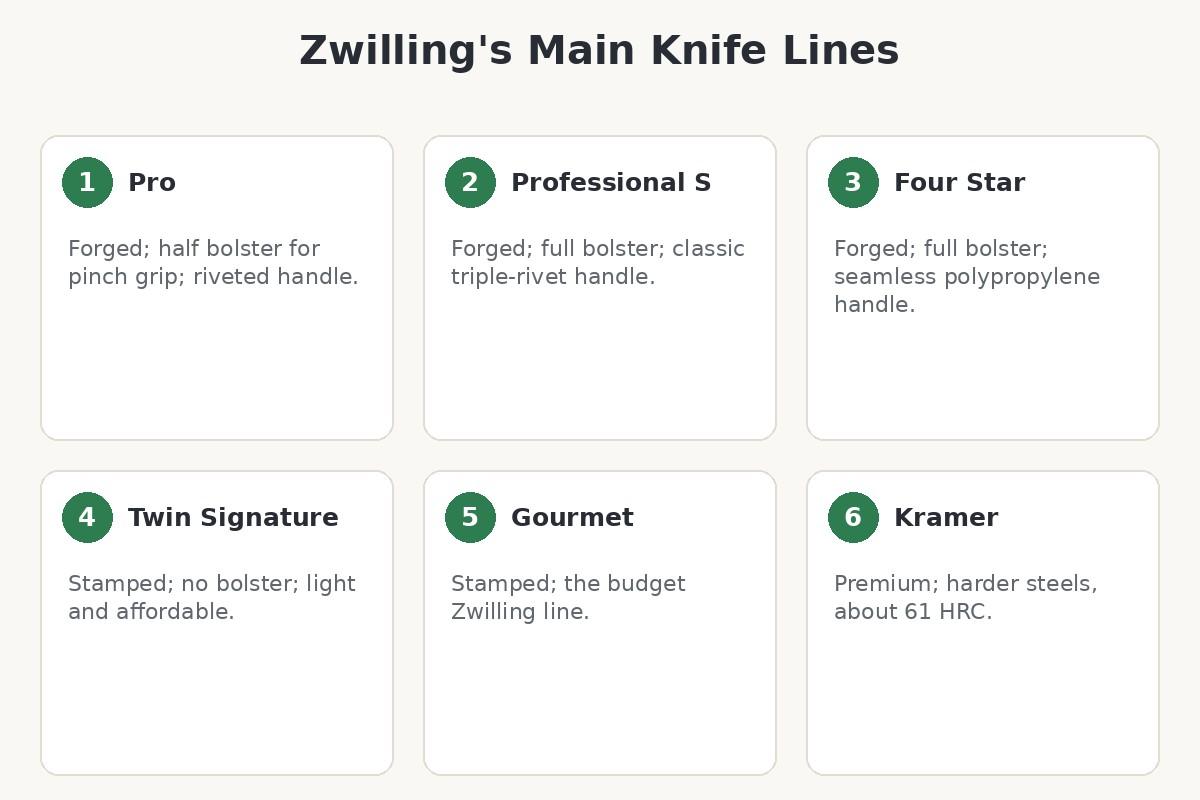
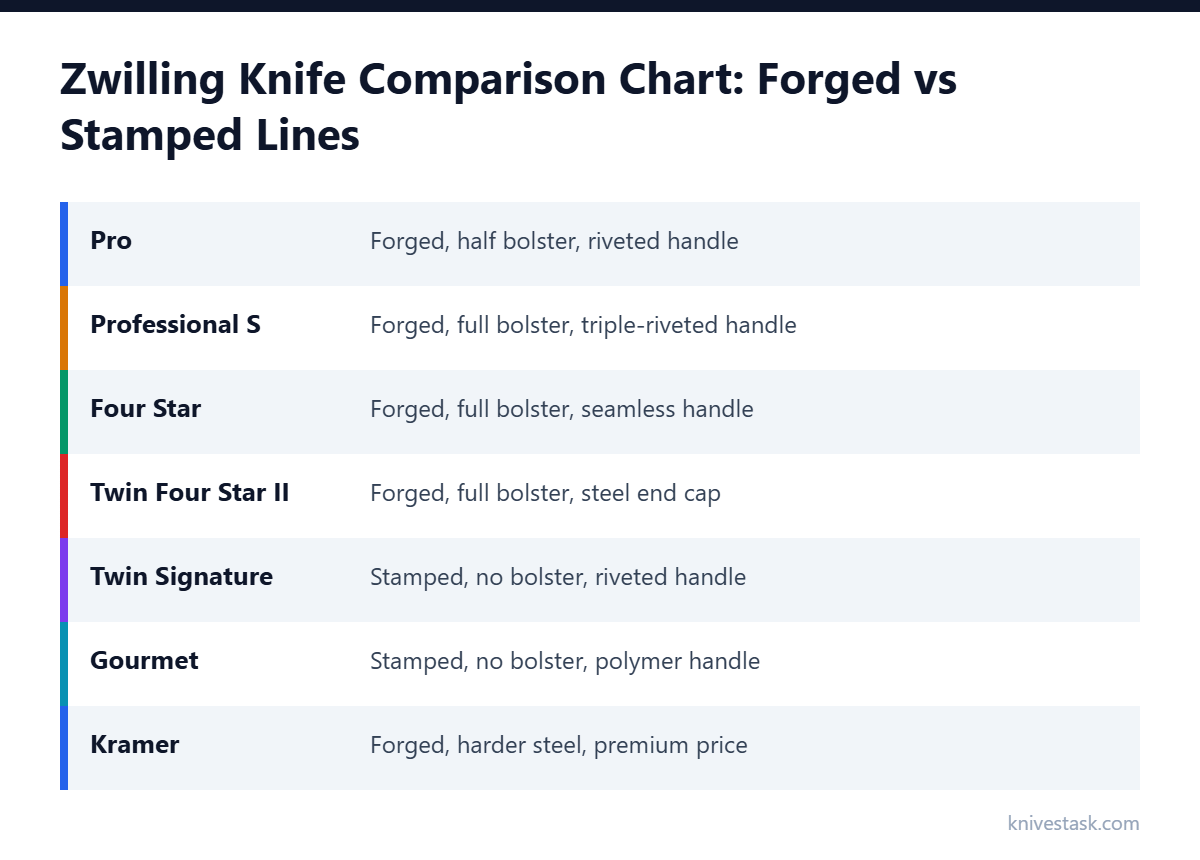
This Zwilling knife comparison chart puts every major line side by side: Pro, Professional S, Four Star, Twin Four Star II, Twin Signature, Gourmet and Kramer. Use it to see how they differ in construction, bolster, handle and price before you buy.
Table of Contents
Table of Contents
Quick Summary
- Most Zwilling lines use the same German stainless steel at about 57 HRC with a 15° edge per side.
- Pro, Professional S and Four Star are forged; Twin Signature and Gourmet are stamped and cheaper.
- Pro has a half bolster that suits a pinch grip; Professional S and Four Star have full bolsters.
- Kramer lines are premium knives with harder steels around 61 HRC.
- Choose by handle, bolster and budget more than by steel.
Knives Task is reader-supported: if you buy through a link on this page, we may earn a small Amazon commission at no extra cost to you. That never changes which knives we recommend.
Zwilling makes many knife lines, and the names can be confusing. The good news is that most of them share the same German steel and edge angle, so the real differences come down to construction, bolster, handle and price.
This chart and guide explain each main line so you can pick the right one.
About Zwilling
Zwilling is a German company founded in Solingen in 1731, one of the oldest names in cutlery. The group sells premium knives under the Zwilling name and value knives under the Henckels name.
Zwilling’s forged knives use its own SIGMAFORGE forging and FRIODUR ice-hardening processes, as described on Zwilling’s forged knives page.
Zwilling Knife Comparison Chart
| Line | Construction | Bolster | Handle | Hardness | Price |
|---|---|---|---|---|---|
| Pro | Forged | Half (sloped) | Riveted ABS | 57 HRC | $$$ |
| Professional S | Forged | Full | Triple-riveted polymer | 57 HRC | $$$ |
| Four Star | Forged | Full | Seamless polypropylene | 57 HRC | $$$ |
| Twin Four Star II | Forged | Full | Polypropylene with steel end cap | 57 HRC | $$$ |
| Twin Signature | Stamped | None | Riveted polymer | 57 HRC | $$ |
| Gourmet | Stamped | None | Polymer | 57 HRC | $$ |
| Kramer (Meiji, Carbon) | Forged | Varies | Pakkawood or Micarta | 61 HRC | $$$$ |
Figures come from Prudent Reviews’ guide to the best Zwilling knives. All main lines except Kramer share a 15° edge per side; Kramer lines are sharpened more acutely, at about 9–12°.
Zwilling Pro
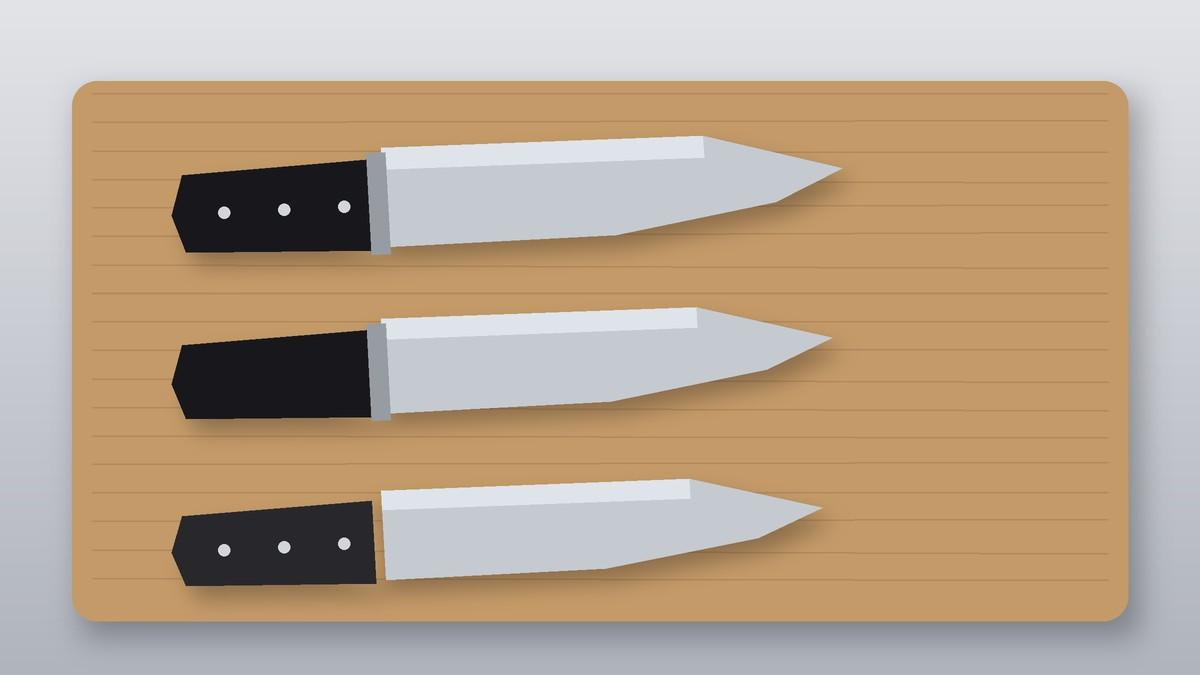
Pro has a sloped half bolster that lets you hold the blade comfortably in a pinch grip and sharpen right to the heel. Its handle is riveted, with a slightly curved shape.
It’s a great choice for cooks who use a pinch grip and want a forged knife without a bulky bolster.
Professional S
Professional S is Zwilling’s most traditional line, with a full bolster and a classic triple-riveted handle. It looks and feels like a classic German chef’s knife.
If you like the feel of a Wüsthof Classic, Professional S is the closest Zwilling equivalent. Try the Zwilling Pro S chef’s knife.
Four Star and Twin Four Star II
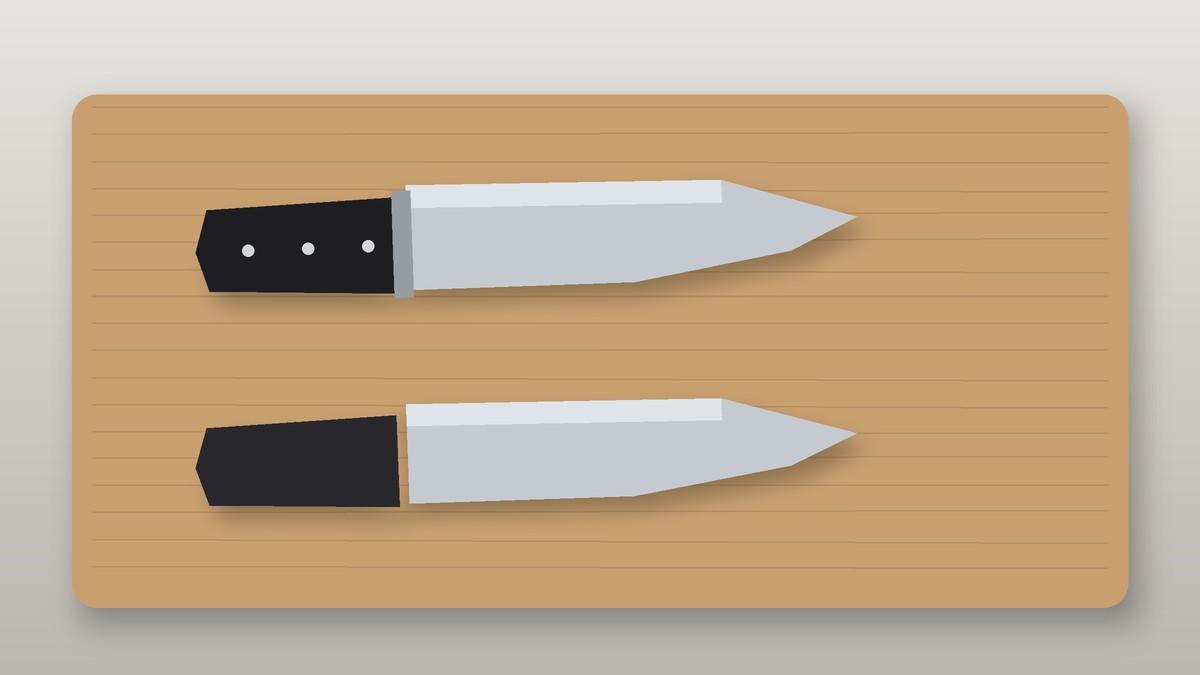
Four Star has a full bolster and a seamless, molded polypropylene handle with no visible rivets. It’s easy to clean and has a modern, all-black look.
Twin Four Star II shares the same blade and handle shape but adds a polished steel end cap. Prudent Reviews’ Pro vs Four Star vs Twin Four Star II comparison covers the small differences.
Twin Signature and Gourmet
These are Zwilling’s stamped lines, made from a single piece of steel without a bolster. They’re lighter, cheaper and easy to sharpen.
They’re a good entry point if you want Zwilling quality on a budget, such as the Zwilling Twin Signature 3-Piece Set.
Kramer Lines
Designed with American bladesmith Bob Kramer, these premium knives use harder steels (around 61 HRC), including a carbon-steel version. They’re made in Japan and aimed at enthusiasts.
Which Zwilling Line Should You Buy?

Choose Pro if you use a pinch grip or want to sharpen easily to the heel. Choose Professional S or Four Star if you want a classic German knife with a full bolster for finger protection.
Choose Twin Signature or Gourmet for the best price, and Kramer if you want a premium, very sharp knife and don’t mind extra care.
For a brand comparison, see Wüsthof vs Henckels, and for Zwilling’s value brand, our Henckels knife set reviews.
Corrections from Our Older Article
Our previous version implied that each line used a different, better or worse steel and claimed Pro had superior edge retention. In fact, the main lines share the same steel and hardness, and Twin Signature is stamped rather than forged.
It also included a broken table and a long general section on knife types. We’ve replaced these with an accurate chart.

Caring for Zwilling Knives
Hand-wash and dry Zwilling knives straight away, and keep them out of the dishwasher. Hone regularly and sharpen at about 15° per side for the main lines.
Store knives in a block or on a magnetic strip. For more on German knives in general, read our guide to German kitchen knives.
Zwilling vs Henckels
Both names belong to the same group. Zwilling-branded knives are the premium, mostly German-made lines in this chart, while Henckels-branded knives are the budget lines, many made outside Germany.
If a set is labeled simply Henckels, it’s the value tier rather than the Zwilling lines described here.
Our Verdict
For most home cooks, Pro is the most versatile Zwilling line thanks to its half bolster. Professional S and Four Star are excellent if you prefer a traditional full bolster, and Twin Signature is the best value.
Choosing a Knife Shape
Every main Zwilling line includes the core shapes: chef’s knife, paring knife, utility knife, bread knife and santoku. Start with an 8-inch chef’s knife, then add a paring knife and a bread knife.
Larger block sets are convenient but often include knives you’ll rarely use. Buying single knives lets you choose the exact pieces you need.
Sharpening Zwilling Knives
Zwilling’s main lines are easy to sharpen on a whetstone, a guided sharpener or a pull-through sharpener set to about 15° per side. Hone regularly with a steel to keep the edge aligned.
Pro’s half bolster makes it easier to sharpen all the way to the heel, which is a real advantage over many years of use.
Where Zwilling Knives Are Made
Zwilling’s premium German lines, such as Pro, Professional S and Four Star, are made in Solingen. Kramer knives are made in Japan, while some value lines are made elsewhere.
Check the blade or box for the country of manufacture if it matters to you.
Final Buying Tip
Hold the knives if you can: the difference between Pro’s sloped bolster and the full bolster on other lines is easy to feel. Choose the one that suits your grip.
Warranty
Zwilling knives come with a limited lifetime warranty against manufacturing defects. It doesn’t cover chips, bent tips or damage from dishwashers and misuse.
Keep your proof of purchase and buy from authorized retailers so the warranty is valid.

For more detail on each range, Cutlery and More has a complete guide to Zwilling knives.
Frequently Asked Questions
What is the best Zwilling knife line?
Pro is the most versatile; Professional S and Four Star suit traditional tastes.
Are all Zwilling knives forged?
No; Pro, Professional S and Four Star are forged, while Twin Signature and Gourmet are stamped.
What angle are Zwilling knives sharpened at?
About 15° per side for the main lines.
What’s the difference between Four Star and Twin Four Star II?
Mainly a polished steel end cap on Twin Four Star II.
Is Zwilling the same as Henckels?
Same group: Zwilling is premium, Henckels is the value brand.