Quick Summary
- Both brands make affordable, professional-grade knives used widely in culinary schools and restaurants.
- Victorinox Fibrox Pro is a stamped Swiss-made chef’s knife and a long-time favorite of America’s Test Kitchen.
- Mercer offers both stamped (Millennia) and forged (Genesis, Renaissance) lines, made in Taiwan.
- Choose Victorinox for a light, proven all-rounder; choose Mercer Genesis for a forged feel on a budget.
- Hand-wash both to keep edges and handles in good shape.
Knives Task is reader-supported: if you buy through a link on this page, we may earn a small Amazon commission at no extra cost to you. That never changes which knives we recommend.
If you want a good knife without paying premium prices, Mercer and Victorinox are usually the first two names you’ll hear. Both supply culinary schools and busy restaurant kitchens, and both make knives that punch far above their price.
This comparison looks at the brands, their key lines and the chef’s knives most people actually buy.
Victorinox at a Glance
Victorinox was founded in 1884 by Karl Elsener in Ibach, Switzerland, and is best known for the Swiss Army Knife. Its company history page on Victorinox’s website covers the brand’s origins.
In the kitchen, Victorinox is famous for its Fibrox Pro line: stamped stainless steel blades with textured, non-slip handles. The knives are light, sharp and inexpensive.
America’s Test Kitchen has long rated the Victorinox Fibrox Pro chef’s knife as its top budget-friendly pick, which helped make it a household name.
Mercer Culinary at a Glance
Mercer Culinary is a US company based in New York that focuses on professional kitchens and culinary schools. Its knives are made in Taiwan, using German or Japanese steels depending on the line.
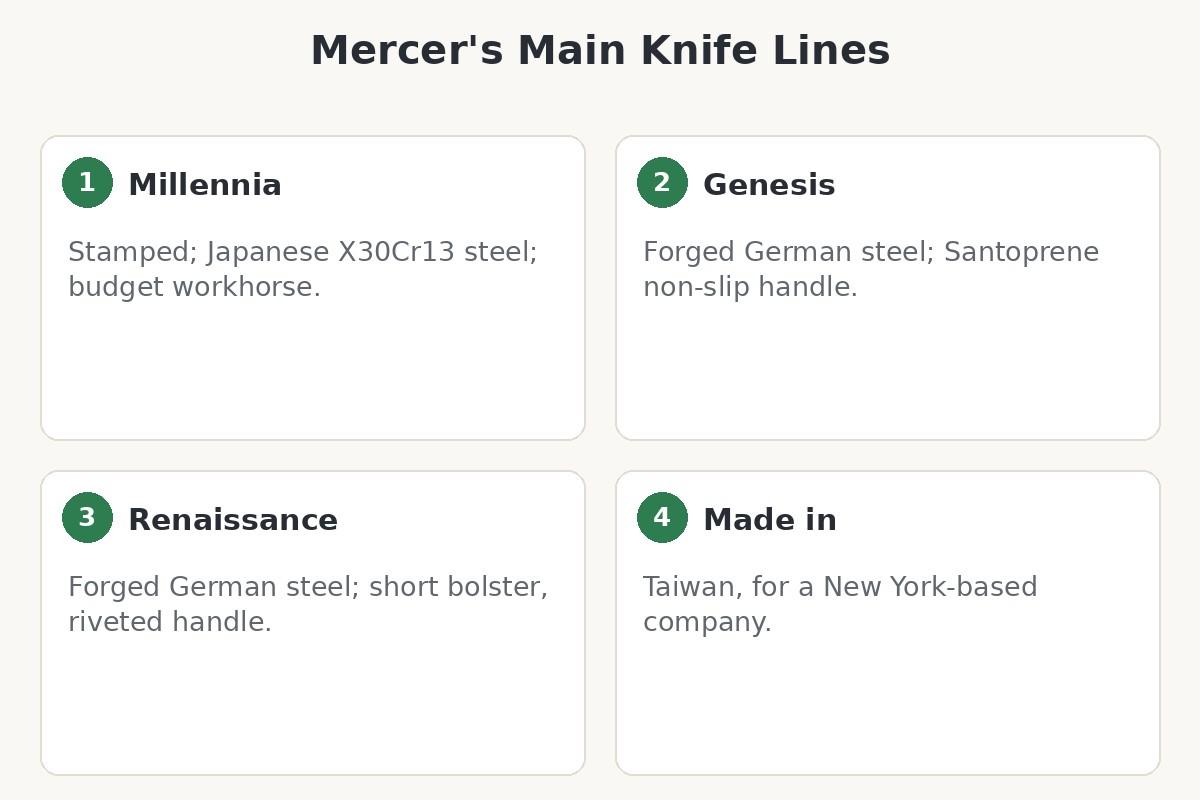
Kitchen review site Prudent Reviews’ Mercer knives review lists the steel, hardness and construction for each Mercer collection.
| Mercer line | Construction | Steel | Hardness (HRC) |
|---|---|---|---|
| Millennia | Stamped | Japanese X30Cr13 | 53–54 |
| Genesis | Forged | German X50CrMoV15 | 55–57 |
| Renaissance | Forged | German X50CrMoV15 | 55–57 |
Head-to-Head Comparison
| Victorinox Fibrox Pro | Mercer Millennia | Mercer Genesis | |
|---|---|---|---|
| Construction | Stamped | Stamped | Forged |
| Made in | Switzerland | Taiwan | Taiwan |
| Weight | Light | Light | Heavier, with bolster |
| Handle | Textured TPE | Textured Santoprene and polypropylene | Santoprene |
| Best for | Everyday all-round use | Students and tight budgets | Cooks who like a forged feel |
The Fibrox Pro and Millennia are the most direct rivals: both stamped, light and inexpensive. The Genesis competes with mid-priced German forged knives at a lower price.
Victorinox Fibrox Pro Chef’s Knife
The Victorinox Fibrox Pro 8-inch chef’s knife is a thin, stamped blade with a gentle curve that suits both rocking and slicing. It arrives very sharp and is easy to resharpen.
The Fibrox handle has a textured surface that stays secure even with wet or greasy hands. It isn’t beautiful, but it’s practical and comfortable for long prep sessions.
Because it’s light, some cooks find it a little flimsy compared with forged knives. For most home kitchens, though, it’s hard to beat for the money.
Mercer Genesis and Renaissance
Mercer’s forged lines feel more solid in the hand. The Genesis has a soft, grippy Santoprene handle and a bolster, while the Renaissance has a shorter bolster and a riveted handle.
Restaurant supplier KaTom’s Genesis vs Renaissance guide explains that the Renaissance’s short bolster leaves the heel free for easier sharpening.
If you prefer the feel of a German-style knife but don’t want to pay German prices, the Genesis is a good choice. It’s also available as the Mercer Genesis 6-Piece Forged Block Set.
Mercer Millennia
The Millennia line is Mercer’s budget workhorse, with stamped blades and colorful handles used in many teaching kitchens. Its softer steel is easy to sharpen but needs touching up more often.
Which Should You Buy?
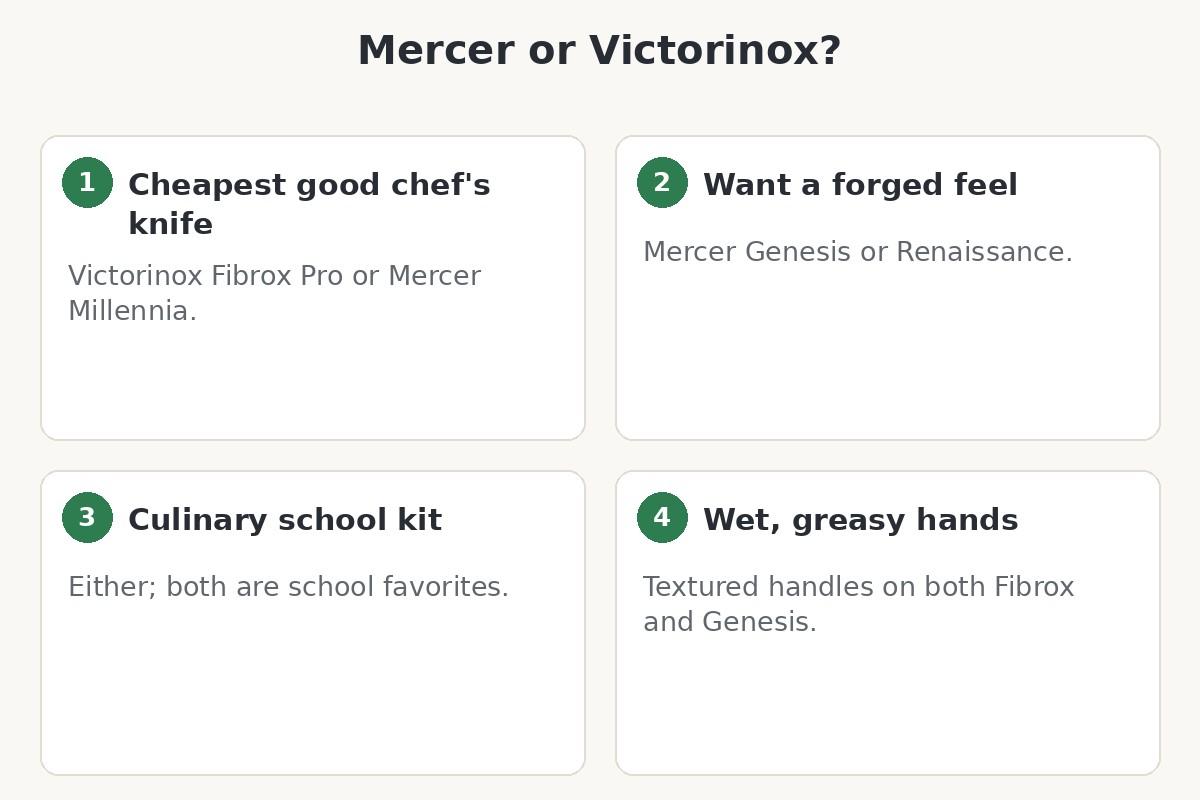
For most home cooks who want one great, inexpensive chef’s knife, the Victorinox Fibrox Pro is the safer pick. It has a long track record and wide availability.
Choose Mercer Genesis if you want a heavier, forged knife with a bolster at a budget price. Choose Mercer Millennia if you’re kitting out a classroom or want the lowest cost per knife.
For more options, see our guide to the best chef’s knives under $100 and our full Mercer knives review.
Care and Maintenance
Hand-wash both brands with warm, soapy water and dry them straight away. Dishwashers dull edges faster and can damage handles over time.
Hone regularly and sharpen when honing stops working. Both brands use fairly soft steels that are quick to sharpen on a whetstone or pull-through sharpener.
Corrections from Our Older Article
Our previous version described the Mercer Renaissance as “black and yellow” and suggested Mercer knives last longer because of an “extended warranty”. We couldn’t verify either claim, so we’ve removed them.
Mercer vs Victorinox for Culinary Students
Many culinary programs include either Mercer or Victorinox knives in their student kits. Both are affordable enough to replace if lost and tough enough to survive a busy teaching kitchen.
Mercer’s color-coded Millennia handles can also help students follow food-safety rules, using different colors for raw meat, fish and vegetables.
How Long Will They Last?
With sensible care, either brand can last many years of regular home use. Stamped knives with softer steel lose their edge a little faster but are quick to resharpen.
The handles are the part most likely to wear first, especially if the knives go through a dishwasher. Hand-washing keeps them in good shape far longer.
Other Knives Worth Comparing
If you’re also considering German brands, read our Wüsthof vs Victorinox comparison. It explains what you gain by spending more on a forged German knife.
Sharpening Tips
Both brands use relatively soft steels that are quick to sharpen. A medium whetstone around 1000 grit, followed by a finer stone, restores the edge in a few minutes.
Keep to an angle of roughly 15–20° per side. A few strokes on a honing steel before each use will keep the edge keen between sharpenings.
Our Verdict
If you can only buy one budget chef’s knife, the Victorinox Fibrox Pro remains the benchmark. If you prefer forged knives or want a matching set with a bolster, Mercer Genesis gives you that at a fair price.
Paring Knives and Other Pieces
Both brands sell inexpensive paring, bread and boning knives that match their chef’s knives. Victorinox’s paring knives are especially popular as cheap, sharp everyday tools.
Mercer’s Millennia line covers almost every shape in matching colors, which makes it easy to build a full kit at low cost. Buying single knives lets you mix the best pieces from each brand.
Storage
Neither brand’s budget knives come with blocks as standard, so plan where you’ll keep them. A magnetic strip or in-drawer tray protects edges and keeps them easy to reach.
Whichever brand you choose, a sharp, comfortable knife makes cooking safer and more enjoyable. Both of these deliver that at a fraction of premium prices.
Frequently Asked Questions
Is Mercer as good as Victorinox?
They’re close; Victorinox’s Fibrox Pro has the stronger reputation, while Mercer offers more forged options.
Where are Mercer knives made?
In Taiwan, for a New York-based company.
Is the Victorinox Fibrox forged or stamped?
It’s stamped.
Which is better for culinary school?
Both are popular; choose whichever handle feels better in your hand.
Are these knives good for home cooks?
Yes, they’re among the best-value knives available.