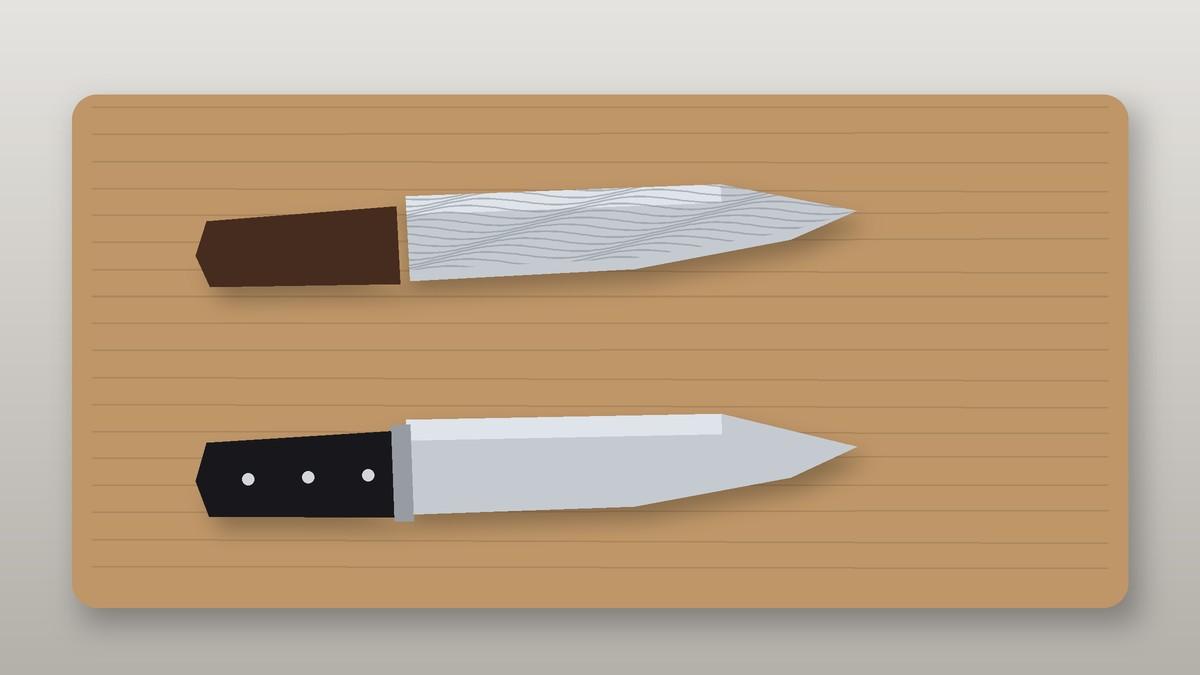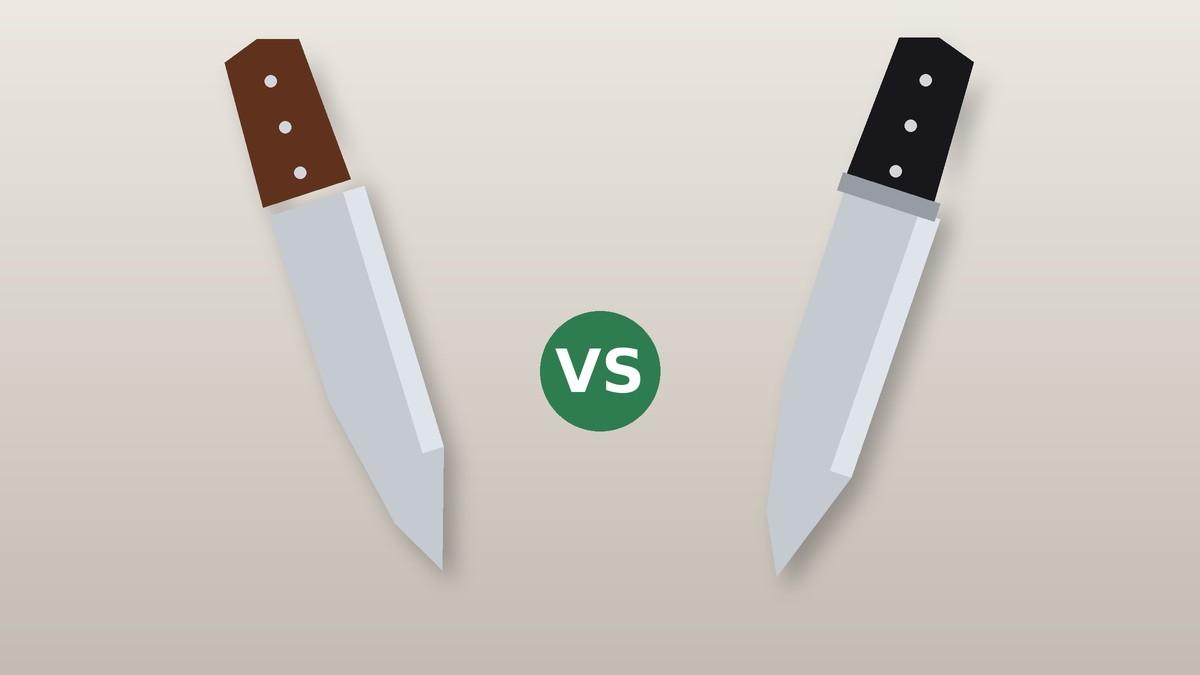
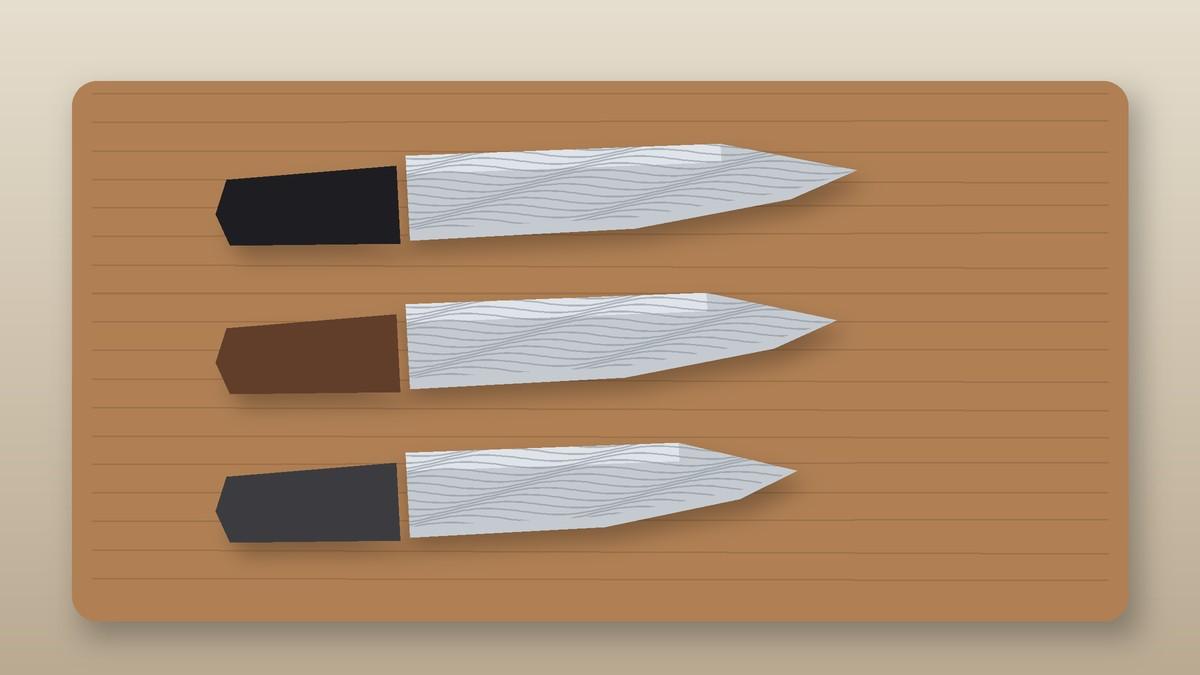
This Shun knife comparison sets the Classic, Premier, Sora, Kanso and Dual Core lines side by side. It covers steel, construction, handles and price, so you can see which Shun line fits your cooking and your budget.
Table of Contents
Table of Contents
Quick Summary
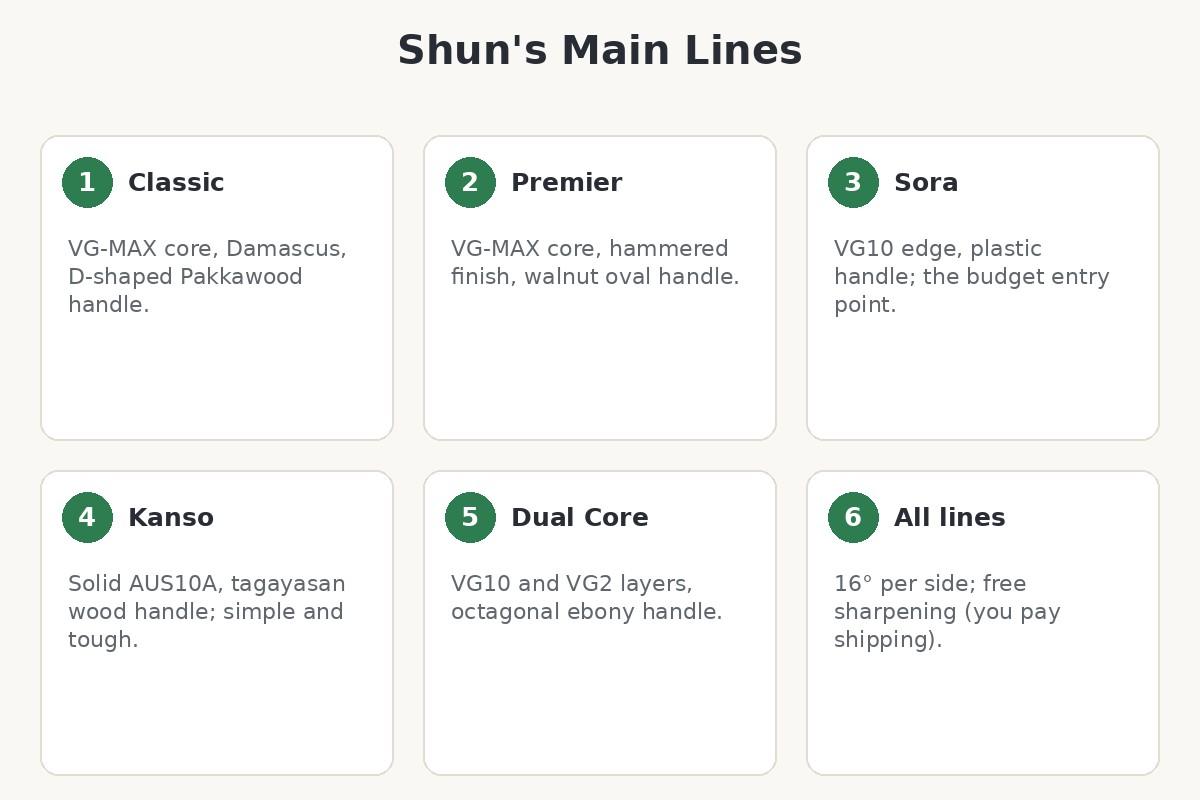
- All Shun lines are made by Kai in Seki, Japan, with a 16° edge on each side.
- Classic and Premier use VG-MAX cores with Damascus cladding; they differ mainly in handle and finish.
- Sora is the budget entry point; Kanso is a simple, solid AUS10A line with a wooden handle.
- Dual Core layers VG10 and VG2 steel for enthusiasts.
- Choose by handle and budget: D-shaped Classic for right-handers, rounded Premier for everyone.
Knives Task is reader-supported: if you buy through a link on this page, we may earn a small Amazon commission at no extra cost to you. That never changes which knives we recommend.
Shun makes several knife lines, and from a distance they can look very similar. The differences are in the steel, the blade finish, the handle shape and the price.
This guide compares the main lines so you can choose the one that suits your hand and budget. For the brand overall, read our Shun knives review.
A Quick Look at Shun
Shun is made by the Kai Group in Seki, Japan, and launched in 2002. Every line shares Shun’s 16° edge per side and the brand’s free sharpening service, where you pay shipping.
Shun’s own series comparison lists the steel, cladding and handle for each line.
Shun Knife Comparison: Lines Side by Side
| Line | Steel | Construction | Handle |
|---|---|---|---|
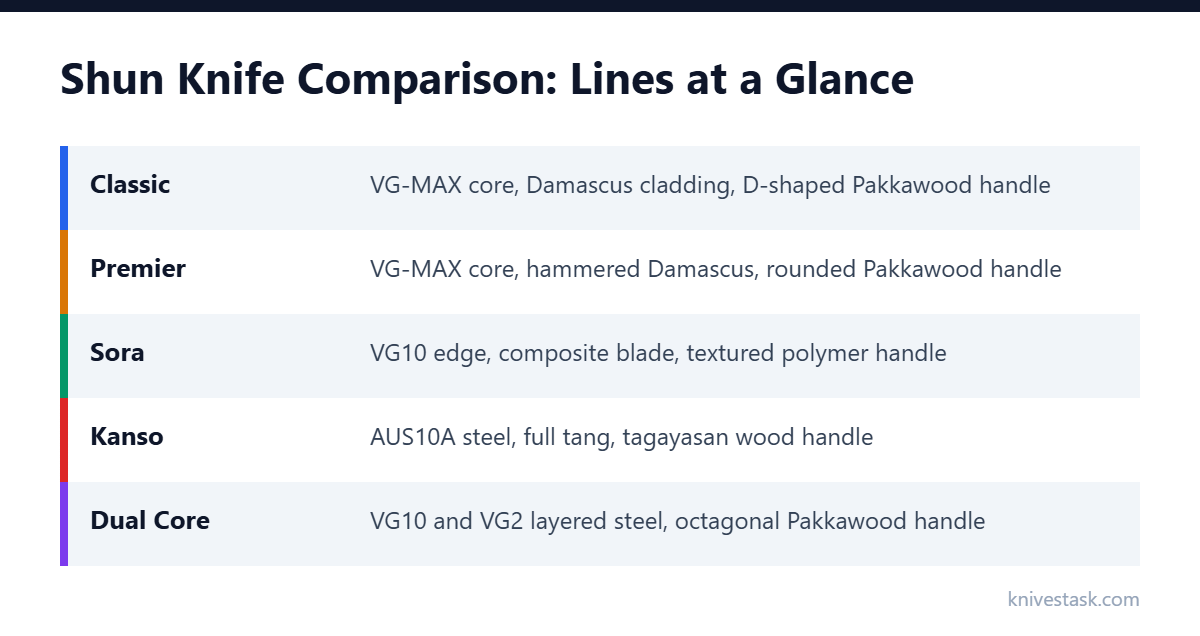
| Classic | VG-MAX core | 68-layer Damascus cladding | D-shaped ebony Pakkawood |
| Premier | VG-MAX core | 68-layer Damascus, hammered finish | Rounded walnut Pakkawood |
| Sora | VG10 edge | Composite blade | Textured polymer |
| Kanso | AUS10A | Solid steel, full tang | Tagayasan (wenge) wood |
| Dual Core | VG10 and VG2 | 71-layer Damascus | Octagonal ebony Pakkawood |
Shun Classic
Classic is Shun’s best-known line and offers the widest range of shapes. Its D-shaped handle fits naturally in the right hand and gives a secure grip.
The Shun Classic 8-inch chef’s knife is a popular starting point. Left-handed cooks should look for left-handed Classic models or choose another line.
Shun Premier
Premier uses the same VG-MAX core but adds a hammered (tsuchime) finish that helps food release and looks striking. Its rounded walnut handle is symmetrical, so it suits both hands.
Many cooks find the Premier the most comfortable Shun. Retailer Cutlery and More’s guide to Shun knives describes it as a slight upgrade from Classic, with a larger, symmetrical handle.
Shun Sora
Sora is Shun’s most affordable line. It combines a VG10 cutting edge with a simpler blade body and a textured polymer handle.
It’s a good way to try a Shun without paying premium prices, and it’s popular for students. Kitchen review site Prudent Reviews’ Shun Classic vs Sora comparison explains what you give up for the lower price.
Shun Kanso
Kanso uses solid AUS10A steel rather than layered Damascus, with a rustic finish and a tagayasan wood handle. It’s simple, tough and easy to look after.
Kanso suits cooks who want a no-fuss Japanese knife and don’t need a decorative blade. It’s priced below Classic and Premier.
Shun Dual Core
Dual Core alternates layers of VG10 and VG2 steel all the way to the edge, with an octagonal ebony handle. It’s aimed at enthusiasts and costs more than the other lines.
Which Shun Line Should You Choose?

| You want | Choose |
|---|---|
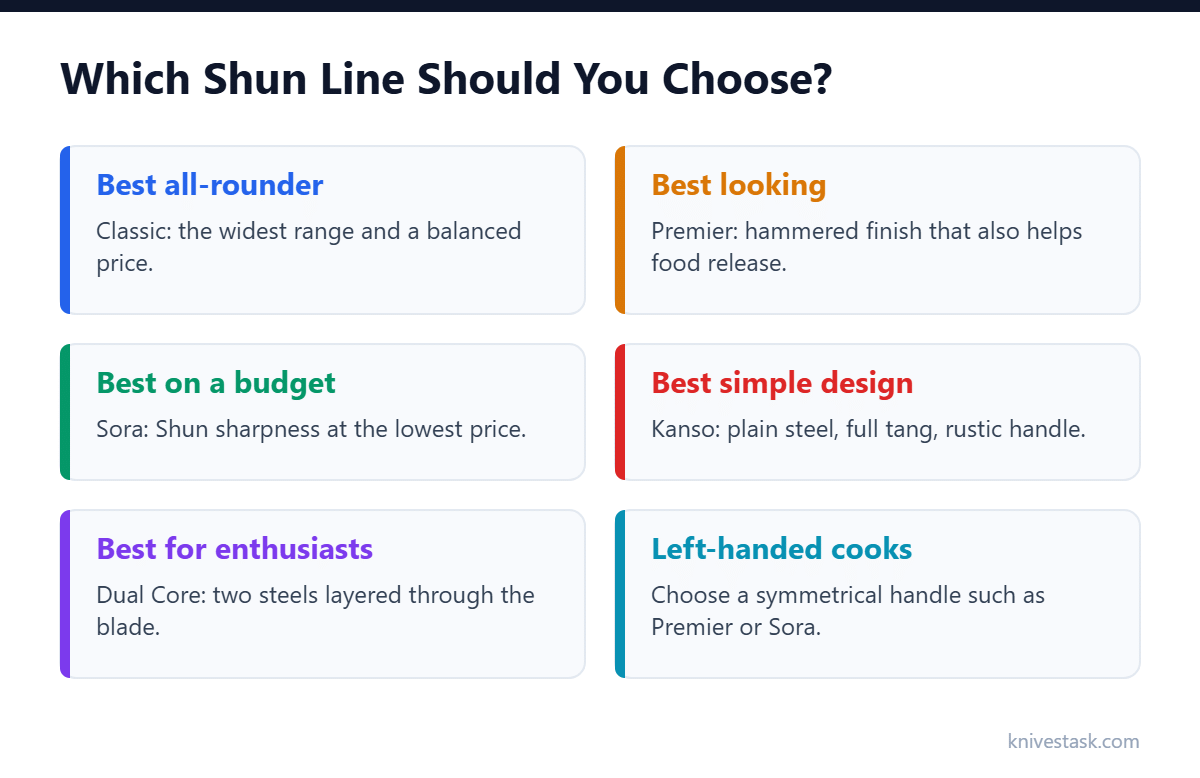
| The lowest price | Sora |
| A simple, tough knife | Kanso |
| The classic Shun look, right-handed | Classic |
| A rounded handle for either hand | Premier |
| Something special | Dual Core |
If you’re not sure, Premier is the easiest line to recommend because its handle suits almost everyone. Classic is the better pick if you love its look and are right-handed.
Corrections from Our Older Article
Our previous version said the Classic line has a “heavier blade” than Premier and that Sora uses “top-of-the-line VG-10” throughout. In fact, Classic and Premier share the same VG-MAX core, and Sora uses VG10 only at the cutting edge.
It also said Damascus steel is “harder than stainless steel” and rusts more easily. Shun’s Damascus cladding is stainless; the hardness comes from the core steel.
Caring for Shun Knives
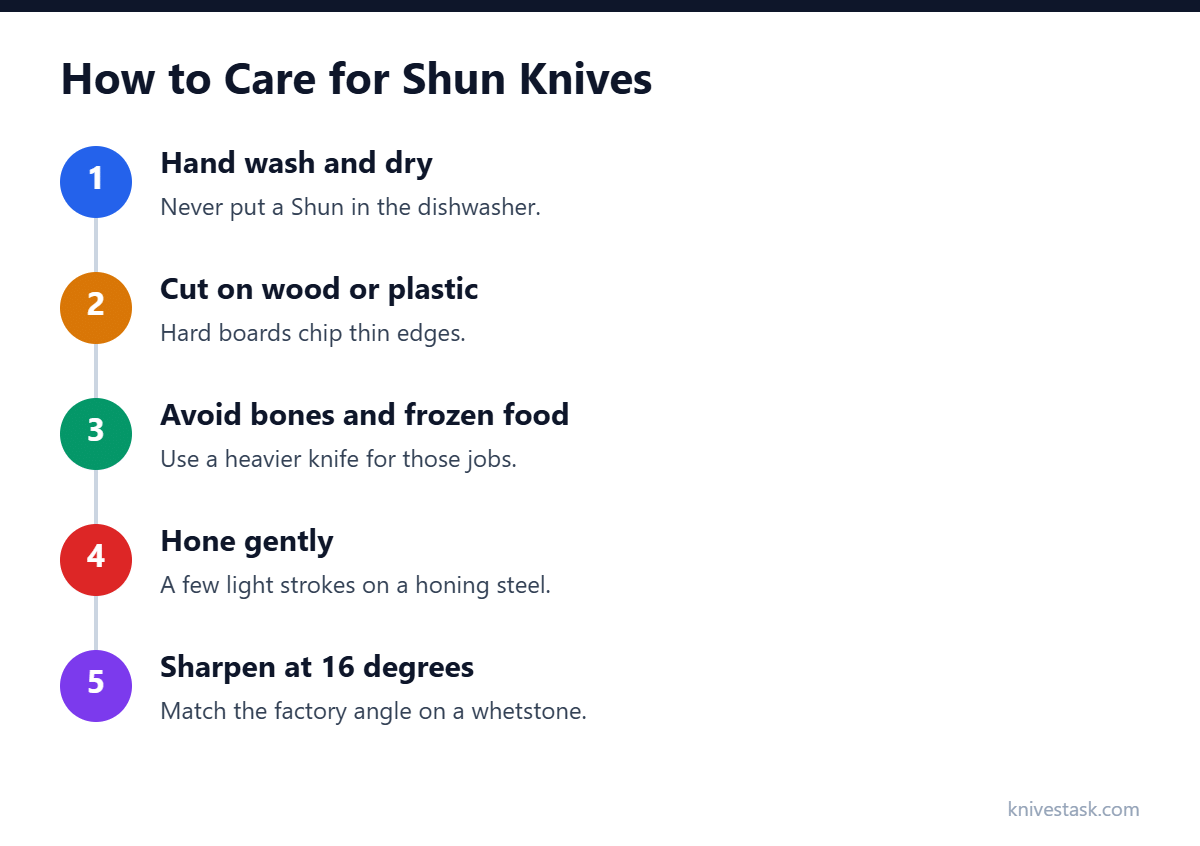
Hand-wash and dry Shun knives immediately; never use the dishwasher. Avoid bones, frozen food and twisting cuts, which can chip the hard edge.
Store them in a block, on a magnetic strip or in a saya, and sharpen at 16° per side. Our guide on how to sharpen Shun knives explains the process.
Shun vs Other Brands
Shun knives are lighter, harder and sharper than German knives such as Wüsthof, but less forgiving of rough use. Many cooks keep a German knife for heavy jobs and a Shun for precision work.
For a side-by-side look, read Shun vs Wüsthof.
Building a Shun Set
A chef’s knife, a paring knife and a bread knife cover most kitchen jobs. Add a santoku or nakiri if you prep lots of vegetables, or a utility knife for sandwiches and small tasks.
You don’t need to buy all your knives in one line. Many cooks mix lines, choosing the handle and price that suit each knife.
Our Verdict
For most home cooks, Premier offers the best balance of comfort, looks and performance. Classic is the best-known line and a great choice for right-handed cooks.
Sora and Kanso are excellent ways to own a genuine Shun for less.
Knife Shapes Available
Most Shun lines include the same core shapes: chef’s knife, santoku, paring knife, utility knife, bread knife and nakiri. Classic offers the widest range, including specialist knives.
If you want a specific shape, check that it’s available in your preferred line before you commit to building a matching set.
Is Damascus Just for Looks?
Shun’s Damascus cladding is mostly decorative, though it also helps protect the hard core and can reduce food sticking slightly. The cutting performance comes from the VG-MAX or VG10 core.
If you don’t care about the pattern, Kanso’s plain AUS10A blade gives you a tough Shun knife for less.
Where to Buy Shun
Buy Shun from authorized retailers so your warranty and sharpening service are valid. Counterfeit Japanese knives do exist, so be wary of prices that look too good to be true.
Check that the blade shows the Shun logo and the box lists the line name and model number.
Final Buying Tip
If possible, hold a Classic and a Premier side by side in a store. Most people know within seconds which handle suits them better.
Once you’ve chosen a line, start with a chef’s knife and add pieces as you need them.
Sharpening Service Details
Shun’s free sharpening covers straight-edged knives; you pay shipping and handling, and serrated knives and scissors aren’t included. Check Shun’s website for the current process before sending knives.
Between services, a few strokes on a honing rod at 16° keep the edge aligned.
Frequently Asked Questions
What is the difference between Shun Classic and Premier?
Both use VG-MAX steel; Classic has a D-shaped handle, Premier a rounded handle and hammered finish.
Which Shun line is best for beginners?
Sora or Kanso offer the best value; Premier is the most comfortable.
Are Shun knives good for left-handed cooks?
Premier, Sora and Kanso suit either hand; Classic has left-handed models.
What angle are Shun knives sharpened at?
16° per side.
Does Shun sharpen knives for free?
Yes, for straight-edged knives; you pay shipping.