
Quick Summary
- Wüsthof: German, founded 1814, best known for forged knives like the Classic (about 58 HRC, 14° edge).
- Victorinox: Swiss, founded 1884, best known in kitchens for the stamped Fibrox Pro.
- Value: the Fibrox Pro costs a fraction of the Wüsthof Classic and is a long-time test favorite.
- Feel: Wüsthof is heavier with a full bolster; Victorinox is lighter with a grippy textured handle.
- Verdict: Victorinox for value and busy kitchens; Wüsthof for a heavier, heirloom-quality knife.
Knives Task is reader-supported: if you buy through a link on this page, we may earn a small Amazon commission at no extra cost to you. That never changes which knives we recommend.
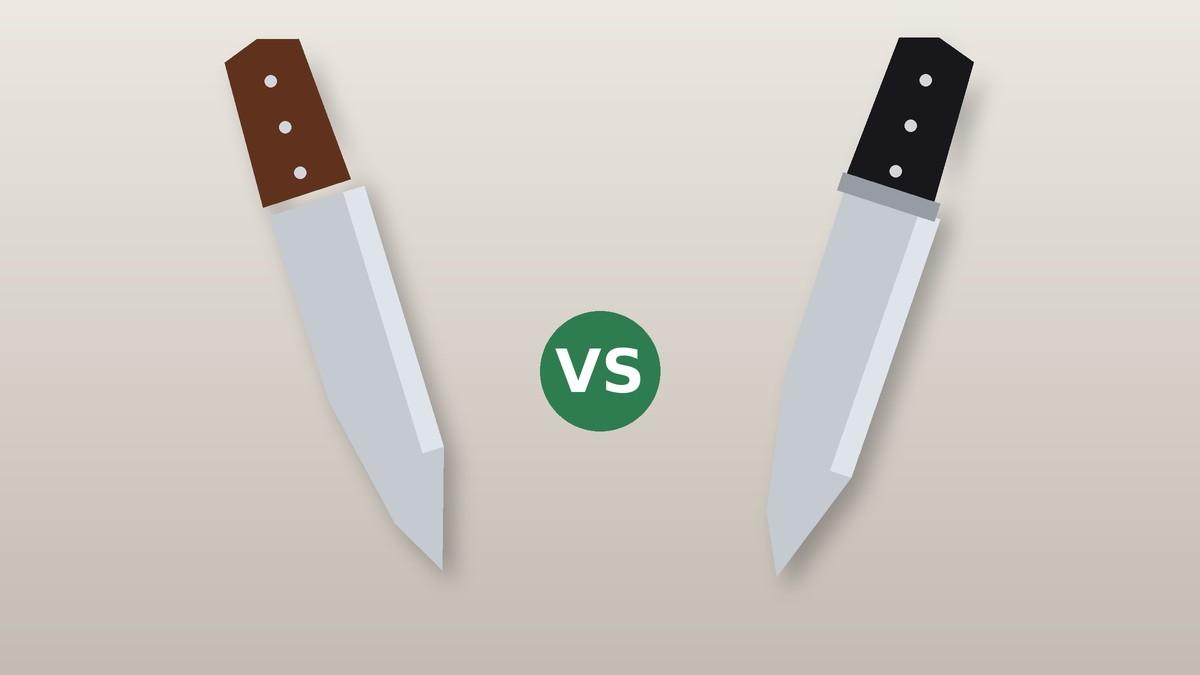
Wüsthof and Victorinox are two of the most trusted names in kitchen knives, but they take different approaches. Wüsthof is famous for heavy, forged German knives, while Victorinox is loved for light, inexpensive stamped knives that perform far above their price.
This comparison focuses on each brand’s best-known chef’s knife: the Wüsthof Classic 8-inch and the Victorinox Fibrox Pro 8-inch.
Wüsthof vs Victorinox at a Glance
| Feature | Wüsthof Classic | Victorinox Fibrox Pro |
|---|---|---|
| Country | Solingen, Germany | Switzerland |
| Founded | 1814 | 1884 |
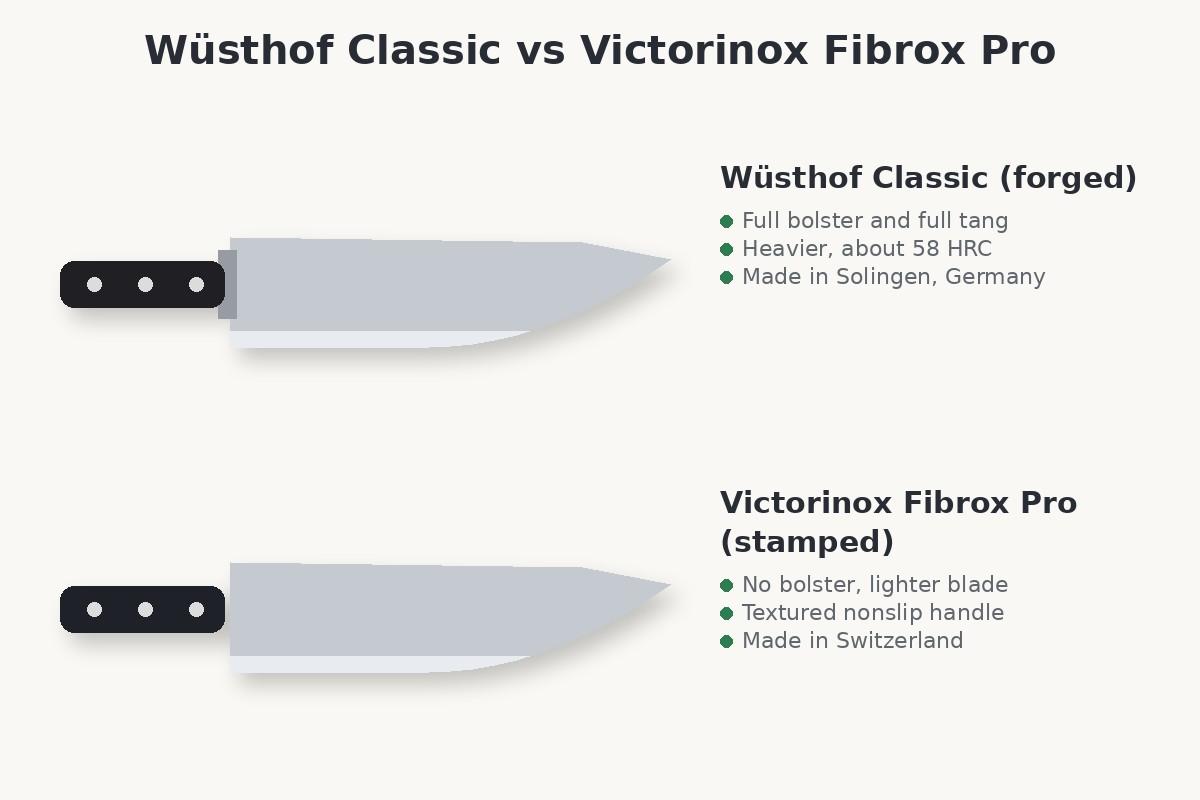
| Construction | Forged, full tang, full bolster | Stamped, no bolster |
| Hardness | About 58 HRC | Softer stainless steel |
| Edge | 14° per side (PEtec) | Fine, easy-to-maintain edge |
| Handle | Triple-riveted synthetic (POM) | Textured, nonslip Fibrox |
| Price | Premium | Budget |
We’ve removed claims from our older version that we couldn’t support, including test scores that weren’t sourced and the statement that Victorinox knives are “more substantial” than Wüsthof’s.
The Brands
Wüsthof
Wüsthof was founded in Solingen, Germany, in 1814 and is still family-owned. Its forged Classic line is made from a single piece of high-carbon stainless steel and sharpened with the brand’s laser-guided PEtec process.
Wüsthof also makes stamped lines, such as Gourmet and the commercial Pro range. Read our Wüsthof knives review for the full lineup.
Victorinox
Victorinox was founded by Karl Elsener, who opened a cutler’s workshop in Ibach-Schwyz, Switzerland, in 1884. According to Victorinox’s company history, the name combines “Victoria”, after his mother, with “Inox”, meaning stainless steel.
It’s best known for the Swiss Army Knife, but its Fibrox Pro kitchen knives are a staple in professional kitchens and culinary schools.
Wüsthof Classic 8-Inch Chef’s Knife
The Wüsthof Classic is forged, with a full bolster and a full tang that runs through a triple-riveted handle. It feels solid and balanced, and the weight helps push through squash, carrots and chicken.
Its 14-degree PEtec edge is sharp out of the box and easy to hone. Check the Wüsthof Classic chef’s knife on Amazon.
Victorinox Fibrox Pro 8-Inch Chef’s Knife
The Fibrox Pro is stamped from sheet steel, so it’s thinner and lighter than the Wüsthof. Its textured Fibrox handle stays grippy when wet, and it’s comfortable for long prep sessions.
It has been America’s Test Kitchen’s top-rated chef’s knife for many years, and the editors describe it as a longtime inexpensive favorite. Check the Victorinox Fibrox Pro on Amazon.
Key Differences
Forged vs Stamped
Forged knives like the Wüsthof Classic are heavier and feel more substantial, with a bolster that protects your fingers. Stamped knives like the Fibrox Pro are lighter and thinner, which many cooks find faster and less tiring.
Neither method is automatically better. Steel, heat treatment and design matter more than how the blade was formed.
Steel and Edge Retention
Wüsthof’s harder steel holds an edge a little longer. The Fibrox Pro’s softer steel needs honing more often but is very easy to bring back to sharp.
Handle and Comfort
Wüsthof’s riveted handle feels classic and solid. Victorinox’s Fibrox handle is lighter and more slip-resistant, which is why it’s popular in commercial kitchens.
Price and Value
The Wüsthof Classic costs several times as much as the Fibrox Pro. For many home cooks, the Victorinox offers better value, while Wüsthof offers a more premium feel that lasts decades.
Other Lines to Consider
| Brand | Line | Type | Why consider it |
|---|---|---|---|
| Wüsthof | Classic Ikon | Forged, half bolster | Easier to sharpen the full edge |
| Wüsthof | Gourmet | Stamped | Wüsthof quality at a lower price |
| Wüsthof | Pro | Stamped, commercial | Lightweight work knife |
| Victorinox | Swiss Classic | Stamped | Similar blade, colorful handles |
| Victorinox | Grand Maître | Forged | Victorinox’s forged option |
If you like Wüsthof but want a lighter, cheaper knife, try the Wüsthof Pro cook’s knife, a stamped model made for professional kitchens.
Sharpening Each Knife
Both knives sharpen easily on a whetstone or a quality manual sharpener. Wüsthof recommends keeping its 14-degree angle, while the Fibrox Pro is forgiving if you sharpen at about 15 to 20 degrees per side.
Because the Fibrox Pro has no bolster, you can sharpen right to the heel. The Wüsthof Classic’s full bolster eventually needs grinding down by a professional to keep the heel in contact with the board.
Who Uses Each Brand?
Victorinox Fibrox Pro knives are common in restaurant kitchens and culinary schools, where knives are used hard and replaced often. Their low price and nonslip handles suit that environment.
Wüsthof Classic knives are popular with home cooks who want a lifetime knife and like the heft of a forged blade. They’re also common in gift sets and wedding registries.
Building a Small Kit From Either Brand
You don’t need a full block. A chef’s knife, a paring knife and a serrated bread knife cover nearly every home cooking job.
Mixing brands works well too. Many cooks pair an inexpensive Victorinox bread or paring knife with a Wüsthof chef’s knife.
Caring for Either Knife
- Hand wash and dry straight after use.
- Avoid the dishwasher, which dulls edges and can damage handles.
- Hone regularly with a steel or ceramic rod.
- Use a wood or plastic board.
- Store knives in a block, on a strip or with guards.
Wüsthof’s own guide on how to clean your knives also warns against soaking knives in the sink, where food acids can cause spots.
Warranty
Wüsthof offers a limited lifetime warranty against manufacturing defects. Victorinox also guarantees its kitchen knives against defects in materials and workmanship.
Neither warranty covers normal wear, misuse or dishwasher damage, so keep your receipt and check the current terms. Buying from authorized sellers also helps avoid counterfeits.
Which Should You Buy?
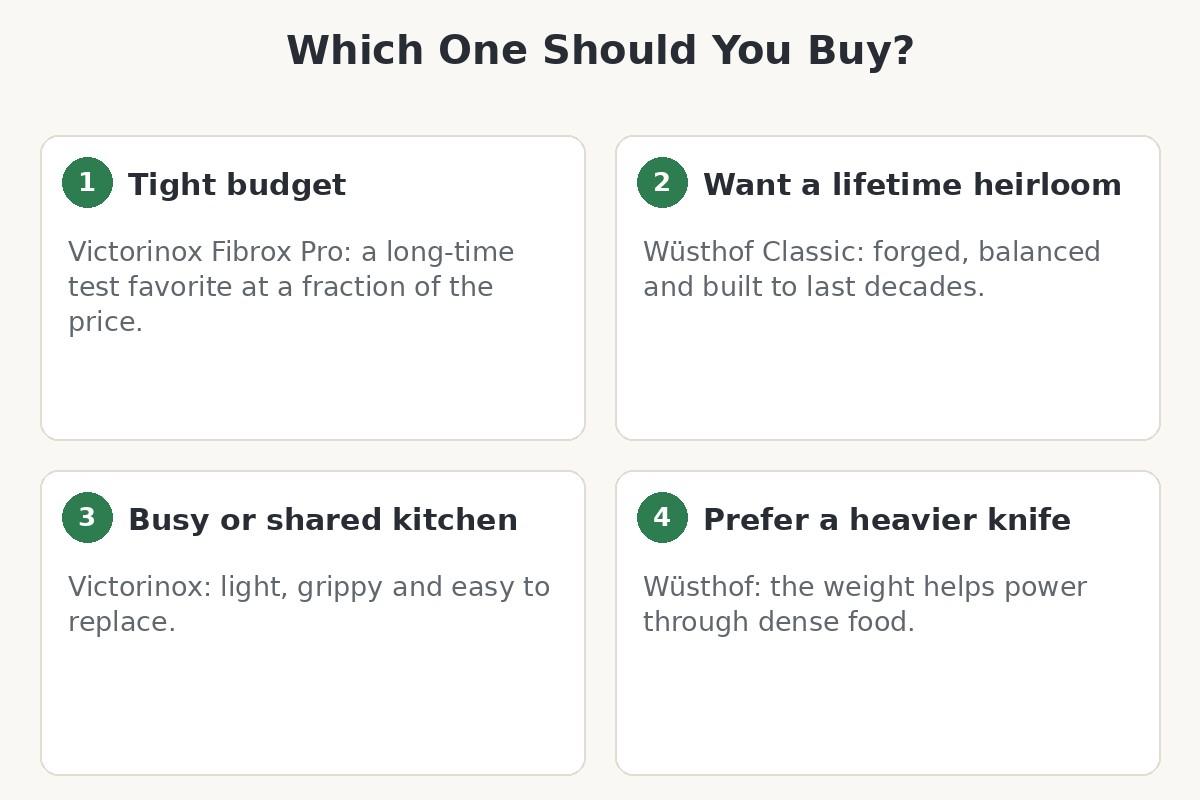
Choose the Victorinox Fibrox Pro if you want excellent performance at a low price, or if your knives get heavy daily use. It’s also an ideal first good knife.
Choose the Wüsthof Classic if you prefer a heavier knife, value a forged bolster and want something that feels like an heirloom. See our picks for the best chef’s knife for home cooks, or compare Wüsthof vs Henckels.
Frequently Asked Questions
Is Wüsthof better than Victorinox?
Wüsthof is heavier and more premium; Victorinox offers better value. Both cut very well.
Why is the Victorinox Fibrox Pro so popular?
It’s sharp, comfortable, light and inexpensive, and has topped America’s Test Kitchen’s chef’s knife ratings for years.
Is Victorinox forged or stamped?
The Fibrox Pro is stamped; Victorinox’s Grand Maître line is forged.
Where are Wüsthof and Victorinox made?
Wüsthof in Solingen, Germany; Victorinox in Switzerland.
Are they dishwasher safe?
Hand washing is recommended for both.