Knowing how to use a butcher knife comes down to three things: the right grip, long smooth strokes that follow the natural seams in the meat, and keeping the blade away from bone. Get those right and big jobs like breaking down a roast or trimming a brisket become faster and safer.
Table of Contents
Quick Summary
- A butcher knife is for meat, mainly breaking down large cuts, trimming fat and portioning.
- Use a handshake grip for power and a pinch grip for control.
- Keep your guide hand in a claw and cut away from your body.
- Don’t hack through bone with a butcher knife; use a cleaver or bone saw.
- Work on a stable board with a sharp, regularly steeled knife.
A butcher knife has a long, sturdy blade, usually with a curved edge that rises toward the tip. It’s designed for the heavy meat work that would strain a chef’s knife: splitting large roasts, separating muscles and trimming away fat and silverskin.
Used well, it makes this work faster and safer. This guide covers grips, cutting techniques and the related knives that a butcher keeps alongside it.
The Butcher’s Knife Family
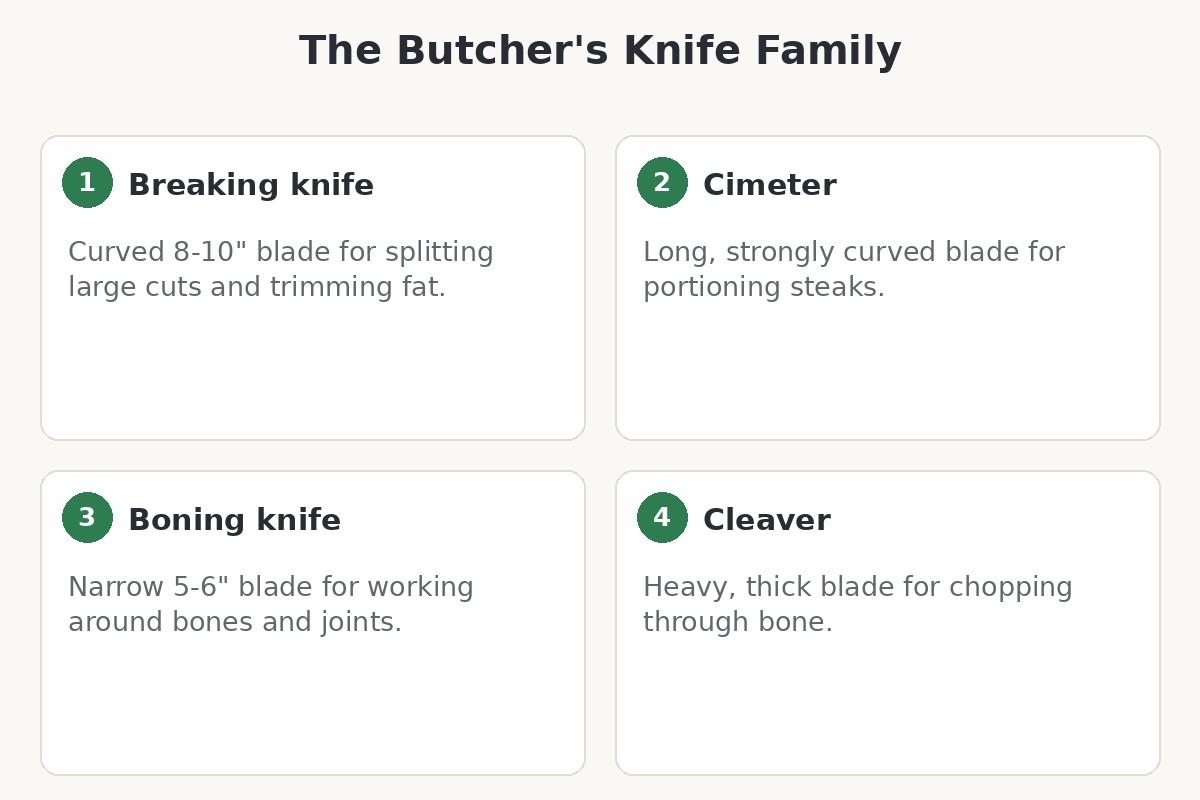
“Butcher knife” usually means a breaking knife or a cimeter, but butchers use a small set of specialized blades. Knife retailer Knives of the North’s guide to butcher knives describes the same core lineup.
| Knife | Blade | Main jobs |
|---|---|---|
| Breaking knife | Curved, about 8–10 inches | Breaking down large cuts, separating muscles, trimming fat |
| Cimeter (scimitar) | Long and strongly curved, 10 inches or more | Portioning steaks, slicing large boneless cuts |
| Boning knife | Narrow, about 5–6 inches, stiff or flexible | Removing bones, working around joints |
| Cleaver | Heavy, thick rectangular blade | Chopping through bones and joints |
A butcher knife should never be used to hack through bone. Hitting bone chips and rolls the edge, so bone work belongs to a cleaver or a bone saw.
How to Hold a Butcher Knife
The Handshake Grip
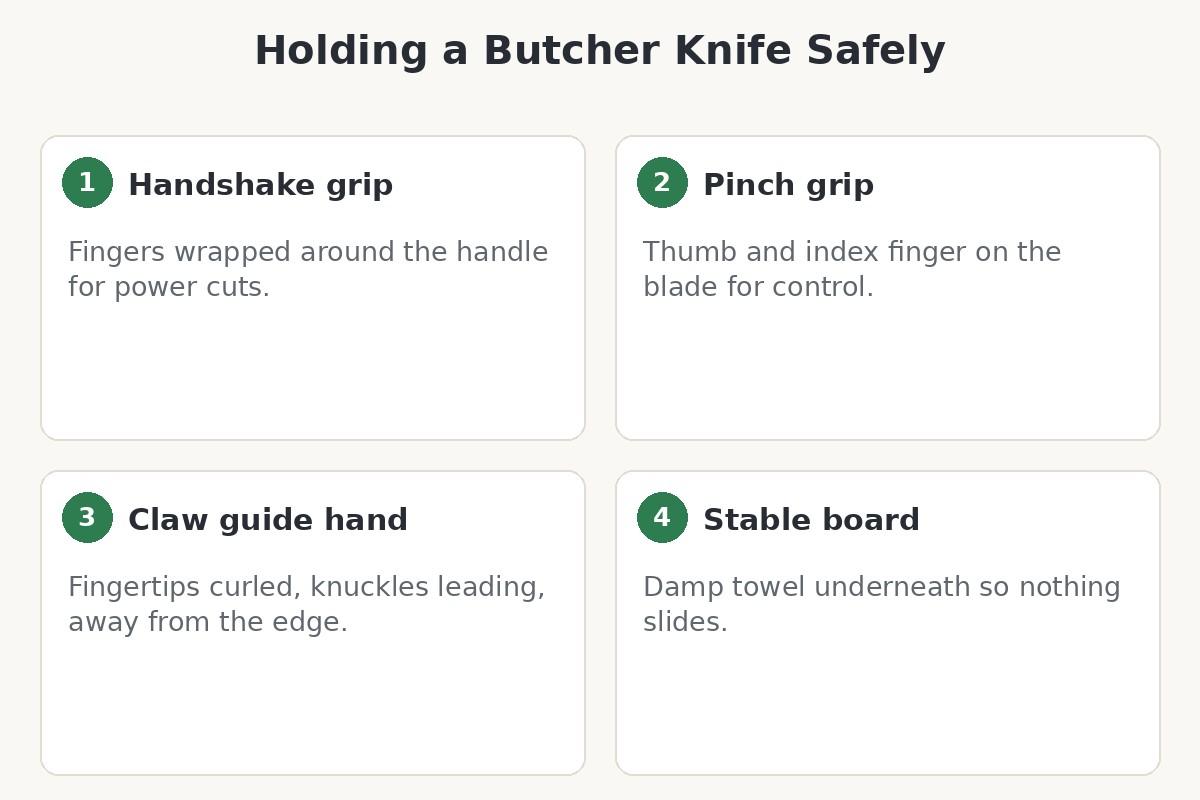
Wrap all your fingers around the handle as if shaking hands, with your thumb along the side. This grip gives the most power and is best for long, firm cuts through large pieces of meat.
The Pinch Grip
Pinch the blade just in front of the handle between your thumb and the side of your index finger, and wrap your remaining fingers around the handle. You get finer control for trimming and portioning.
Your Guide Hand
Hold the meat with your fingertips curled under, so your knuckles face the blade. When cutting toward yourself is unavoidable, keep your guide hand well behind the line of the cut.
How to Use a Butcher Knife: Basic Techniques
Breaking Down Large Cuts
Look for the natural seams between muscles. Use long, smooth strokes along those seams, pulling the meat gently apart with your guide hand as you go.
Following seams gives cleaner pieces and less waste than cutting straight through muscle.
Trimming Fat and Silverskin
Slide the tip under the edge of the fat or silverskin, angle the blade slightly upward and draw it along. Pull the trimmed strip taut with your other hand so the blade glides beneath it.
Portioning Steaks and Roasts
Use the full length of the blade in one long slicing stroke rather than sawing back and forth. Sawing tears the meat and leaves ragged surfaces.
Cut across the grain for tender steaks, and keep the blade upright for even thickness.
Butcher Knife vs Chef’s Knife
| Butcher knife | Chef’s knife | |
|---|---|---|
| Blade | Longer, thicker, curved toward the tip | Thinner, all-purpose curve |
| Best for | Large cuts of meat, trimming, portioning | Vegetables, herbs, everyday meat prep |
| Bones | No; use a cleaver or saw | No |
| Edge | Sharp, slightly more robust | Sharp, finer |
A butcher knife is not blunter than a chef’s knife. Both should be kept sharp; a butcher knife’s blade is simply thicker and longer.
If you only cook occasionally, a good chef’s knife handles most meat; see the best knives for cutting meat.
Safety Rules for Butcher Knives
- Use a stable board with a damp towel or non-slip mat underneath.
- Keep the knife sharp; a dull blade needs more force and slips more easily.
- Cut away from your body whenever you can.
- Never try to catch a falling knife; step back and let it drop.
- Wipe the handle if it becomes greasy, and dry your hands.
- Consider a cut-resistant glove on your guide hand for big jobs.
The UK Health and Safety Executive’s guidance on safe knife use stresses sharp knives, stable work surfaces and secure storage. Professional butchers also wear protective gloves and aprons for heavy work.
Choosing a Boning Knife to Go with It
A boning knife handles the jobs a butcher knife is too large for, such as freeing a chicken thigh bone or trimming around a joint. UK supplier Butchers Equipment’s guide to boning knives recommends stiffer blades for beef and lamb and flexible ones for poultry and fish.
Keeping Your Butcher Knife Sharp
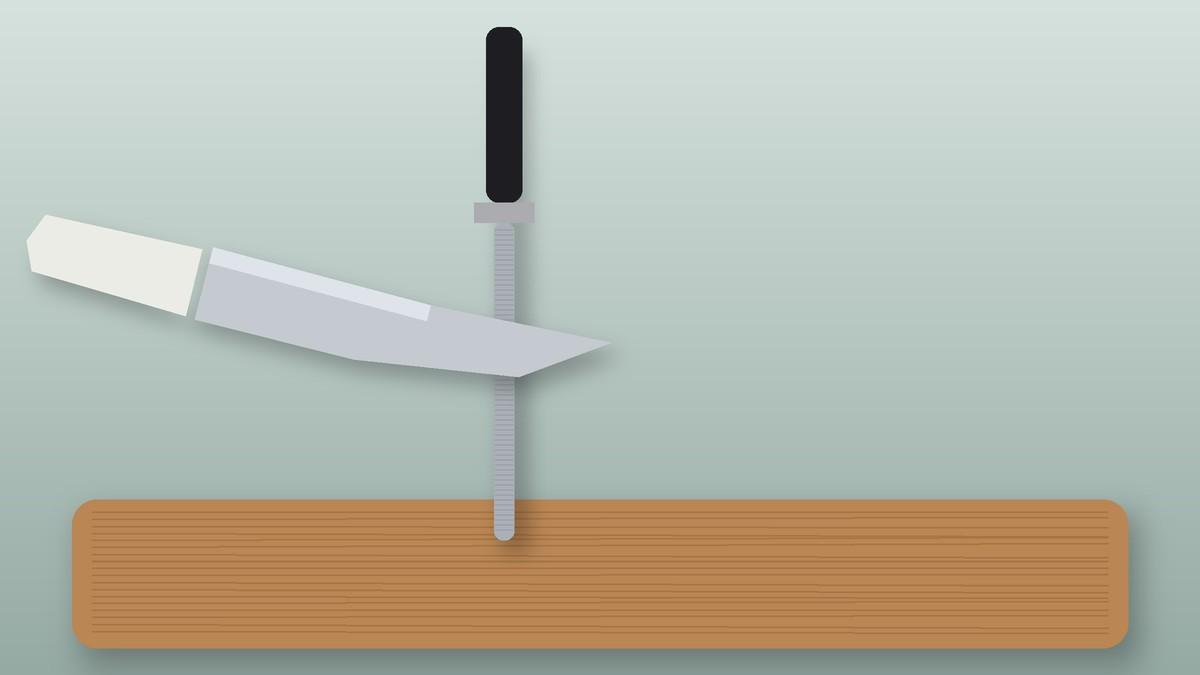
Butchers steel their knives often, sometimes every few minutes during heavy work. A few light strokes on a steel realign the edge so it keeps cutting cleanly.
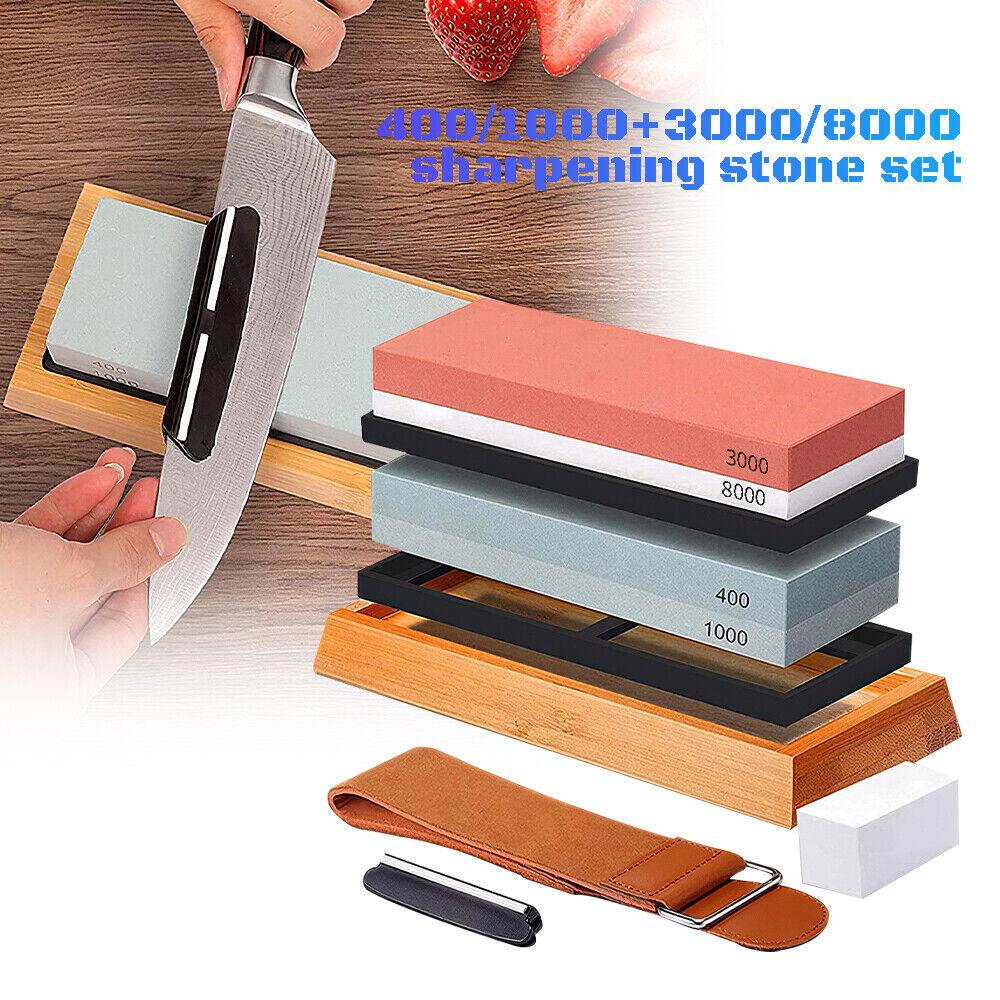
When steeling no longer helps, sharpen on a whetstone at about 15–20° per side; our guide on how to sharpen a butcher knife walks through it step by step.
Cleaning and Storage
Wash the knife by hand with hot, soapy water straight after use, especially after raw meat, then dry it completely. Keep it out of the dishwasher.
Store it in a block, on a magnetic strip or in a sheath so the edge stays protected.
Ready to buy one? Compare options in our guide to the best butcher knife brands.
Step-by-Step: Breaking Down a Pork Shoulder
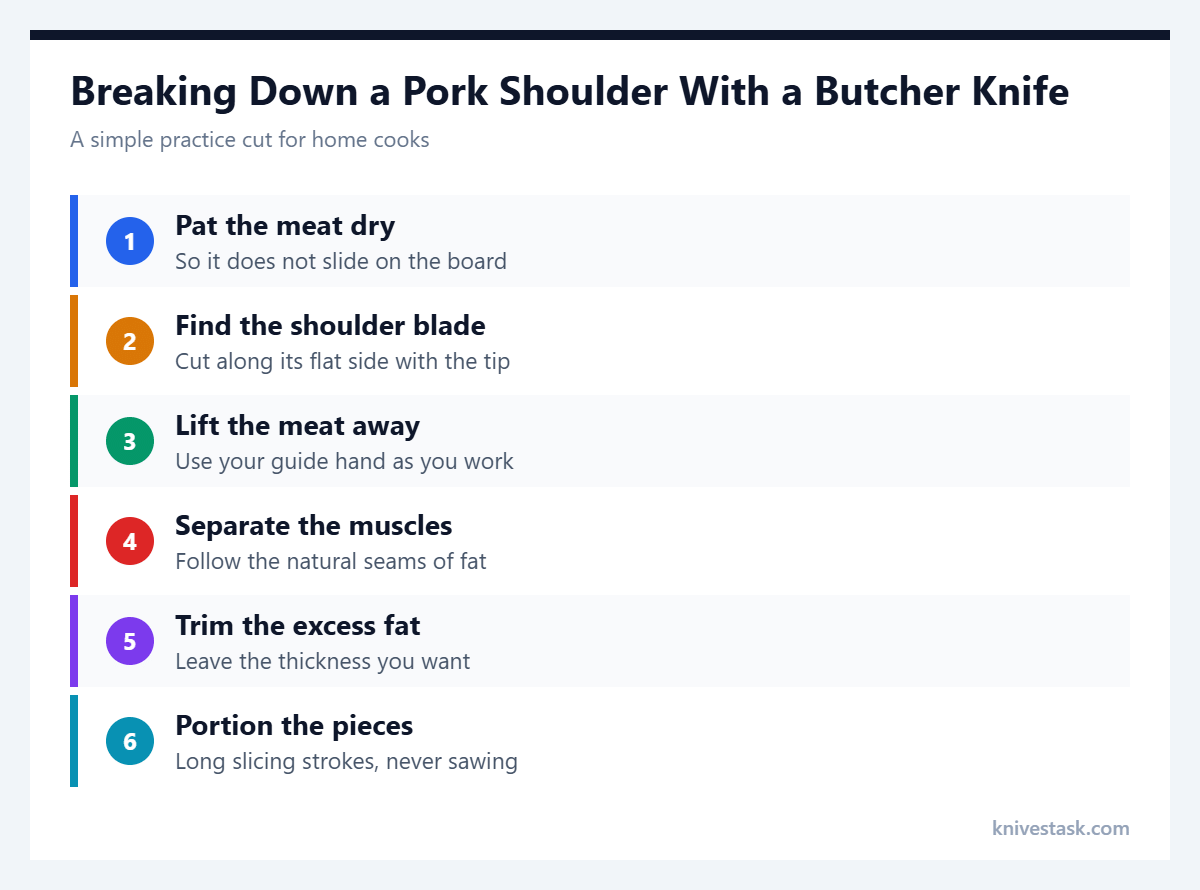
A bone-in pork shoulder is a good practice cut, because its muscles separate along clear seams. Here’s a simple approach for home cooks.
- Pat the meat dry so it doesn’t slide on the board.
- Find the shoulder blade by feel and cut along its flat side with the tip, keeping the edge against the bone.
- Lift the meat away from the bone with your guide hand as you work.
- Separate the muscles along the visible seams of fat and connective tissue.
- Trim the excess fat to the thickness you want.
- Portion the pieces into roasts, steaks or stew cubes with long slicing strokes.
Take your time on the first attempt. Speed comes from knowing where the seams are, not from forcing the knife.
How to Use a Butcher Knife on Different Meats
The basic technique stays the same, but each type of meat rewards a slightly different approach.
- Beef: large subprimals such as chuck and brisket have thick fat caps and long seams. A 10-inch breaking knife or cimeter handles long trimming and portioning strokes best.
- Pork: shoulders and loins separate cleanly along their seams, and the fat is softer, so a sharp 8-inch breaking knife gives good control.
- Lamb: smaller cuts with more bone. Use the butcher knife for trimming and switch to a stiff boning knife around the joints.
- Poultry: a whole turkey can be portioned with a butcher knife, but a flexible boning knife is easier for thighs and breasts.
- Venison and wild game: work along the seams and trim silverskin carefully, since game is lean and tough membranes are common.
Setting Up Your Workspace
Good setup prevents most slips before you make the first cut. Use a large, heavy board that won’t move, with a damp towel or non-slip mat underneath, and keep a clean, dry towel nearby for your hands and the handle.
Keep raw meat separate from everything else. FoodSafety.gov’s four steps to food safety recommend washing hands, utensils and surfaces often and keeping raw meat away from ready-to-eat foods, so wash the knife and board in hot, soapy water as soon as you finish.
Common Mistakes to Avoid
- Sawing back and forth instead of using long, smooth strokes.
- Twisting the blade in a joint, which can snap the tip.
- Letting the knife go dull and pushing harder to compensate.
- Working on a wet or greasy board that lets the meat slide.
- Cutting toward your guide hand instead of away from it.
Whatever you are cutting, how to use a butcher knife safely comes back to the same habits. Most knife injuries in butchery happen when the blade slips. A sharp knife, a dry handle and a stable board prevent nearly all of them.
Which Butcher Knife Should You Buy First?
For home use, a 6-inch boning knife and an 8- or 10-inch breaking knife cover most jobs. Add a cleaver if you regularly cut through poultry joints or ribs.
Look for a non-slip handle, a blade that holds an edge without being brittle, and a weight that feels comfortable in your hand.
The Bottom Line
Learning how to use a butcher knife is mostly about control. Hold it with a handshake grip for power or a pinch grip for precision, keep your guide hand curled, follow the natural seams with long strokes, and leave bones to a cleaver or saw. Keep the edge steeled and sharp, work on a stable board, and wash the knife by hand right after use.
Frequently Asked Questions
What is a butcher knife used for?
Breaking down large cuts of meat, trimming fat and silverskin, and portioning steaks and roasts. Learning how to use a butcher knife well makes all three jobs faster.
Can a butcher knife cut through bone?
It shouldn’t; use a cleaver or bone saw to avoid chipping the edge.
How do you hold a butcher knife?
Use a handshake grip for power or a pinch grip for control, with your guide hand in a claw.
Is a butcher knife the same as a cleaver?
No, a butcher knife slices and trims while a cleaver chops through bone.
How long is a butcher knife?
Most breaking knives are about 8–10 inches, and cimeters are 10 inches or longer.