Quick Summary
- Best set: Shun Premier 5-piece starter block, with hammered Damascus-clad blades made in Seki.
- Best chef’s knife: Enso HD 8-inch, a VG-10 core with hammered Damascus cladding.
- Best showpiece: Yaxell Ran Plus 8-inch chef’s knife with a striking layered pattern.
- Best budget: KYOKU Shogun Damascus steak knives, a VG-10 Damascus set for the table.
- Important: the pattern is mostly beauty; the core steel and heat treatment do the cutting.
Knives Task is reader-supported: if you buy through a link on this page, we may earn a small Amazon commission at no extra cost to you. That never changes which knives we recommend.
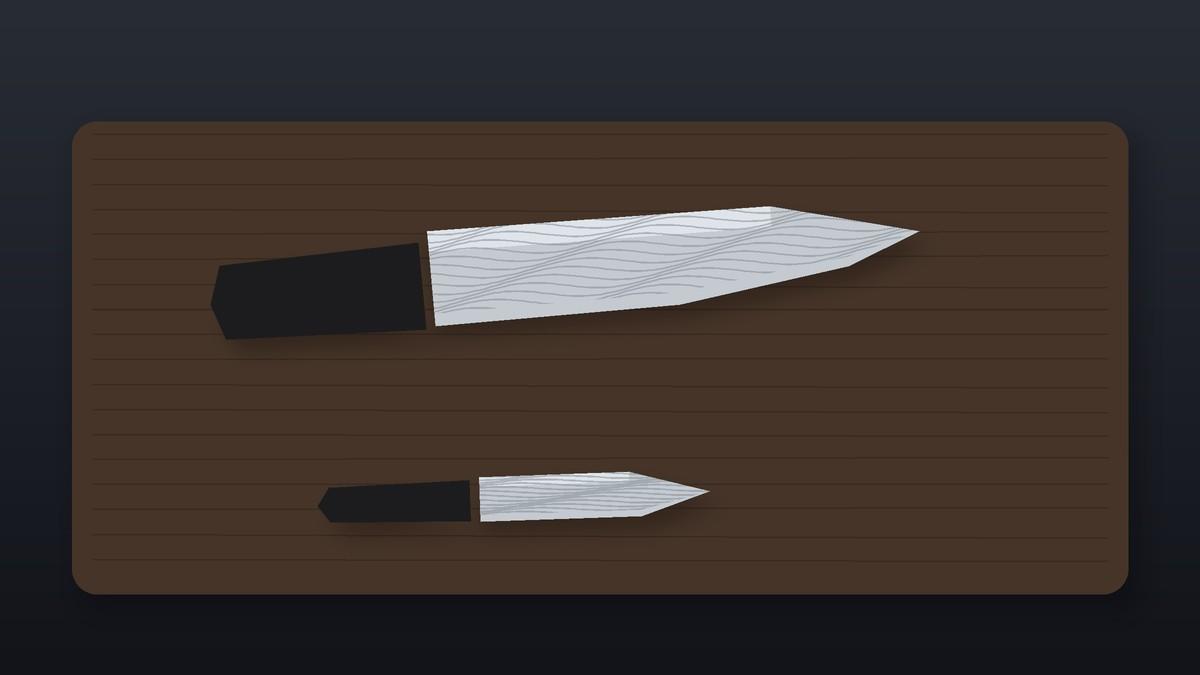
Damascus knives are instantly recognizable by their flowing, layered patterns. They’re beautiful, and good ones are excellent cutting tools.
They’re also one of the most faked categories in kitchen knives. Many cheap “Damascus” knives have a pattern that’s been laser-etched or printed onto a plain blade.
This guide sticks to knives from established makers with genuine layered steel. It also explains what Damascus actually is and how to tell real from fake.
Our Picks at a Glance
| Knife or set | Core steel | Best for |
|---|---|---|
| Shun Premier 5-Piece Starter Block | VG-MAX | Best set |
| Enso HD 8″ Chef’s Knife | VG-10 | Best chef’s knife |
| Yaxell Ran Plus 8″ Chef’s Knife | Damascus-clad | Showpiece |
| Yoshihiro VG-10 Damascus Gyuto | VG-10 | Traditional gyuto |
| Shun Classic 9″ Bread Knife | VG-MAX | Damascus bread knife |
| KYOKU Shogun Damascus Steak Knives | VG-10 | Budget steak set |
How we chose: we haven’t lab-tested these knives side by side. We compared blade length and shape, steel, construction (forged or stamped), handle design and the makers’ published specifications, and we favored models with a long track record and consistent owner feedback over newer, unproven listings.
Specifications come from the manufacturers’ listings. Prices change often, so check before buying.
What Is Damascus Steel?
The original Damascus steel was a crucible steel, made from ingots originally produced in South Asia and forged into famous sword blades in the Middle East. The exact method was lost centuries ago.
Modern Damascus is pattern-welded steel. Smiths forge-weld layers of two or more steels together, fold or stack them, then etch the finished blade so the layers show as a pattern.
In most kitchen knives, Damascus layers clad a single hard core steel that forms the edge. The cladding adds beauty and some toughness, while the core does the cutting.
The Best Damascus Steel Kitchen Knives
1. Shun Premier 5-Piece Starter Block Set — Best Damascus Set
Best for: cooks who want a matching set of genuine Damascus knives from a major Japanese maker.
Shun makes its knives in Seki, Japan. The Premier line has a VG-MAX steel core clad in Damascus layers, with a hammered finish that helps food release and a walnut-colored pakkawood handle.
The starter block brings core Premier knives together in one purchase. Check the listing for the exact contents.
It’s an investment, but it’s a set you’ll use and admire for years.
What we like:
- Genuine Damascus cladding
- Made in Seki, Japan
- Hammered finish helps food release
What to consider:
- Premium price
- Hard edges need careful use
Check the current price of the Shun Premier 5-piece starter block on Amazon →
2. Enso HD 8-Inch Chef’s Knife — Best Damascus Chef’s Knife
Best for: cooks who want one excellent Damascus chef’s knife at a fair price.
Enso knives are made in Seki by Yaxell. The HD has a VG-10 core clad in hammered Damascus, with a comfortable Western-style handle.
It offers genuine layered steel and Japanese sharpness for much less than many premium brands. The 8-inch blade suits most kitchens.
If you only want one Damascus knife, a chef’s knife like this gets the most use.
What we like:
- Real layered cladding
- VG-10 core
- Good value for made-in-Japan
What to consider:
- Hand wash only
- Can chip if misused
Check the current price of the Enso HD 8-inch chef’s knife on Amazon →
3. Yaxell Ran Plus 8-Inch Chef’s Knife — Best Showpiece
Best for: cooks who want a striking Damascus pattern from a respected Seki maker.
Ran Plus is one of Yaxell’s Damascus lines, with a bold layered pattern and a durable synthetic handle. It’s made in Japan, according to the listing.
It’s a knife that looks as good on a magnetic strip as it performs on the board. That makes it a popular gift for keen cooks.
Like all hard Japanese blades, treat it with care and use a wood or soft plastic board.
What we like:
- Striking pattern
- Made in Japan
- Durable handle
What to consider:
- Higher price
- Pattern shows scratches over time
Check the current price of the Yaxell Ran Plus 8-inch chef’s knife on Amazon →
4. Yoshihiro VG-10 Hammered Damascus Gyuto — Best Traditional Gyuto
Best for: cooks who prefer a Japanese-handled knife with a saya.
This gyuto has a VG-10 core in 46-layer hammered Damascus with a double-bevel edge, according to its listing. It’s rated around 60 HRC and comes with a wooden saya.
The traditional handle is light, putting the balance toward the blade. Many cooks find this makes precise slicing feel effortless.
Dry the wooden handle and saya after use to keep them in good condition.
What we like:
- Traditional Japanese handle
- Saya included
- Hard, keen edge
What to consider:
- Wood needs care
- Feels different from Western knives
Check the current price of the Yoshihiro VG-10 Damascus gyuto on Amazon →
5. Shun Classic 9-Inch Bread Knife — Best Damascus Bread Knife
Best for: cooks who want a bread knife to match a Damascus collection.
The Shun Classic line pairs a VG-MAX core with Damascus cladding and a D-shaped pakkawood handle. This 9-inch bread knife has long serrations that glide through crusty loaves.
Wide serrations cut cleanly without tearing soft bread. They also stay usable for a long time between sharpenings.
It’s a beautiful addition if you already own other Shun Classic knives.
What we like:
- Damascus-clad blade
- Long, clean-cutting serrations
- Made in Seki
What to consider:
- Expensive for a bread knife
- Serrations need special sharpening
Check the current price of the Shun Classic 9-inch bread knife on Amazon →
6. KYOKU Shogun Damascus Steak Knives — Best Budget Damascus
Best for: people who want Damascus knives at the table without premium kitchen-knife prices.
KYOKU’s Shogun steak knives have a VG-10 core in 67-layer Damascus and G10 handles, according to the listing. They come with sheaths and a case.
KYOKU uses Japanese steel but its knives aren’t made in Japan, so check the listing if that matters to you.
The straight edges slice steak cleanly and look impressive at dinner parties.
What we like:
- Damascus look at a lower price
- G10 handles
- Case included
What to consider:
- Not made in Japan
- Straight edges need honing
Check the current price of the KYOKU Shogun Damascus steak knife set on Amazon →
Common Damascus Patterns
Smiths create different patterns by how they stack, twist, cut and grind the layers. Common names include:
- Random or wave: flowing, irregular lines, the most common pattern on kitchen knives.
- Raindrop: circular spots made by drilling or pressing the billet before grinding.
- Ladder: grooves cut across the billet create a repeating rung-like pattern.
- Twist: the billet is twisted while hot, creating spiral or star-like shapes.
- Feather: the billet is split and pressed to create a feather-like design.
Pattern choice is purely about looks. Pick the one you enjoy, because it won’t change how the knife cuts.
Stainless or Carbon Damascus?
Most Damascus kitchen knives from Japanese makers use stainless layers around a stainless core, so they resist rust well. Some custom and hunting-style Damascus uses carbon steels such as 1095 and 15N20.
Carbon Damascus can show a very bold pattern but needs drying and oiling after use. If you want low maintenance, choose stainless Damascus from an established kitchen-knife maker.
Choosing Your First Damascus Knife
Start with the knife you’ll use most, usually an 8-inch chef’s knife or gyuto. A single beautiful chef’s knife gives more pleasure than a full set you rarely use.
Add a matching petty or paring knife later, then a bread knife if you want the whole collection to match.
Real Damascus or Laser-Etched?
Laser-etched or printed patterns are common on cheap knives. They look similar in photos but don’t come from layered steel.
| Clue | Genuine Damascus | Fake pattern |
|---|---|---|
| Pattern on the spine | Layers visible on the spine and edge bevel | Pattern only on the flat faces |
| Pattern shape | Irregular and flowing | Very regular, repeating or printed-looking |
| After sharpening | Layers show along the edge bevel | Edge bevel looks plain |
| Price and maker | Named maker, realistic price | Unknown brand, very low price |
| Steel description | Named core and cladding steels | Vague terms like “Damascus steel” only |
If a listing doesn’t name the core steel or the maker, be cautious. Genuine layered blades cost more to make, and reputable makers explain how theirs are built.
Does Damascus Make a Knife Cut Better?
Not by itself. The cutting edge is the core steel, so a Damascus knife cuts as well as its core steel and heat treatment allow.
Damascus cladding can add toughness and help a hard core resist chipping. A hammered finish also helps food release, but the main appeal is beauty and craftsmanship.
For more on blade steels, see our knife steel comparison.
Caring for Damascus Knives
- Hand wash and dry immediately: the dishwasher can dull the pattern and edge.
- Avoid acidic foods sitting on the blade: wipe it after cutting citrus or tomatoes.
- Don’t scrub with abrasives: they scratch the etched pattern.
- Oil carbon-steel cladding: some Damascus uses carbon steel layers that can rust.
- Sharpen on whetstones: pull-through sharpeners can damage hard edges.
If the pattern fades after years of sharpening and polishing, a knife specialist can re-etch it. It doesn’t affect how the knife cuts.
Store Damascus knives on a magnetic strip, in a block or in a saya, never loose in a drawer where the pattern and edge can get scratched.
Damascus Knives as Gifts
Damascus knives are popular gifts because they look special straight out of the box. A single chef’s knife from a known maker usually makes a better gift than a large set from an unknown brand.
Include a simple care card or a wooden saya if you can. It helps the recipient keep the knife looking beautiful for years.
Damascus Knives and Cutting Boards
Hard Japanese cores can chip on bamboo, glass or stone boards. End-grain wood and soft plastic boards are kinder to the edge and help the knife stay sharp much longer.
Is a Damascus Knife Worth It?
If you value beauty and craftsmanship as well as performance, a genuine Damascus knife from a known maker is worth it. You get a sharp, well-made knife that’s also a pleasure to look at.
If you only care about cutting performance, a plain-finished knife with the same core steel usually costs less. See our guide to the best Japanese kitchen knives for both kinds.
How Many Layers Is Best?
Listings often boast about 67, 101 or even more layers. Layer count changes the look of the pattern but has little effect on cutting performance.
A blade with 30 well-forged layers can be better than one with 200 poorly made layers. Focus on the core steel, the maker and the heat treatment instead.
Frequently Asked Questions
What is Damascus steel?
Modern Damascus is pattern-welded steel: layers of different steels forged together and etched to reveal a pattern.
Are Damascus knives better?
Not automatically. Performance depends on the core steel and heat treatment; the pattern is mainly decorative.
How can I tell if a Damascus knife is real?
Look for the pattern on the spine and edge bevel, a named maker and core steel, and a realistic price.
Do Damascus knives rust?
Stainless Damascus resists rust well, but some patterns use carbon-steel layers that need drying and oiling.
Can you sharpen a Damascus knife?
Yes, on whetstones like any other knife. Sharpening exposes the layers along the edge bevel.
Does the number of layers matter?
Very little. It affects appearance far more than cutting performance.