Quick Summary
- The essential three: a chef’s knife, a paring knife and a serrated bread knife.
- Chef’s knife: 8 inches suits most cooks and does most of the work.
- Worth adding later: a boning knife, a carving knife or a santoku — only if you need them.
- Don’t forget: a honing rod, a wood or plastic board and safe storage.
- Skip: big block sets full of knives you’ll never use.
Most kitchens need just three knives: a chef’s knife, a paring knife and a serrated bread knife. Together they handle nearly every cutting job you’ll meet at home.
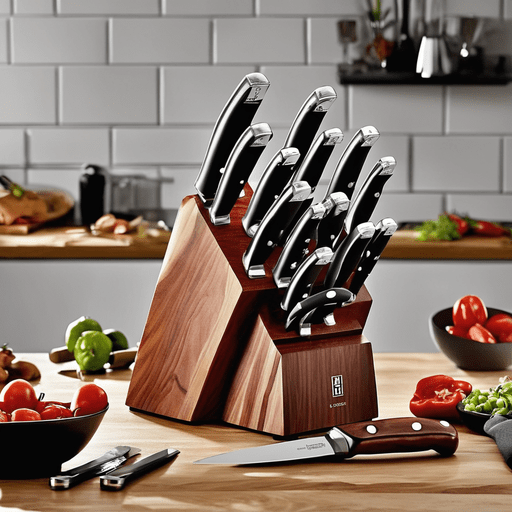
Big block sets look impressive, but most of their knives sit unused. You’re usually better off buying three good knives individually.
The Three Essential Knives
| Knife | Typical size | Main jobs |
|---|---|---|
| Chef’s knife | 8″ | Chopping, slicing, dicing, mincing |
| Paring knife | 3–4″ | Peeling, coring, trimming, small cuts |
| Bread knife | 9–10″ serrated | Bread, tomatoes, cakes, citrus |
1. Chef’s Knife
This is your main knife for chopping vegetables, slicing meat, mincing herbs and crushing garlic. If you buy only one good knife, make it this one.
Eight inches suits most people, while 6 inches is easier for smaller hands. See our best chef’s knives for home cooks.
2. Paring Knife
A paring knife handles small and in-hand jobs like peeling, coring, trimming and deveining shrimp. Good ones are inexpensive, so there’s no need to overspend.
Look for a 3- to 4-inch blade and a handle that feels secure. See our best paring knives.
3. Bread Knife
A serrated bread knife slices crusty loaves without crushing them. It’s also excellent for tomatoes, cakes and citrus.
Choose one at least 2 inches longer than your widest loaf. See our best bread knives.
What to Look for in Each Essential
In a Chef’s Knife
Look for a blade that feels balanced in a pinch grip, with a handle that doesn’t dig into your palm. The edge should have a gentle curve so you can rock it through herbs and onions.
Stamped or forged both work well. Lighter knives are easier for long prep sessions, while heavier ones power through dense vegetables.
In a Paring Knife
Choose a thin, sharp blade and a handle you can grip securely in mid-air. A spear-point tip is the most versatile shape for a first paring knife.
In a Bread Knife
Look for wavy or scalloped serrations, which grip crusts without tearing soft bread. A comfortable, slightly thicker handle helps when you’re slicing a whole loaf.
Useful Extras
Add these only when you find a job the essential three don’t cover. Each one solves a specific problem.
| Knife | Add it if you… |
|---|---|
| Boning knife | debone chicken, trim pork or break down meat — best boning knives |
| Carving / slicing knife | carve roasts, turkey or brisket — best carving knives |
| Santoku | prefer a shorter, flatter blade for straight chopping — best santoku knives |
| Utility knife | want something between paring and chef’s size — best kitchen utility knives |
| Steak knives | serve steak or chops often — best steak knives |
| Cleaver | need to cut through bones — types of cleavers |
Chef’s Knife or Santoku?
A santoku is shorter, with a flatter edge that suits straight up-and-down chopping. It can replace a chef’s knife if that’s how you like to cut.
A chef’s knife is more versatile if you rock the blade. Read chef’s knife vs. santoku for a full comparison.
Don’t Forget These Tools
- A honing rod to keep edges straight between sharpenings.
- A good cutting board — wood or plastic, never glass or stone.
- Safe storage — a block, a magnetic strip or blade guards.
- Kitchen shears for herbs, packaging and spatchcocking chicken.
See how to store kitchen knives for storage ideas.
Building Your Collection Over Time
| Stage | What to add | Why |
|---|---|---|
| Day one | Chef’s knife, paring knife, bread knife | Covers nearly every everyday job |
| After a few months | Honing rod and a whetstone | Keeps the essentials sharp |
| When you cook more meat | Boning or carving knife | Cleaner, less wasteful butchery and slicing |
| If you entertain | Steak knives | Comfortable cutting at the table |
| If you love a particular cuisine | Santoku, nakiri or cleaver | Specialist shapes for specific styles |
Should You Buy a Knife Set?
A set makes sense as a gift, or if you want everything to match. Otherwise, three individually chosen knives usually cost less and perform better.
If you do want a set, see our best kitchen knife sets or best knife sets under $200.
Knives You Can Probably Skip
- Specialty knives you’ve never needed, such as cheese, tomato or grapefruit knives, unless you use them often.
- Very long slicers if you never cook large roasts or brisket.
- Decorative knives sold mainly for looks, which often have poor steel or uncomfortable handles.
- Duplicate knives that come with big sets but overlap with what you already use.
How Much Should You Spend?
You can buy a very good chef’s knife, paring knife and bread knife for a modest budget by choosing value brands like Victorinox and Mercer. Spending more mainly buys better steel, weight and finish.
Put most of your budget into the chef’s knife, since you’ll use it every day. Paring and bread knives can be inexpensive without any real downside.
Three Knife Skills to Learn First
- The pinch grip: hold the blade between thumb and index finger just ahead of the handle for control.
- The claw: curl the fingertips of your guiding hand so your knuckles, not your nails, face the blade.
- The rock chop: keep the tip on the board and rock the heel up and down for herbs and onions.
These three techniques make any knife safer and faster to use. They matter far more than which brand you buy.
Basic Knife Care
- Hand wash and dry knives straight after use.
- Hone your chef’s knife every few uses.
- Sharpen when honing stops helping — see how to sharpen kitchen knives.
- Never leave knives loose in a drawer or soaking in the sink.
Common Mistakes When Buying Knives
- Buying a 15-piece set and using only two knives from it.
- Choosing looks over grip. A handle that’s comfortable when wet matters more than style.
- Buying a glass cutting board. It will dull even the best knife quickly.
- Skipping a honing rod. It’s the cheapest way to keep knives working well.
Frequently Asked Questions
What is the most important kitchen knife?
The chef’s knife. It handles most everyday cutting.
How many knives does a home cook need?
Three: chef’s, paring and bread. Add others only when you find a job they don’t cover.
What knives do professional chefs use most?
Mostly a chef’s knife, a paring knife and a serrated knife — the same three essentials.
Do I need a utility knife?
Not usually. A paring knife and a chef’s knife cover the same ground, though some cooks like a utility knife for sandwiches and small produce.
What’s the best knife for a beginner?
An inexpensive, light chef’s knife such as the Victorinox Fibrox Pro. It’s forgiving, easy to sharpen and cheap to replace.
Are expensive knives worth it?
Not necessarily. A sharp, comfortable, well-maintained knife matters far more than the price tag.
Related: types of knives and their uses