Quick Summary
- Yoshihiro is the brand of Yamawaki Hamono, a knife maker in Sakai, Japan.
- Best for most home cooks: the VG-10 16-layer hammered Damascus gyuto, stainless and 60 HRC.
- Best for carbon-steel fans: White #2 kurouchi knives, very sharp at 62–63 HRC but prone to rust.
- Best traditional knife: the Kasumi White #2 yanagiba, a single-bevel sushi and sashimi slicer.
- Care matters: hand-wash, dry at once and sharpen on whetstones only.
Knives Task is reader-supported: if you buy through a link on this page, we may earn a small Amazon commission at no extra cost to you. That never changes which knives we recommend.
This Yoshihiro knives review starts with the brand’s biggest strength: range. Yoshihiro is a respected Japanese knife brand known for both traditional single-bevel knives and Western-friendly double-bevel ones. Its range spans stainless steels that are easy to look after and carbon steels prized by professionals.
This review explains the main Yoshihiro steels and styles, then picks the best knives for different cooks.
About Yoshihiro
Yoshihiro is the main brand of Yamawaki Hamono, a knife maker in Sakai, near Osaka, whose founding is dated to 1927. Australian retailer Knives and Stones’ Yoshihiro maker profile describes its focus on knives for professional cooks as well as home use.
Sakai is famous for traditional Japanese kitchen knives, often made by teams of specialist smiths and sharpeners. Yoshihiro knives are sold in the US through Yoshihiro Cutlery and other retailers.
Our older review mixed up some products, describing a six-knife set as a single gyuto and calling one knife a “fake version”. We’ve rebuilt this review around verified specifications.
Yoshihiro Steels Explained
| Steel | Type | Hardness | Care |
|---|---|---|---|
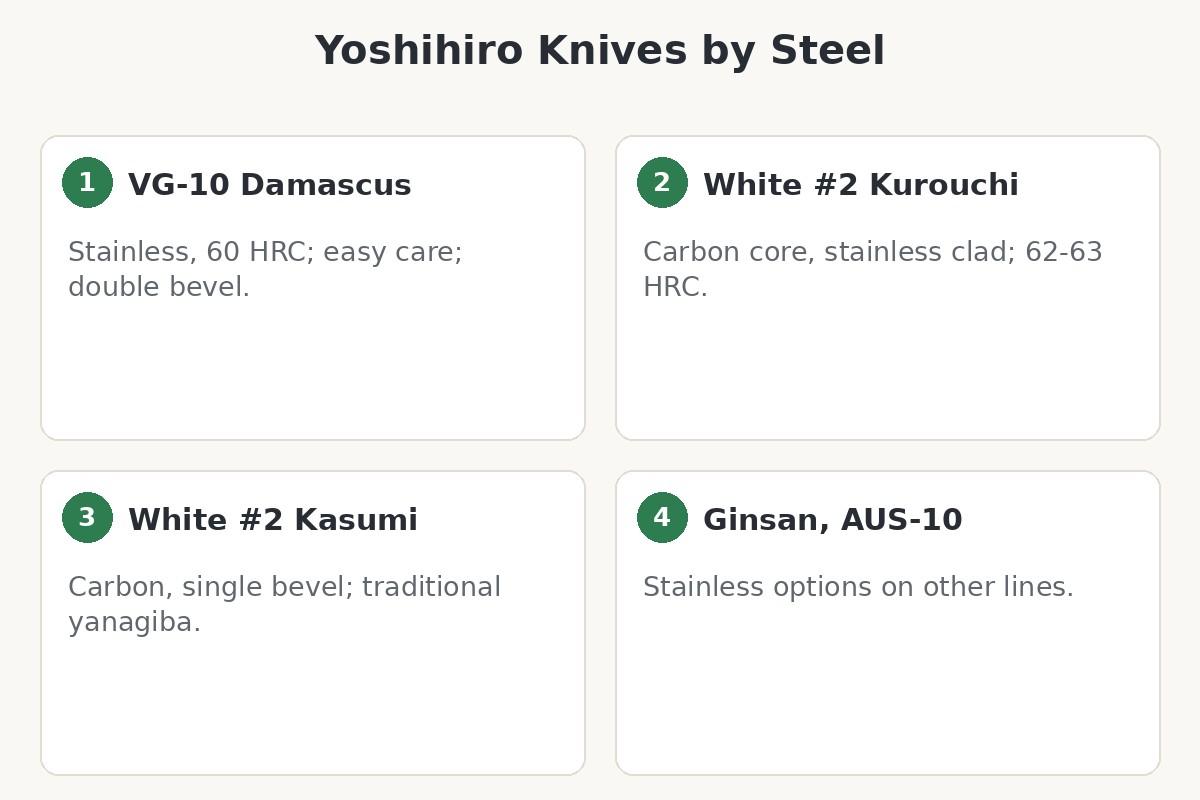
| VG-10 (Damascus clad) | Stainless | About 60 HRC | Easy; resists rust |
| White #2 (Shirogami) | Carbon | About 62–63 HRC | Dry immediately; rusts and stains |
| Ginsan (Silver #3) | Stainless | High | Easy |
| AUS-10 | Stainless | High | Easy |
Carbon steels like White #2 take an extremely keen edge and are easy to sharpen, but they rust if left wet. Stainless steels like VG-10 are much easier to look after.
How we chose: we haven’t lab-tested these knives side by side. We compared blade length and shape, steel, construction (forged or stamped), handle design and the makers’ published specifications, and we favored models with a long track record and consistent owner feedback over newer, unproven listings.
The Best Yoshihiro Knives
1. Yoshihiro VG-10 16-Layer Hammered Damascus Gyuto — Best Overall
Best for: home cooks who want an easy-care Japanese chef’s knife.
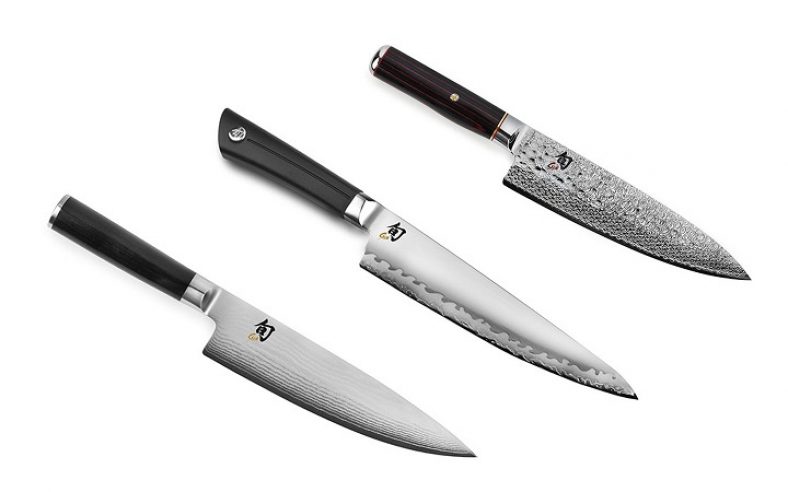
This gyuto has a VG-10 core clad in 16 layers of hammered Damascus stainless steel, hardened to about 60 HRC. It has a double-bevel edge and a Western-style mahogany handle, according to Yoshihiro’s VG-10 16-layer product listings.
The hammered finish helps food release, and the stainless steel is forgiving if you don’t dry it instantly. It’s a great first Japanese knife.
The Western handle feels familiar if you’re used to German knives.
What we like:
- Stainless and easy to care for
- Very sharp double-bevel edge
- Familiar Western handle
What to consider:
- Harder steel can chip on bones
- Pricier than budget Japanese brands
Check the current price of the Yoshihiro VG-10 Damascus Gyuto on Amazon →
2. Yoshihiro White #2 Kurouchi Stainless-Clad Gyuto — Best Carbon-Steel Chef’s Knife
Best for: enthusiasts who want the sharpness of carbon steel with easier care.
This gyuto has a White #2 carbon steel core at 62–63 HRC, clad in stainless steel with a rustic black kurouchi finish, according to Yoshihiro’s Kurouchi gyuto listing.
The stainless cladding reduces rust on the blade face, but the exposed carbon edge still needs drying straight away. It takes and holds a very keen edge.
The traditional wa handle is light and shifts the balance toward the blade.
What we like:
- Exceptionally sharp
- Easy to sharpen
- Stainless cladding reduces rust
What to consider:
- Carbon edge needs careful drying
- Wa handle feels different from Western knives
Check Yoshihiro Kurouchi White #2 gyuto prices on Amazon →
3. Yoshihiro VG-10 Hammered Damascus Nakiri — Best Vegetable Knife
Best for: cooks who prepare lots of vegetables.
This 6.5-inch (165mm) nakiri has a VG-10 core with 16-layer hammered Damascus cladding at about 60 HRC and a double bevel. Its flat edge makes clean push cuts through onions, carrots and cabbage.
The stainless steel keeps care simple, and the double bevel works for both left- and right-handed cooks.
Learn the technique in our guide on how to use a nakiri knife.
What we like:
- Clean, flat-edge cuts
- Stainless and easy care
- Suits either hand
What to consider:
- Vegetables only
- Not for bones or hard squash
Check the current price of the Yoshihiro VG-10 Hammered Nakiri on Amazon →
4. Yoshihiro Kasumi White #2 Yanagiba — Best for Sushi and Sashimi
Best for: sushi enthusiasts and cooks learning traditional Japanese slicing.
This traditional yanagiba has a single-bevel White #2 carbon steel blade rated at 62–63 HRC, with a magnolia D-shaped handle and an oak saya included, according to Yoshihiro’s Kasumi yanagiba listing. It comes in lengths from 240mm to 330mm.
The long, single-bevel blade slices raw fish in one smooth pull, keeping the surface clean and glossy.
It needs careful drying and single-bevel sharpening technique. See our best sushi knife guide for more options.
What we like:
- Traditional single-bevel slicer
- Very keen carbon edge
- Saya included
What to consider:
- Rusts if not dried
- Needs single-bevel sharpening skills
Check Yoshihiro Kasumi White #2 yanagiba prices on Amazon →
5. Yoshihiro VG-10 Damascus Santoku — Best Compact All-Rounder
Best for: cooks who prefer a shorter, flatter all-purpose knife.
Yoshihiro’s VG-10 santoku shares the stainless Damascus construction of its gyuto in a shorter, taller blade. It’s ideal for push cuts and everyday vegetable, fish and boneless meat prep.
Its compact size suits small kitchens and cooks with smaller hands.
Choose a gyuto instead if you like rocking cuts or need extra length.
What we like:
- Compact and easy to control
- Stainless VG-10
- Versatile
What to consider:
- Less reach than a gyuto
- Limited rocking motion
Check Yoshihiro VG-10 santoku prices on Amazon →
6. Yoshihiro Kasumi White #2 Deba — Best for Fish Butchery
Best for: cooks who regularly break down whole fish.
The deba is a thick, single-bevel Japanese knife for heading and filleting fish and cutting through small fish bones. Yoshihiro makes debas in White #2 carbon steel.
Its weight and thick spine let it handle tasks that would chip a thin gyuto or yanagiba.
Like other carbon knives, it needs drying and oiling to prevent rust.
What we like:
- Built for whole-fish prep
- Thick, sturdy spine
- Traditional single bevel
What to consider:
- Specialist knife
- Carbon steel needs care
Check Yoshihiro deba prices on Amazon →
7. Yoshihiro White #2 Kurouchi Nakiri — Best Carbon-Steel Vegetable Knife
Best for: vegetable lovers who want carbon-steel sharpness.
This nakiri pairs a White #2 carbon core with stainless cladding and a rustic kurouchi finish, like the matching gyuto. It produces wafer-thin slices with very little effort.
The stainless cladding makes care easier than a fully carbon knife, though the edge still needs drying immediately.
It’s a beautiful, practical choice for cooks who already own a stainless chef’s knife.
What we like:
- Exceptionally keen edge
- Stainless cladding
- Rustic, traditional look
What to consider:
- Carbon edge needs care
- Vegetables only
Check Yoshihiro Kurouchi nakiri prices on Amazon →

Yoshihiro Knives Review: How to Choose the Right Knife
Stainless or Carbon?
Choose VG-10 or another stainless steel if you want low maintenance. Choose White #2 carbon steel if you want the keenest edge and don’t mind drying the knife carefully every time.
Single or Double Bevel?
Double-bevel knives such as the gyuto, santoku and nakiri cut straight and suit most home cooks. Single-bevel knives such as the yanagiba and deba are specialist tools that need practice and are made for right- or left-handed use.
Our usuba vs nakiri guide explains single and double bevels in more detail.
Western or Japanese Handle?
Western (yo) handles feel familiar and add weight near your hand. Japanese (wa) handles are lighter and move the balance toward the blade, which many experienced cooks prefer.
Which Size?
A 210mm (about 8.25-inch) gyuto suits most home cooks. Professionals often choose 240mm or longer, while a 165mm nakiri or santoku suits smaller boards.
Caring for Yoshihiro Knives

- Hand-wash and dry immediately, especially carbon steel.
- Avoid bones, frozen food and twisting cuts, which can chip hard edges.
- Use wooden or soft plastic boards, never glass or stone.
- Sharpen on whetstones rather than pull-through sharpeners.
- Store in a saya or on a magnetic strip with the spine touching first.
A grey or blue patina will form on carbon steel over time. It’s normal and helps protect the blade; only orange rust needs removing.
Damascus and Kurouchi Finishes
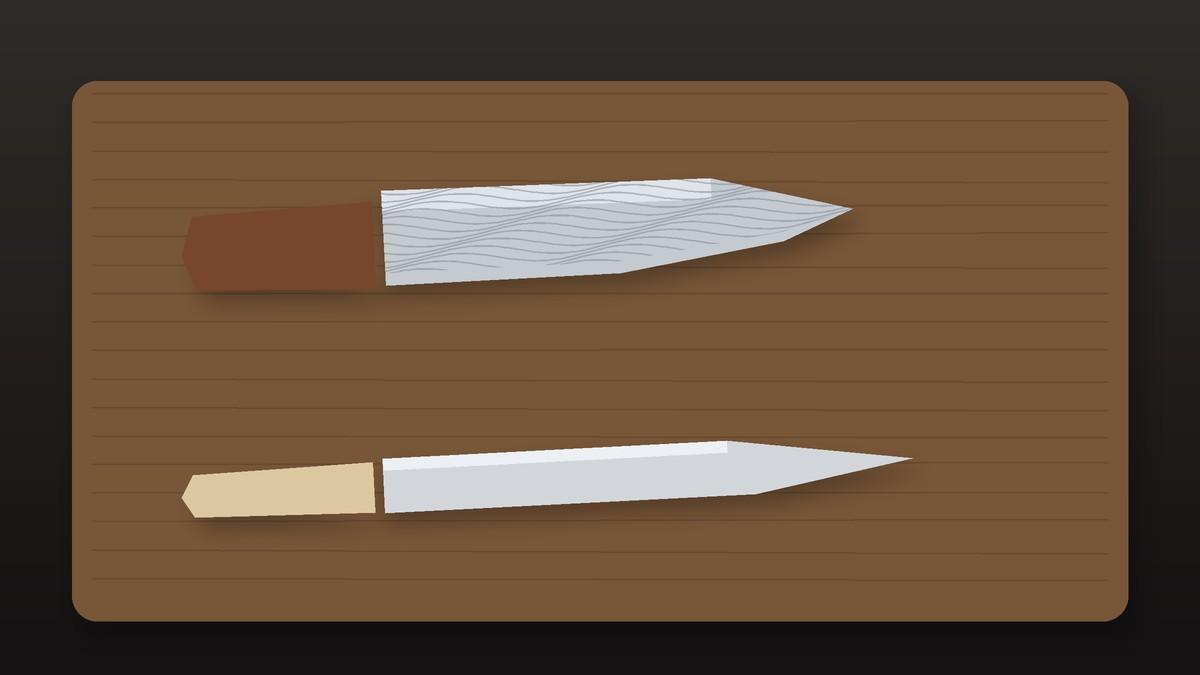
Damascus cladding is made by layering two types of steel and etching them to reveal a pattern. It’s mainly decorative, though it also protects the hard core and can help food release slightly.
Kurouchi is the black, forge-scale finish left on the upper part of the blade. It gives a rustic look and offers a little extra rust protection on carbon-steel knives.
Neither finish changes how sharp the knife is; the core steel and the sharpening do that.
Sharpening Yoshihiro Knives
Use whetstones, starting around 1000 grit for routine sharpening and finishing at 3000–6000 grit. Pull-through sharpeners are too coarse for thin Japanese edges and can chip them.
For double-bevel knives, sharpen both sides at a low, steady angle. For single-bevel knives, sharpen mostly on the bevel side and remove the burr with light strokes on the flat back.
Our guide to sharpening a sushi knife covers single-bevel technique step by step.
Yoshihiro vs Other Japanese Brands
Compared with Shun, Yoshihiro offers more traditional shapes and carbon-steel options, while Shun focuses on polished, mostly stainless knives. Read our Yoshihiro vs Shun comparison for more.
Compared with budget brands like Tojiro, Yoshihiro costs more but offers more traditional Sakai craftsmanship and a wider range of steels.
Is Yoshihiro Worth It?
For anyone who wants a genuine Japanese knife from a traditional knife-making region, yes. The VG-10 gyuto and nakiri are excellent, easy-care starting points.
Carbon-steel and single-bevel Yoshihiro knives reward experienced cooks who enjoy sharpening and caring for their tools. They’re less suited to busy households that want a dishwasher-proof knife.
What Owners Say
Owners consistently praise Yoshihiro knives for their sharpness out of the box, fit and finish, and the beauty of the Damascus and kurouchi blades. Many say they’re a big step up from mass-market knives.
The most common complaints involve rust on carbon steel and small chips from misuse, both of which come down to care. A few owners also find wa handles light at first.
Who Should Buy Yoshihiro?
Yoshihiro suits keen home cooks moving up from German knives, sushi enthusiasts and professionals who want traditional Japanese tools. Beginners are best served by the stainless VG-10 line.
Corrections from Our Older Article
Our previous review listed “doesn’t hold an edge” as a con for knives made from hard VG-10 and carbon steel, which isn’t accurate. It also called a six-knife boxed set a single gyuto and answered the sushi FAQ incorrectly; a yanagiba, not a general-purpose knife, is the right tool for sushi and sashimi.
Buying Tip
Buy from Yoshihiro Cutlery or established Japanese knife retailers so you get genuine knives and clear return terms. Check the exact steel, bevel and handle on each listing, since the same shape often comes in several versions.
If you’re unsure, start with one stainless VG-10 knife and add carbon or single-bevel knives once you’re comfortable with Japanese knife care.
Frequently Asked Questions
Are Yoshihiro knives made in Japan?
Yes, by Yamawaki Hamono in Sakai, Japan.
Which Yoshihiro knife is best for beginners?
The VG-10 16-layer hammered Damascus gyuto, which is stainless and double-beveled.
Will Yoshihiro carbon knives rust?
Yes, if left wet; dry them immediately and oil them occasionally.
Are Yoshihiro knives good for left-handed cooks?
Double-bevel knives suit either hand; single-bevel knives must be bought in a left-handed version.
What Yoshihiro knife is best for sushi?
A single-bevel yanagiba, such as the Kasumi White #2 yanagiba.