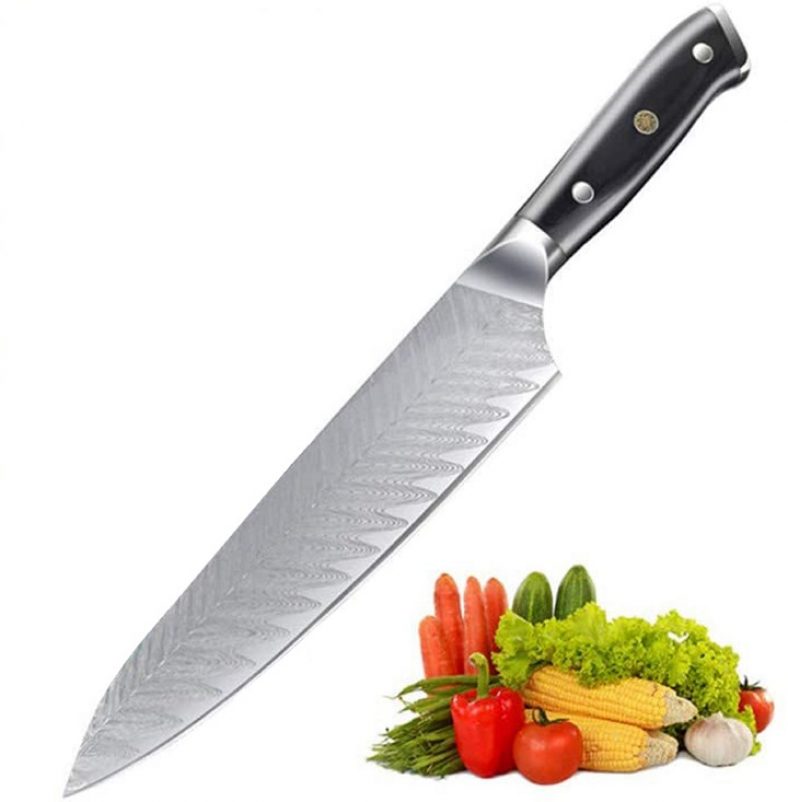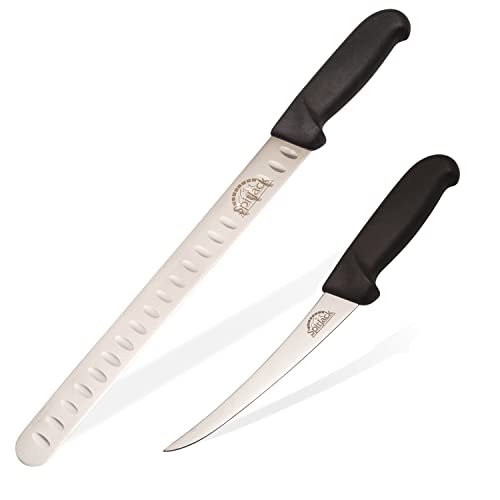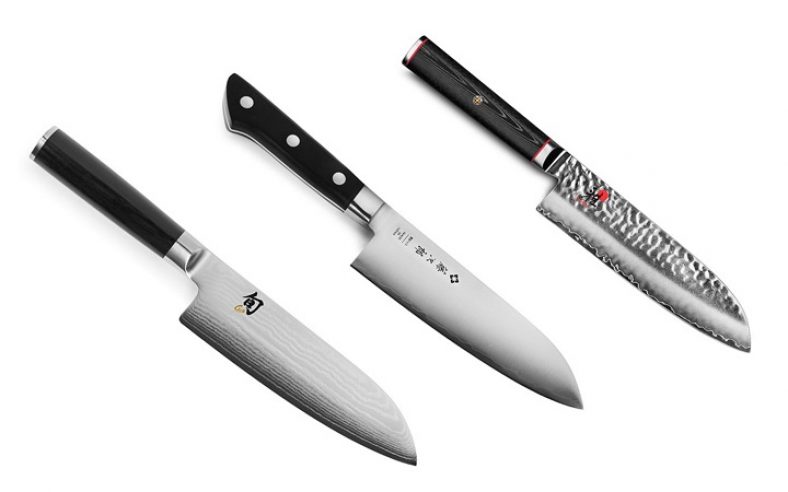
The santoku — “three virtues” in Japanese, usually read as slicing, dicing and mincing — is the most popular Japanese knife in Western kitchens. Compared with a chef’s knife it’s shorter (5–7 inches), flatter, taller and finished with a rounded sheepsfoot tip, which makes it ideal for push cuts, thin slicing and fast vegetable prep. Below are seven of the best santoku knives for every budget, Japanese and German, plus how to choose blade length, steel and hollow edge, and how to use and sharpen one.
Quick Picks
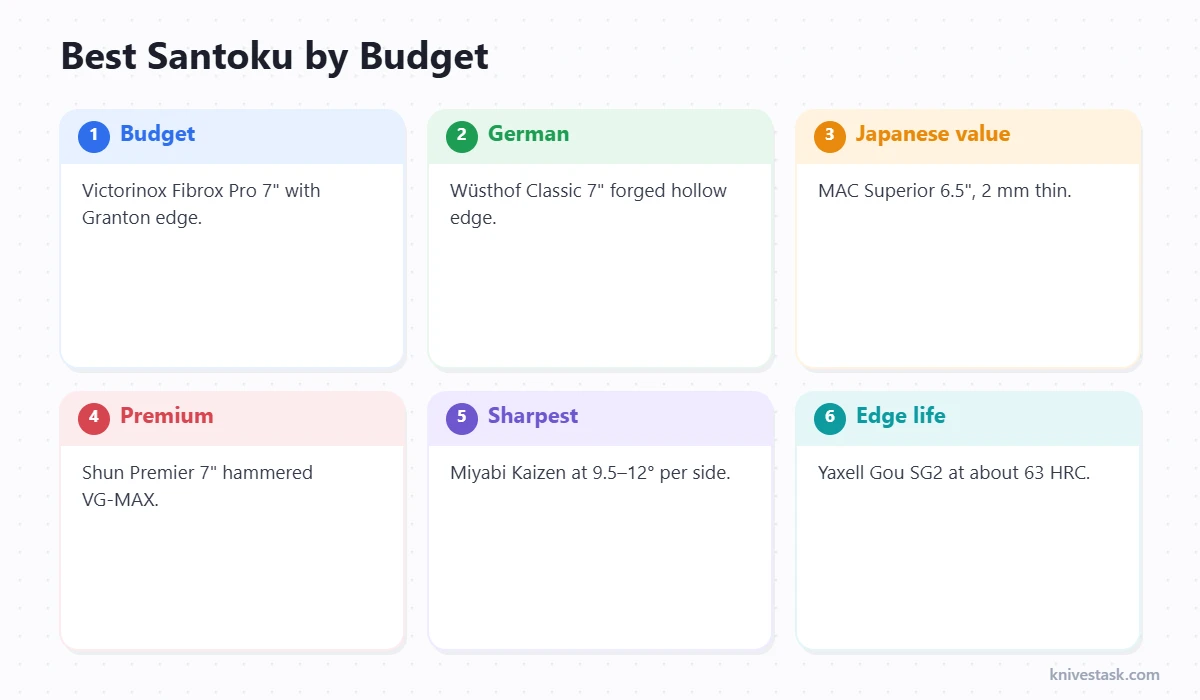
- Best budget: Victorinox Fibrox Pro 7″ — light, grippy, Granton edge.
- Best German: Wüsthof Classic 7″ hollow edge — forged in Solingen.
- Best Japanese value: MAC Superior 6.5″ — 2 mm thin, made in Japan.
- Best premium: Shun Premier 7″ — VG-MAX, hammered Damascus.
- Sharpest: Miyabi Kaizen — 9.5–12° Honbazuke edge.
Knives Task is reader-supported: if you buy through a link on this page, we may earn a small Amazon commission at no extra cost to you. That never changes which knives we recommend.
Our Picks at a Glance
| Knife | Blade | Steel | Hardness | Best for |
|---|---|---|---|---|
| Victorinox Fibrox Pro 7″ | 7″, Granton, stamped | X50CrMoV15 | ~56 HRC | Budget |
| Wüsthof Classic 7″ Hollow Edge | 7″, forged | X50CrMoV15 | ~58 HRC | Durability |
| MAC Superior 6.5″ | 6.5″, 2 mm thin | Japanese stainless | ~59 HRC | Japanese value |
| Cangshan TC 7″ | 7″ | Sandvik 14C28N | ~59 HRC | Value with sheath |
| Shun Premier 7″ | 7″, hammered | VG-MAX | 60–61 HRC | Premium |
| Miyabi Kaizen Hollow Edge | 7″ | VG10 Damascus | ~60 HRC | Sharpest edge |
| Yaxell Gou 6.5″ | 6.5″ | SG2 powder steel | ~63 HRC | Edge retention |
How we chose: we haven’t lab-tested these knives side by side. We compared steel, hardness, blade thickness and height, edge angle, hollow vs plain edge, handle design, published specs and long-term owner feedback.
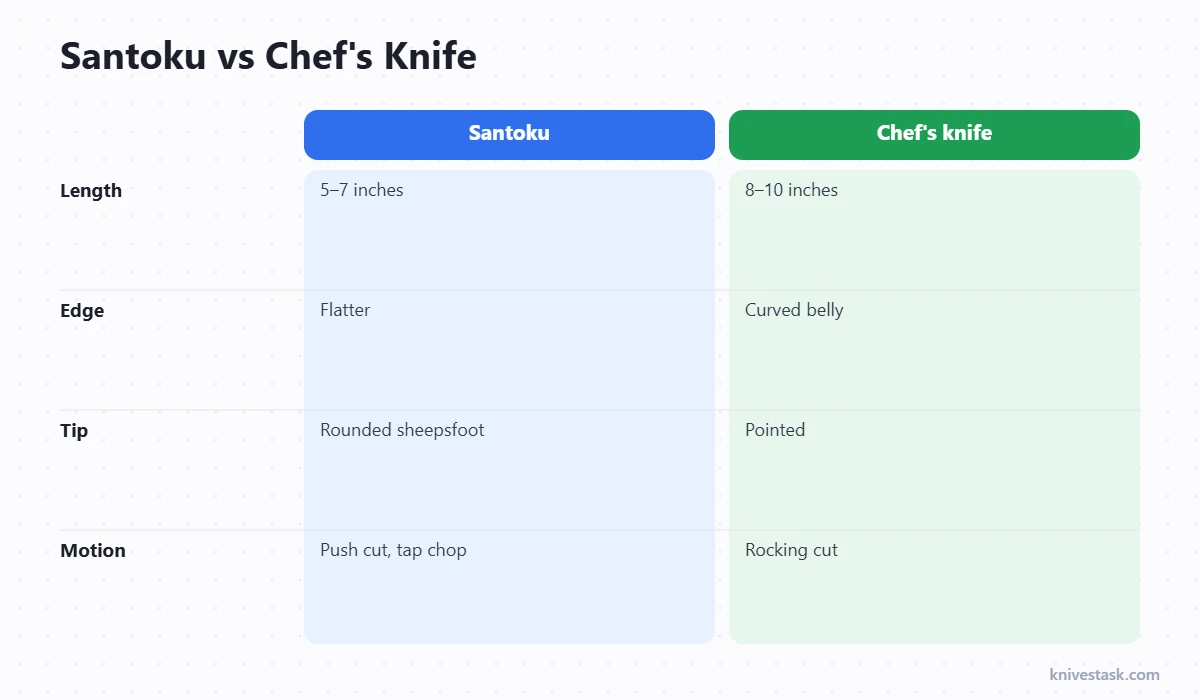
Santoku vs Chef’s Knife
| Feature | Santoku | Chef’s knife (gyuto) |
|---|---|---|
| Typical length | 5–7″ | 8–10″ |
| Edge profile | Flatter | More curved belly |
| Tip | Rounded sheepsfoot | Pointed |
| Best motion | Push cut, tap chop | Rocking cut |
| Best for | Vegetables, thin slicing, smaller hands | All-round prep, large items |
Neither is better — it depends on how you cut. See chef’s knife vs santoku and santoku vs gyuto. The santoku itself evolved in mid-20th-century Japan as a home-cook hybrid of the nakiri and Western chef’s knife.
The Best Santoku Knives
1. Victorinox Fibrox Pro 7-Inch Santoku — Best Budget
Best for: a capable santoku for very little money.
Victorinox’s Fibrox Pro line is a professional-kitchen staple. This stamped 7-inch santoku has a Granton (scalloped) edge for food release and a textured, non-slip handle. It’s light, sharp and easy to sharpen — a low-risk way to try the santoku shape.
- Pros: great value, non-slip handle, Granton edge
- Cons: plain looks, light stamped feel
Check the current price of the Victorinox Fibrox Pro santoku on Amazon →
2. Wüsthof Classic 7-Inch Hollow Edge Santoku — Best German
Best for: cooks who want a durable santoku for heavier use.
Forged in Solingen from one piece of high-carbon stainless (about 58 HRC) with a full tang, triple-riveted handle and hollow-ground edge. Tougher German steel forgives the occasional hard squash or chicken joint, and the extra weight helps with dense vegetables.
- Pros: forged and durable, forgiving steel, hollow edge
- Cons: heavier, bolster complicates heel sharpening
Check the current price of the Wüsthof Classic hollow-edge santoku on Amazon →
3. MAC Superior 6.5-Inch Santoku — Best Japanese Value
Best for: a thin, light, made-in-Japan santoku at a fair price.
MAC is known for thin, very sharp blades; the Superior santoku is about 2 mm thick with a PakkaWood handle. It glides through onions and cucumbers with almost no effort and is a favorite for cooks moving from German to Japanese knives. Dry it promptly to avoid spotting.
- Pros: thin and very sharp, made in Japan, light
- Cons: needs prompt drying, thin edge needs care
Check the current price of the MAC Superior santoku on Amazon →
4. Cangshan TC Series 7-Inch Santoku — Best Value With a Sheath
Best for: a well-made santoku that can live safely in a drawer.
Swedish Sandvik 14C28N stainless (about 59 HRC) with a G10 handle and a magnetic ash-wood sheath. 14C28N is fine-grained, takes a keen edge and resists corrosion. See our Cangshan review for more on the brand.
- Pros: quality Swedish steel, magnetic sheath, G10 handle
- Cons: made in China, sheath adds bulk
Check the current price of the Cangshan TC santoku on Amazon →
5. Shun Premier 7-Inch Santoku — Best Premium
Best for: a beautiful, razor-sharp santoku made in Seki.
A VG-MAX core in Damascus cladding with a hand-hammered tsuchime finish, a 16° edge and a symmetrical walnut PakkaWood handle. The dimples help food release, and the knife is light and agile.
- Pros: stunning hammered Damascus, very sharp, ambidextrous
- Cons: premium price, can chip if misused
Check the current price of the Shun Premier santoku on Amazon →
6. Miyabi Kaizen Hollow Edge Santoku — Sharpest Edge
Best for: cooks who want the keenest edge on this list.
A VG10 core in flower Damascus, ice-hardened to about 60 HRC and hand-honed to 9.5–12° per side, with a black Micarta D-handle. Outstanding for paper-thin slicing.
- Pros: exceptionally sharp, durable Micarta, hollow edge
- Cons: D-handle favors right-handers, fine edge needs care
Check the current price of the Miyabi Kaizen santoku on Amazon →
7. Yaxell Gou 6.5-Inch Santoku — Best Edge Retention
Best for: experienced cooks who want premium powder steel.
An SG2 core (about 63 HRC) clad in many layers of Damascus with a canvas-Micarta handle, made in Seki. SG2 holds an edge for a long time but takes more effort on the stones.
- Pros: outstanding edge retention, made in Seki, durable handle
- Cons: premium price, harder to sharpen
Check the current price of the Yaxell Gou santoku on Amazon →
Hollow Edge or Plain Edge?
A hollow (Granton) edge has oval scallops ground into the blade face that create air pockets so potato, cucumber and cheese slices release. They help a little with sticky foods but don’t make the knife sharper, and plain blades are slightly easier to sharpen over many years. Either is fine.
Choosing the Right Size and Steel
- 7 inches (180 mm): the most versatile, good as a main knife.
- 5–6.5 inches: smaller hands, small kitchens, or as a companion to a chef’s knife.
- Japanese steel (60–63 HRC): sharper, longer-lasting, more chip-prone.
- German steel (56–58 HRC): tougher, more forgiving, easier to hone.
How to Use a Santoku
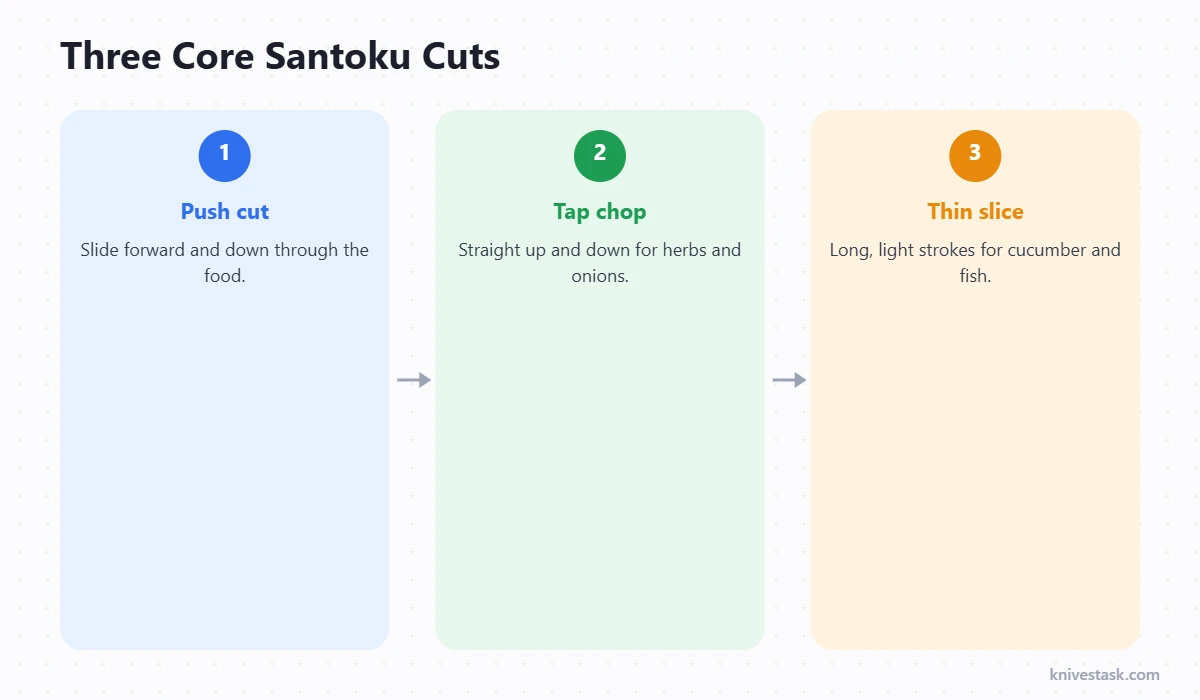
- Push cut: slide forward and down through the food.
- Tap chop: lift the whole blade and bring it straight down for herbs and onions.
- Thin slice: long, smooth strokes for cucumbers, mushrooms and fish.
- Claw grip: curl fingertips so knuckles guide the blade.
- Scoop: use the tall blade to carry food to the pan.
Three techniques worth learning: a fine onion dice (horizontal and vertical cuts toward the root, then slice across), paper-thin cucumber (long strokes, almost no downward pressure) and herb chiffonade (stack, roll and push-cut). More in what a santoku knife is used for.
Caring for a Santoku
- Hand wash and dry immediately.
- Use end-grain wood or soft plastic boards.
- Avoid bones and frozen food, especially with Japanese steel.
- Hone regularly; sharpen on whetstones — see how to sharpen a santoku knife.
- Store in a block, on a magnetic strip or in a sheath — never loose in a drawer.
Who Should Buy a Santoku?
A santoku is a great first knife for cooks with smaller hands or anyone who finds an 8-inch chef’s knife unwieldy, and a great second knife for vegetable-heavy cooking. If you mostly prep vegetables, also consider a nakiri — see nakiri vs santoku. For a deeper look at Japanese kitchen knife shapes, Wikipedia’s overview is a handy reference.
Frequently Asked Questions
What is a santoku knife used for?
Slicing, dicing and mincing vegetables, boneless meat and fish — especially push cuts and thin slices.
Is a santoku better than a chef’s knife?
Neither is better. A santoku suits push cutting and smaller hands; a chef’s knife suits rocking cuts and big items.
What size santoku should I buy?
7 inches is the most versatile; 5–6.5 inches suits smaller hands.
Do hollow edges make a difference?
They help sticky foods release a little but don’t make the knife sharper.
Can a santoku cut meat?
Yes, boneless meat and fish. Avoid bones.
Are German or Japanese santoku knives better?
German santokus are tougher and easier to maintain; Japanese ones are sharper and lighter.