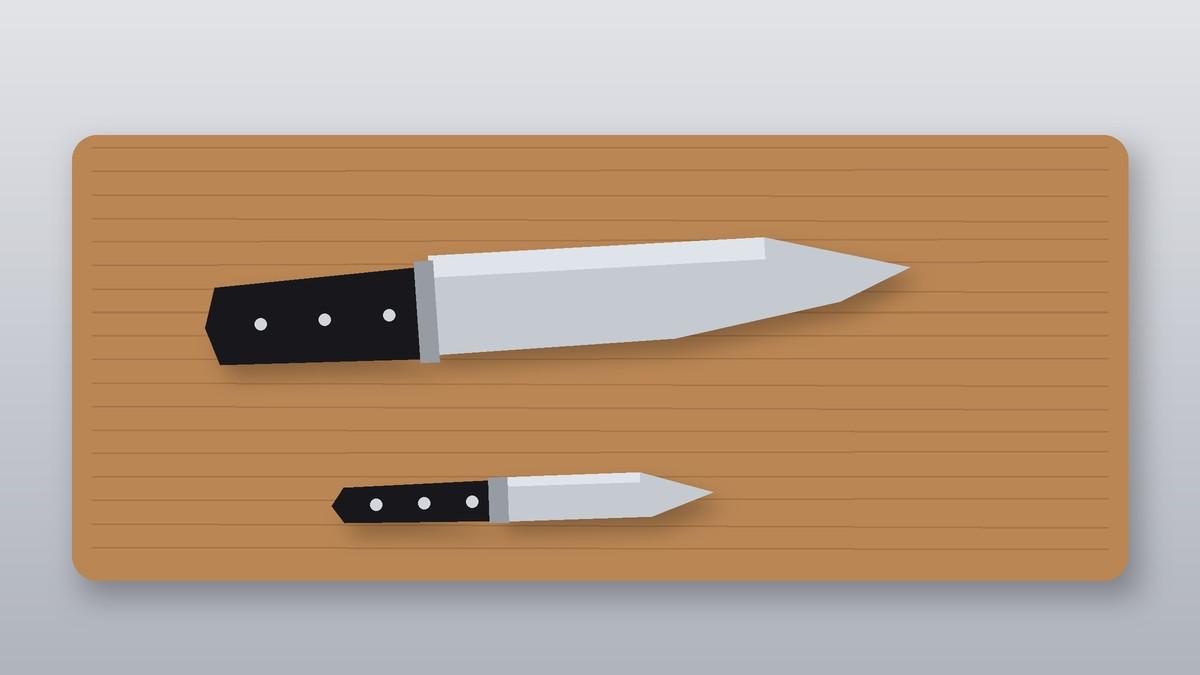

Choosing the best boning knife starts with knowing the job. A boning knife has a narrow, pointed, 5–7 inch blade that slips between meat and bone, so you can debone chicken thighs, trim pork shoulder, remove silver skin from tenderloin or skin a fish fillet without wasting meat. The two decisions that matter most are flex (flexible, semi-stiff or stiff) and shape (curved or straight). Below are the best boning knives for meat, poultry and fish — from butcher-shop Victorinox to premium Shun — plus how to choose one and step-by-step deboning techniques.
Quick Picks
- Best overall: Victorinox Fibrox Pro 6″ curved, semi-stiff — the butcher-shop standard.
- Best for poultry and fish: Victorinox Fibrox Pro 6″ flexible.
- Best forged: Mercer Genesis 6″ flexible — heavier and balanced.
- Best premium: Shun Classic 6″ boning and fillet — VG-MAX steel.
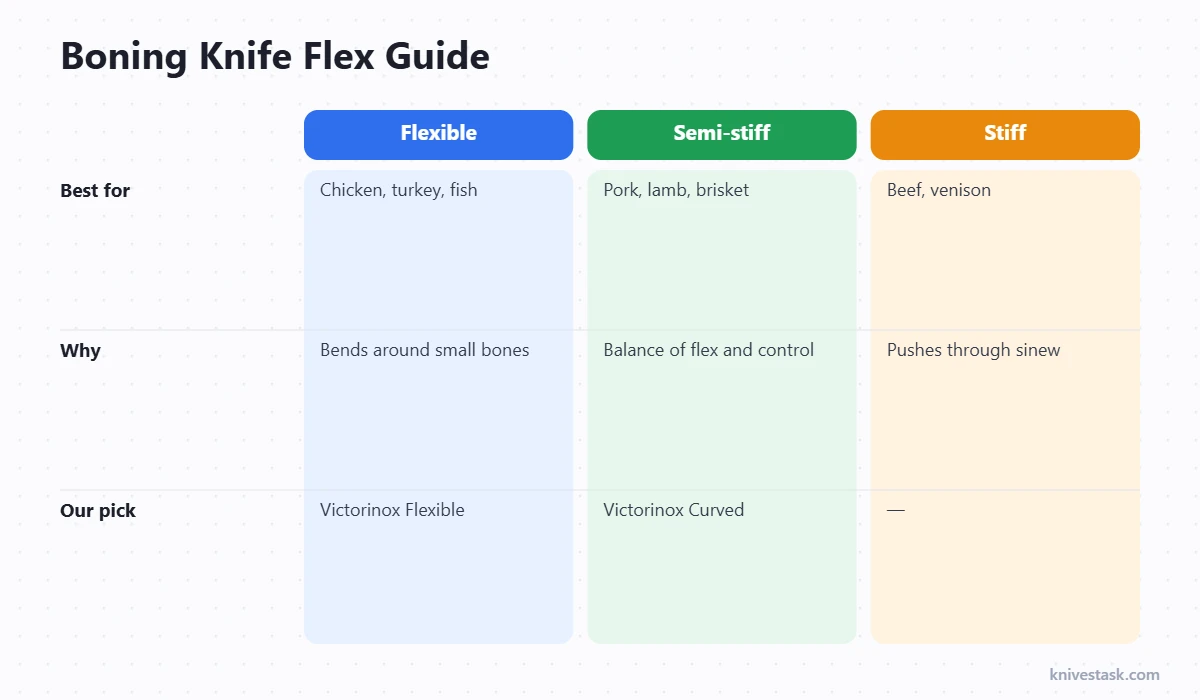
- Flex rule of thumb: flexible for poultry and fish, semi-stiff for pork and lamb, stiff for beef and game.
Knives Task is reader-supported: if you buy through a link on this page, we may earn a small Amazon commission at no extra cost to you. That never changes which knives we recommend.
Our Picks at a Glance
| Pick | Blade | Flex | Best for |
|---|---|---|---|
| Victorinox Fibrox Pro 6″ Curved, Semi-Stiff | Curved, stamped | Semi-stiff | Best overall |
| Victorinox Fibrox Pro 6″ Flexible | Straight, stamped | Flexible | Poultry and fish |
| Mercer Genesis 6″ Flexible | Forged | Flexible | Forged feel |
| Wüsthof Gourmet 6″ Flexible | Laser-cut | Flexible | German-made |
| Shun Classic 6″ Boning & Fillet | VG-MAX, curved | Semi-flex | Premium |
| Mercer Ultimate White 6″ Curved | Curved, stamped | Semi-stiff | Tight budgets |
How we chose: we haven’t lab-tested these knives side by side. We compared blade flex, curve, length, steel, handle grip when greasy, construction, published specs and long-term feedback from home cooks, butchers and pitmasters.
The Best Boning Knives
1. Victorinox Fibrox Pro 6-Inch Curved, Semi-Stiff — Best Overall
Best for: most home cooks, and anyone breaking down pork, beef, lamb or whole chickens.
The curved, semi-stiff blade follows the contour of bones while keeping enough backbone for tough connective tissue — that’s why it’s a fixture in butcher shops and barbecue kits. The textured Fibrox handle stays secure with greasy hands. It handles chicken, pork shoulder, lamb and brisket trimming with ease, and it’s cheap enough to own two.
- Pros: ideal flex-to-control balance, non-slip handle, great value
- Cons: not flexible enough for delicate fish, utilitarian look
Check the current price of the Victorinox Fibrox Pro curved boning knife on Amazon →
2. Victorinox Fibrox Pro 6-Inch Flexible — Best for Poultry and Fish
Best for: deboning chicken and turkey, and skinning fish fillets.
The flexible straight blade bends around small bones, follows the keel of a chicken breast and slides under fish skin. It doubles as a fillet knife for trout and mackerel. Pair it with the semi-stiff curved knife and you’ll cover almost every boning job at home.
- Pros: bends neatly around bones, great for skinning, low price
- Cons: too floppy for heavy beef or pork
Check the current price of the Victorinox Fibrox Pro flexible boning knife on Amazon →
3. Mercer Genesis 6-Inch Flexible — Best Forged Boning Knife
Best for: cooks who prefer a heavier, more substantial knife.
Forged from German X50CrMoV15 with a grippy Santoprene handle and NSF certification, the Genesis feels sturdier and more balanced than stamped boning knives without a big price jump. The flexible blade suits poultry and fish best.
- Pros: forged balance, comfortable grip, fair price
- Cons: heavier than Victorinox
Check the current price of the Mercer Genesis boning knife on Amazon →
4. Wüsthof Gourmet 6-Inch Flexible — Best German-Made Option
Best for: cooks who want a Solingen boning knife to match a Wüsthof set.
Laser-cut in Solingen from Wüsthof’s 58 HRC stainless, the Gourmet boning knife is thin, light and flexible — well suited to poultry and fish. A natural match if you own Wüsthof knives; otherwise the Victorinox does most of the same work for less.
- Pros: thin flexible blade, German-made, light
- Cons: you pay for the name
Check the current price of the Wüsthof Gourmet flexible boning knife on Amazon →
5. Shun Classic 6-Inch Boning and Fillet Knife — Best Premium
Best for: keen cooks who want a beautiful knife with a long-lasting edge.
A VG-MAX core in Damascus cladding (60–61 HRC) with a narrow, curved blade that works for both boning and filleting, and a D-shaped PakkaWood handle. The hard steel holds a keen edge for precision work like silver skin and fish skin — but don’t twist it against bone.
- Pros: very sharp, long-lasting edge, boning and filleting
- Cons: expensive, can chip if twisted, favors right-handers
Check the current price of the Shun Classic boning and fillet knife on Amazon →
6. Mercer Ultimate White 6-Inch Curved — Best Budget
Best for: occasional use or a spare for barbecue season.
A simple, inexpensive curved boning knife with a textured white handle (common in color-coded commercial kitchens). It trims and debones well for the money; expect to hone it more often.
- Pros: very low price, curved blade, grippy handle
- Cons: shorter edge life, basic finish
Check the current price of the Mercer Ultimate White boning knife on Amazon →
How to Choose a Boning Knife
Flexible, Semi-Stiff or Stiff
| Flex | Best for | Why |
|---|---|---|
| Flexible | Chicken, turkey, fish | Bends around small bones and under skin |
| Semi-stiff | Pork, lamb, whole chickens, brisket | Best all-round balance |
| Stiff | Beef, venison, heavy trimming | Pushes through tough sinew |
Curved or Straight
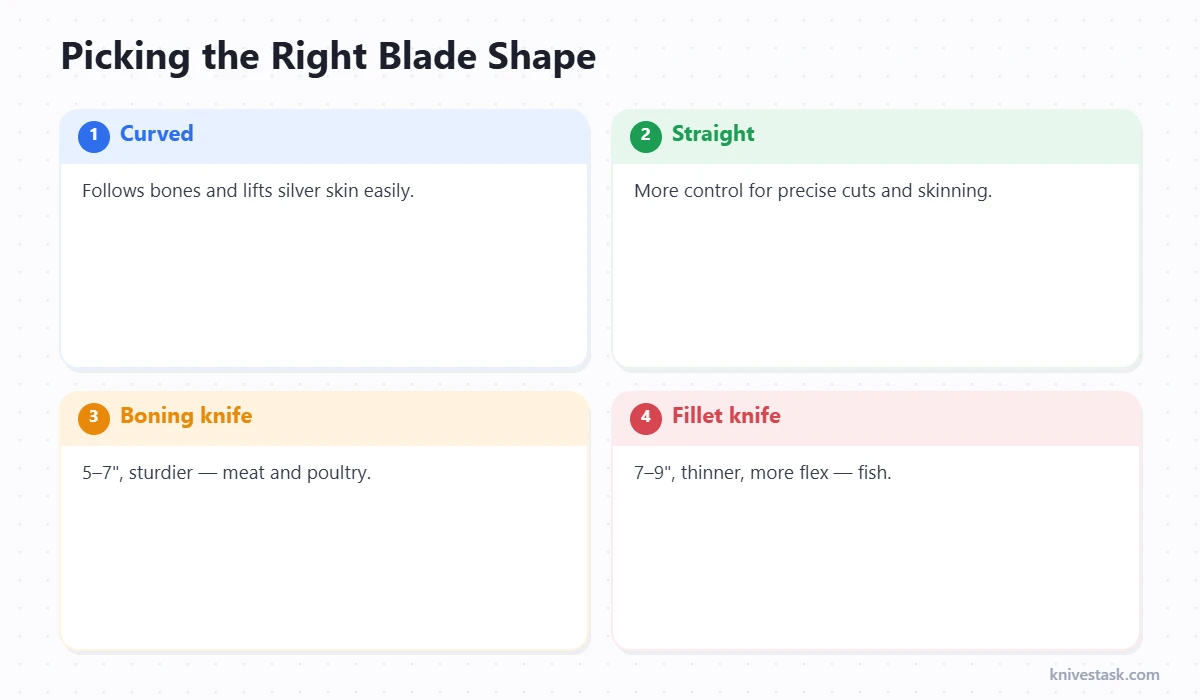
A curved blade follows bones and peels away silver skin more easily; a straight blade gives more control for precise cuts and skinning fillets.
Length, Handle and Construction
Five to six inches suits most home kitchens; longer blades help with game processing but are harder to steer around small joints. Boning is greasy work, so a textured, non-slip handle (Fibrox, Santoprene, polypropylene) is a genuine safety feature. Most professional boning knives are stamped because thin, light blades steer more easily; forged versions add heft some cooks prefer.
Boning Knife vs Fillet Knife
A fillet knife is longer (7–9″), thinner and more flexible, made for separating fish fillets from the frame. A boning knife is shorter and sturdier for meat and poultry. If you mostly cook fish, add a dedicated fillet knife; for meat, a boning knife is better.
Which Boning Knife for Which Job?
- Chicken and turkey: flexible — see the best boning knife for chicken.
- Brisket and pork: semi-stiff and curved — see the best boning knife for brisket.
- Deer and game: stiffer blade with a sheath — see the best boning knife for deer.
- Fish: flexible, or a dedicated fillet knife for big fish.
How to Debone a Chicken Thigh
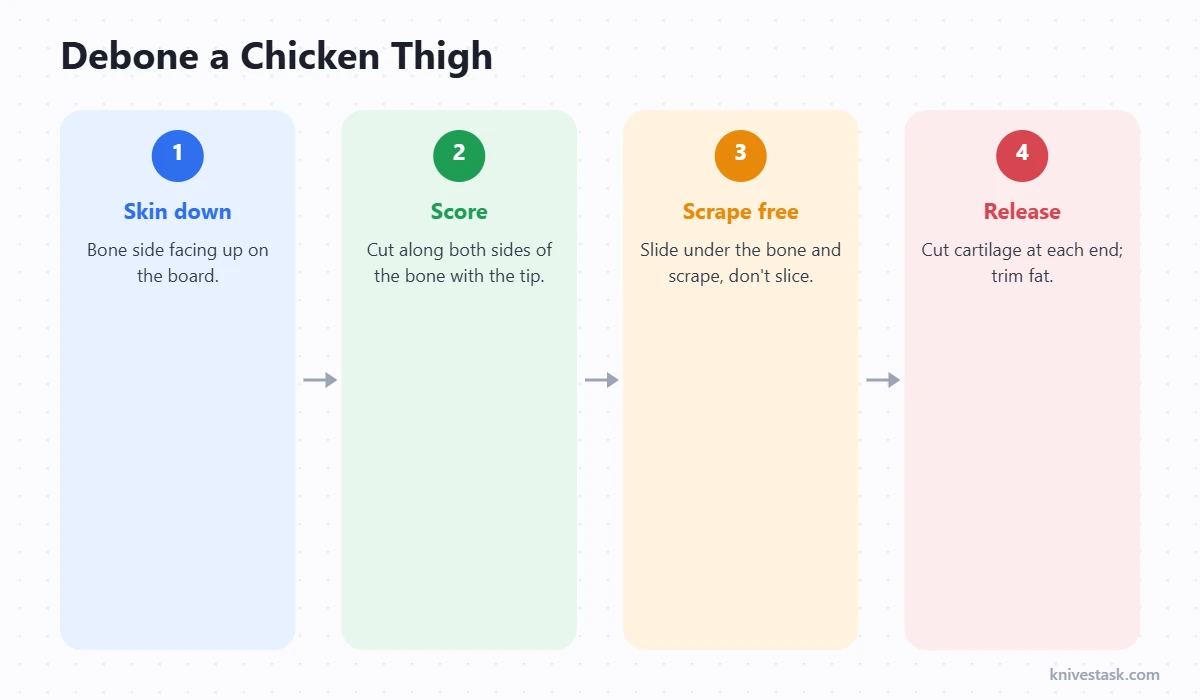
- Place the thigh skin-side down, bone facing up.
- Score along both sides of the bone with the tip, keeping the blade against it.
- Slide under the bone and scrape it free rather than slicing.
- Cut the cartilage at each end to release the bone, then trim excess fat.
Keep the edge angled toward the bone, not the meat. More techniques in how to use a boning knife.
How to Skin a Fish Fillet
Lay the fillet skin-side down, cut down to the skin at the tail, grip the skin with a paper towel, angle a flexible blade slightly toward the board and wiggle forward while pulling the skin the other way.
How to Trim Silver Skin
Slide the tip under one end of the membrane, angle the blade slightly upward, hold the loose end taut and run the edge along its length.
Safety, Sharpening and Care
- Cut away from yourself and keep your guiding hand behind the blade; a cut-resistant glove is a smart investment.
- Work on a stable board with a damp towel underneath; wipe greasy handles often.
- Hone before each session — fat and cartilage dull edges fast.
- Sharpen at the original angle (about 15–20° per side) and go gently at the narrow tip.
- Hand wash and dry immediately.
See how to sharpen kitchen knives for the basics.
Common Mistakes
- Using a chef’s knife — its wide blade can’t follow bones.
- Too much flex for beef — a floppy blade wanders and tires your hand.
- Prying with the tip — thin tips snap.
- Letting it go dull — hone often.
Frequently Asked Questions
What’s the difference between a boning knife and a fillet knife?
A fillet knife is longer, thinner and more flexible for fish; a boning knife is shorter and sturdier for meat and poultry.
Should I get a flexible or stiff boning knife?
Flexible for poultry and fish, semi-stiff as an all-rounder, stiff for beef and game.
Can I trim brisket with a boning knife?
Yes — a curved, semi-stiff boning knife is one of the best brisket-trimming tools.
What length boning knife should I buy?
Six inches covers most home jobs.
Can a boning knife cut through bone?
No. It works around bones; use a cleaver or saw to cut through them.
Related: best carving knives · best knife for cutting meat