Quick Summary
- Best value: German-steel lines like D and V2, with forged X50CrMoV15 blades.
- Best for sharpness: TS and TC lines with Swedish Sandvik 14C28N steel and magnetic sheaths.
- Best premium: Thomas Keller Signature Collection with Swedish powder steel.
- Good to know: Cangshan knives are made in Yangjiang, China, a major knife-making center.
- Verdict: well-designed knives with named steels at fair prices; check the series before buying.
Knives Task is reader-supported: if you buy through a link on this page, we may earn a small Amazon commission at no extra cost to you. That never changes which knives we recommend.
Cangshan is a cutlery brand founded by Henry Liu, named after a mountain range in southern China. Its knives are manufactured in Yangjiang, one of China’s main knife-making cities.
The brand stands out for its distinctive, award-winning designs and its use of clearly named steels from Germany, Sweden and Japan. That makes it easy to compare with established brands.
This review explains Cangshan’s main series and who each one suits.
Cangshan Series at a Glance
| Series | Steel | Handle | Best for |
|---|---|---|---|
| S1, D, V2, Y2 | German X50CrMoV15 | Synthetic | Everyday value |
| H1 | German X50CrMoV15 | Teak | Natural wood look |
| TS, TC, TG | Swedish Sandvik 14C28N | G10, with sheaths | Sharpness and storage |
| J series | VG-10 Damascus | African blackwood | Japanese-style premium |
| Thomas Keller Signature | Swedish powder steel | Synthetic | Premium performance |
How we chose: we haven’t lab-tested these knives side by side. We compared blade length and shape, steel, construction (forged or stamped), handle design and the makers’ published specifications, and we favored models with a long track record and consistent owner feedback over newer, unproven listings.
Steel and construction details come from Cangshan’s product listings. Prices change often, so check before buying.
Understanding Cangshan’s Steels
- German X50CrMoV15: the same family of steel used by many German brands; tough, stain-resistant and easy to sharpen, around 58 HRC.
- Swedish Sandvik 14C28N: a fine-grained stainless steel that takes a keen edge; Cangshan claims it holds an edge longer than its German steel.
- VG-10: a Japanese stainless steel known for edge retention, here with Damascus cladding.
- Swedish powder steel: used in the Thomas Keller line for a hard, long-lasting edge.
Cangshan also markets a multi-step heat treatment it calls ULTRA6. As with any brand’s heat-treatment claims, judge the knife by the steel and how it performs for you.
The Best Cangshan Knives
1. Cangshan D Series 8-Inch Chef’s Knife — Best Value Chef’s Knife
Best for: cooks who want a forged German-steel chef’s knife with a distinctive design.
The D Series is forged from German X50CrMoV15 steel with a full tang. It has a sharper, Asian-style edge than many traditional German knives, according to the listing.
That gives it a keener feel while keeping the toughness of German steel. The handle is designed for a comfortable pinch grip.
It’s a good everyday chef’s knife at a moderate price.
What we like:
- Forged German steel
- Keen edge
- Comfortable handle
What to consider:
- Flatter profile suits slicing more than rocking
- Not made in Germany
Check the current price of the Cangshan D Series chef’s knife on Amazon →
2. Cangshan V2 Series 8-Inch Chef’s Knife — Best Classic Style
Best for: cooks who like a traditional German look with a modern twist.
The V2 Series uses forged German X50CrMoV15 steel with a classic-style handle and a patented angled bolster. Many cooks compare its look to traditional German forged knives.
The angled bolster supports a pinch grip while leaving room to sharpen the heel. It feels solid and balanced.
If you like German knives but want something less expensive, the V2 is worth a look.
What we like:
- Classic forged feel
- Angled bolster
- Good value
What to consider:
- Heavier than Japanese knives
- Classic styling won’t suit everyone
Check the current price of the Cangshan V2 chef’s knife on Amazon →
3. Cangshan TS Series 3.5-Inch Paring Knife — Best Swedish Steel
Best for: cooks who want a keen, durable paring knife with a protective sheath.
The TS Series uses Swedish Sandvik 14C28N steel, rated around 59 HRC in the listing, with a G10 handle and a magnetic ash wood sheath.
A sheathed paring knife can live safely in a drawer or picnic kit. Sandvik steel takes a fine edge that suits peeling and trimming.
Cangshan’s TC Series uses the same steel in a different style; our best santoku knives guide features the TC santoku.
What we like:
- Keen Swedish steel
- Magnetic sheath
- Tough G10 handle
What to consider:
- Sheath adds bulk
- Small knife for the price
Check the current price of the Cangshan TS paring knife on Amazon →
4. Cangshan J Series 8-Inch VG-10 Damascus Chef’s Knife — Best Japanese Style
Best for: cooks who want a Damascus-clad VG-10 knife with a striking wooden handle.
The J Series pairs a VG-10 core with Damascus cladding and an African blackwood handle, rated around 60 HRC in the listing. It comes with a walnut saya-style sheath.
It’s a good-looking knife that offers Japanese-style sharpness at a lower price than many made-in-Japan brands.
Wooden handles need drying and occasional oiling, and the hard edge should be kept away from bones.
What we like:
- VG-10 core
- Beautiful blackwood handle
- Saya-style sheath
What to consider:
- Not made in Japan
- Wood handle needs care
Check the current price of the Cangshan J Series chef’s knife on Amazon →
5. Cangshan Thomas Keller Signature 8-Inch Chef’s Knife — Best Premium
Best for: cooks who want Cangshan’s highest-performance steel.
The Thomas Keller Signature Collection was developed with the well-known American chef Thomas Keller. It uses Swedish powder steel, which can hold an edge for a long time.
The design is clean and functional rather than flashy. It’s Cangshan’s most premium line and is priced accordingly.
The collection also includes a 7-inch knife and a steak knife set.
What we like:
- Premium powder steel
- Developed with a renowned chef
- Clean design
What to consider:
- Higher price
- Harder steels take more effort to sharpen
Check the current price of the Cangshan Thomas Keller Signature chef’s knife on Amazon →
6. Cangshan H1 Series 4-Piece Leather Roll Set — Best for Traveling Cooks
Best for: cooks who take knives to work, classes or holiday rentals.
The H1 Series uses German X50CrMoV15 steel with solid teak handles, and this set comes in a leather roll. The listing notes a German Design Award honorable mention for the design.
A roll keeps knives organized and protected in transit. Teak handles look warm and natural but need hand washing and drying.
Check the listing for the four knives included.
What we like:
- Leather roll included
- Teak handles
- Tough German steel
What to consider:
- Wood handles need care
- Only four pieces
Check the current price of the Cangshan H1 4-piece leather roll set on Amazon →
Cangshan Block Sets
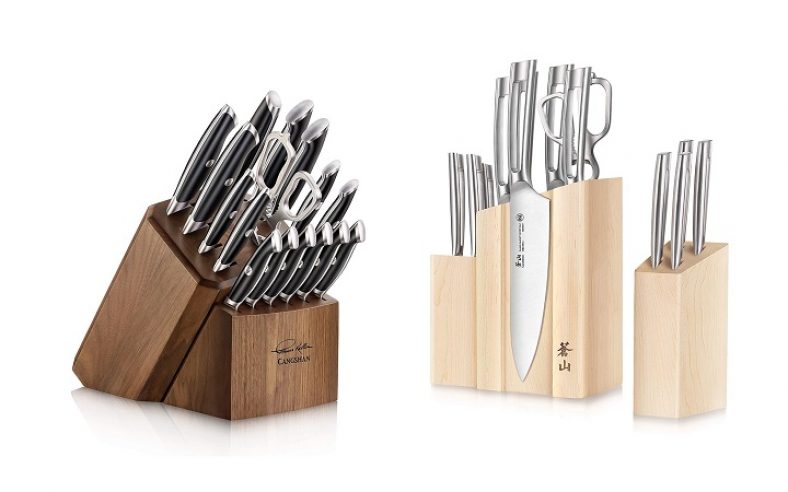
If you want a full kitchen set, the Cangshan S1 Series 17-piece block set uses forged German steel and includes a wide range of knives, steak knives and shears. Large sets include pieces you may rarely use, so compare the contents with how you cook.
Design and Handles
Cangshan’s designs are its biggest selling point. Many lines use sculpted handles, angled bolsters and tapered tangs that look different from traditional knives.
The brand promotes several design awards in its listings. Good looks only matter if the knife is comfortable, so check the handle shape suits your grip before buying a large set.
| Handle material | Lines | What to expect |
|---|---|---|
| Synthetic polymer | S1, D, V2, Y2 | Durable, low maintenance |
| G10 fiberglass | TS, TC, TG | Very tough, grippy when wet |
| Teak | H1 | Warm look, needs drying and oiling |
| African blackwood | J Series | Dense and beautiful, needs care |
Sheaths and Storage
Several Cangshan lines come with magnetic wooden sheaths, which is unusual at these prices. They protect the edge in a drawer, on a picnic or in a travel bag.
Wipe the sheath dry and keep it out of the dishwasher. Make sure the knife is dry before you slide it back in, so moisture isn’t trapped against the blade.
What to Check When Your Knife Arrives
- Edge: it should be even from heel to tip, with no chips or rolled spots.
- Handle fit: scales and bolster should sit flush, with no gaps.
- Sheath fit: the knife should click in securely and not rattle.
Where Are Cangshan Knives Made?
Cangshan knives are made in Yangjiang, China, which produces a large share of the world’s kitchen knives. The brand names its steels clearly, which helps you judge quality.
Country of manufacture matters less than the steel, heat treatment and quality control. That said, if you specifically want a made-in-Germany or made-in-Japan knife, look at brands like Wüsthof, Zwilling or Shun.
Cangshan Compared With Other Brands
| Feature | Cangshan | Wüsthof | Shun |
|---|---|---|---|
| Made in | China | Germany | Japan |
| Steels | German, Swedish, VG-10, powder | German X50CrMoV15 | VG-MAX, VG10, SG2 |
| Design | Modern, award-winning | Classic | Elegant Japanese |
| Price | Low to mid | Mid to high | Mid to high |
For a direct comparison with a German brand, read Cangshan and Henckels compared.
Who Should Buy Cangshan?
- Good fit: cooks who want named steels and modern designs at fair prices.
- Good fit: people who like knives with sheaths for drawer storage.
- Less ideal: buyers who want a heritage brand or a specific country of manufacture.
Caring for Cangshan Knives
- Hand wash and dry immediately, even if a listing says dishwasher-safe.
- Dry and oil wooden handles occasionally to prevent cracking.
- Hone regularly and sharpen on whetstones at the factory angle.
- Use the sheaths: they protect the edge and your fingers.
Our Verdict
Cangshan makes well-designed knives with clearly named steels at prices below many heritage brands. The German-steel D and V2 lines are great value, and the Swedish-steel TS and TC lines are a step up in sharpness.
If you value design and good steel for the money, Cangshan is a strong choice. If heritage and country of origin matter most, established German and Japanese brands remain the safer bet.
Which Cangshan Series Should You Choose?
| If you want… | Choose |
|---|---|
| A tough, affordable everyday knife | D or V2 Series |
| Warm wooden handles | H1 Series |
| A keener edge and a sheath | TS or TC Series |
| A Damascus look | J Series |
| The best edge retention | Thomas Keller Signature |
Start with a chef’s knife in the series you like, then add a paring knife and a bread knife. That small kit covers almost every kitchen job.
Buying single knives first also lets you check that the handle suits your hand before you commit to a large matching set.
Warranty and Support
Cangshan offers a warranty against manufacturing defects, but terms vary by product and retailer. Check the current warranty on Cangshan’s website or the listing before you buy, and keep your proof of purchase.
Like any warranty, it won’t cover chips or bent tips caused by cutting bones, frozen food or using a dishwasher.
Sharpening Cangshan Knives
German-steel Cangshan knives sharpen quickly on a medium whetstone, while the Swedish and powder-steel lines take a little longer but hold their edges for more time. Keep to the factory angle and finish with a fine stone or strop.
Common Complaints About Cangshan
Some owners find the modern handle shapes take getting used to, and wooden handles on some lines need more care than synthetic ones. As with any knife, edge damage usually comes from bones, hard boards or the dishwasher.
Frequently Asked Questions
Are Cangshan knives good?
Yes, they offer good steels and thoughtful designs for the money, though they lack the long track record of heritage brands.
Where are Cangshan knives made?
In Yangjiang, China.
What steel does Cangshan use?
German X50CrMoV15, Swedish Sandvik 14C28N, Japanese VG-10 and Swedish powder steel, depending on the series.
Are Cangshan knives dishwasher safe?
Hand washing is recommended to protect the edge and handle, whatever the listing says.
Which Cangshan series is best?
D and V2 for value, TS and TC for sharpness, and Thomas Keller Signature for premium performance.
Can I sharpen Cangshan knives at home?
Yes. Use whetstones at the factory angle and hone regularly between sharpenings.