Quick Summary
- Classic pocket knife: the Higonokami, a simple friction folder made in Miki, Hyogo.
- For carving: the kiridashi, a small single-bevel knife for whittling and fine work.
- For wood: the nata, a Japanese hatchet-like tool for brush and kindling.
- Modern folders: several Western brands make knives in Seki, Japan’s knife-making city.
- Watch out: many “Japanese” outdoor knives sold online aren’t made in Japan.
Japan has a long tradition of making excellent blades, from kitchen knives to woodworking tools. Its outdoor knives are less famous, but they’re just as interesting and practical.
This guide explains the main types of Japanese outdoor knives and tools, the steels they use and how to care for them. It also explains how to spot listings that use “Japanese” as marketing rather than a fact.
Japanese Outdoor Knives at a Glance
| Tool | Type | Best for |
|---|---|---|
| Higonokami | Friction folder, no lock | Light cutting, food, whittling |
| Kiridashi | Small fixed single-bevel blade | Carving, marking, fine cuts |
| Nata | Heavy chopping blade | Brush clearing, splitting kindling |
| Seki-made folders | Modern locking folders | Everyday carry and camping |
| Japanese pull saws | Folding or fixed saws | Cutting branches and firewood |
Why Japanese Blades Have Such a Reputation
Japanese bladesmithing grew out of centuries of swordmaking. Cities such as Seki in Gifu Prefecture, and Sakai near Osaka, still make large numbers of knives today.
Japanese makers are known for hard steels, keen edges and laminated construction. A hard core steel is often clad in softer outer layers, which adds toughness and makes sharpening easier.
The Higonokami: Japan’s Classic Pocket Knife
The Higonokami is a simple folding knife with a pressed metal handle and a lever, called the chikiri, at the back of the blade. It has no lock; you hold the blade open by pressing your thumb on the lever.
Traditional versions are made by Nagao Kanekoma in Miki, Hyogo Prefecture, and many use laminated carbon steel blades. They’re light, inexpensive and take a very sharp edge.
Because there’s no lock, a Higonokami is best for light cutting, food prep and whittling. Avoid hard prying or stabbing cuts that could close the blade on your fingers.
The Kiridashi: A Small Carving Knife
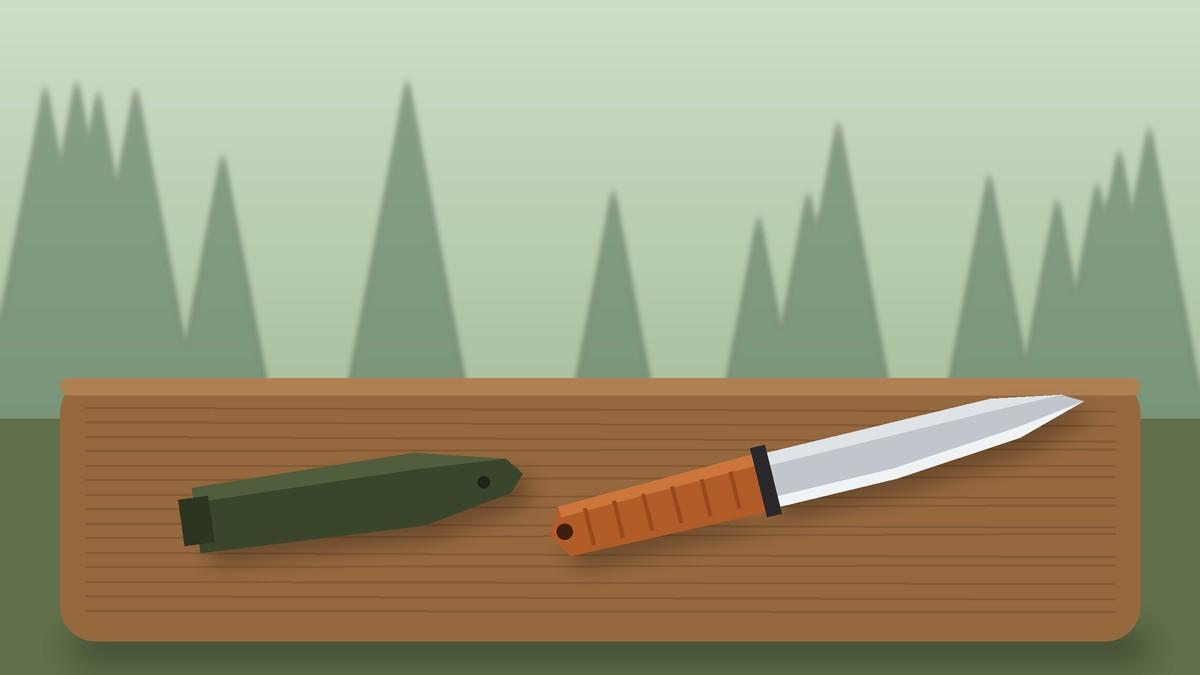
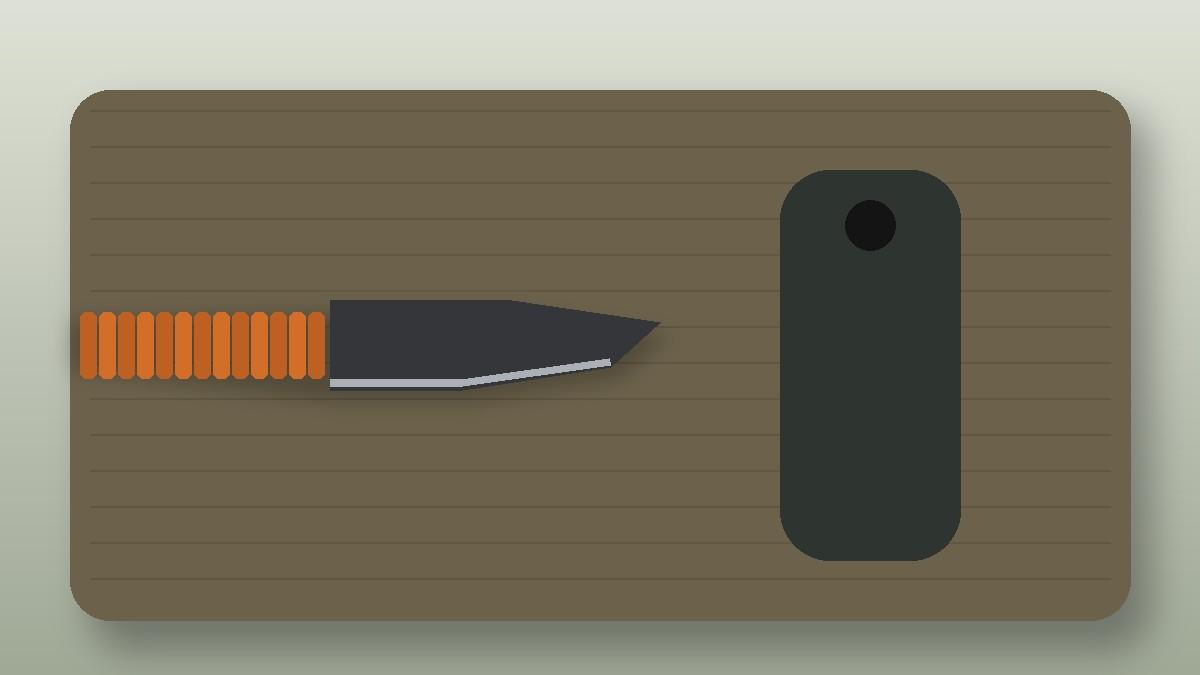
A kiridashi is a small, flat knife with a single bevel and an angled tip. Japanese woodworkers use it for marking lines and fine cuts, and it was once a common tool for sharpening pencils.
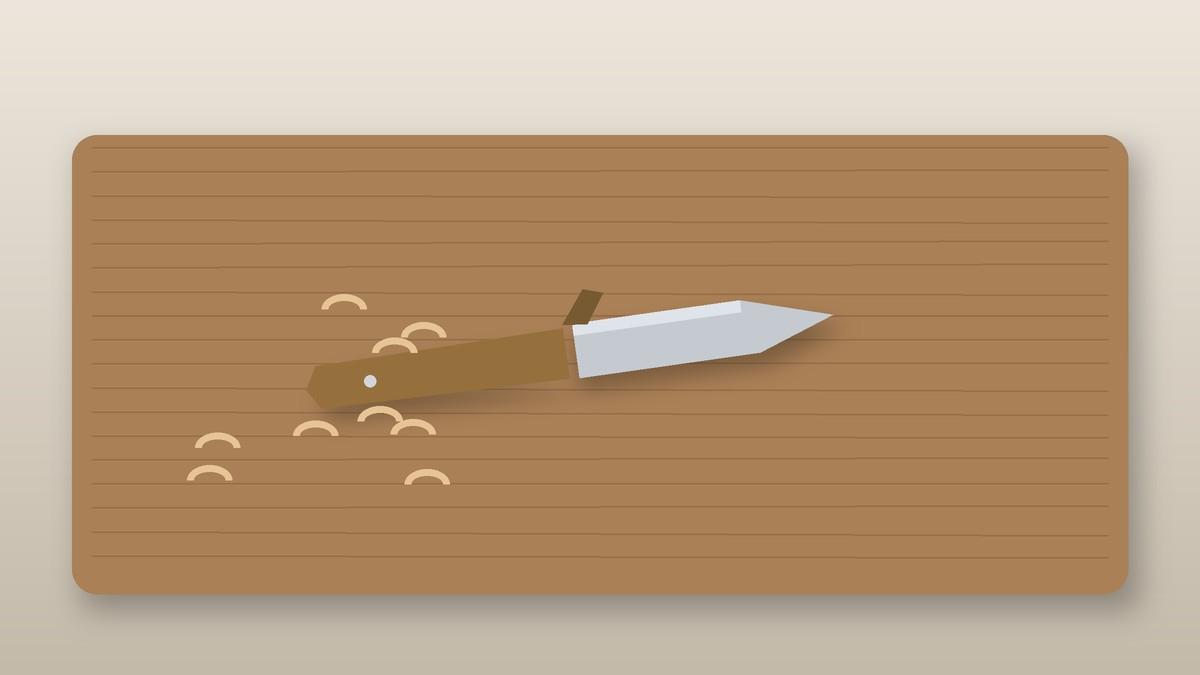
Outdoors, a kiridashi is useful for carving tent pegs, feather sticks and small camp items. Its single bevel cuts very cleanly but needs a little practice to sharpen correctly.
Most kiridashi have no handle scales, so many people wrap the tang with cord or tape for a better grip.
The Nata: Japan’s Brush and Wood Tool
A nata is a heavy chopping blade, somewhere between a machete and a hatchet. It’s traditionally used for clearing brush, cutting bamboo and splitting kindling.
Some nata have a flat tip, while others have a protective tip that keeps the edge off the ground when chopping. They’re usually sold with a wooden sheath.
For campers, a nata can replace a small hatchet. It’s heavier than most knives, so it’s best kept in a pack rather than on your belt.
Modern Folders Made in Seki
Seki is home to many factories that make knives for Japanese and international brands. Several well-known Western knife companies have made some of their folding knives there.
Spyderco, for example, has produced popular folders such as the Delica and Endura in Seki. Swedish brand Fallkniven also has many of its knives made in Japan.
Product pages usually state the country of manufacture. If a knife is advertised as “Japanese” but the listing doesn’t say where it’s made, be cautious.
Japanese Saws for Outdoor Use
Japanese pull saws cut on the pull stroke rather than the push. That lets them use thinner blades, which cut quickly and smoothly through green wood.
Folding pruning saws from Japanese makers such as Silky are popular with campers and bushcrafters. For firewood, a good saw is safer and more efficient than any large knife.
Japanese Steels You’ll See
| Steel | Type | Notes |
|---|---|---|
| Shirogami (white paper) | Carbon steel | Very fine edge, easy to sharpen, rusts easily |
| Aogami (blue paper) | Carbon steel with added alloys | Tougher and holds an edge longer than white steel |
| VG-10 | Stainless steel | Popular for its edge retention and rust resistance |
| AUS-8 | Stainless steel | Tough, easy to sharpen, common on folders |
Carbon steels take beautiful edges but must be kept dry and oiled, while stainless steels are more forgiving outdoors, especially near salt water. See our knife steel comparison for more detail.
Single Bevel and Double Bevel
Many traditional Japanese tools, including the kiridashi and some nata, are sharpened on one side only. A single bevel cuts very precisely but tends to steer, and it needs a specific sharpening technique.
Most modern folders use a double bevel, like Western knives. They’re easier to sharpen and more predictable for general outdoor tasks.
Marketing Claims to Ignore
Online marketplaces are full of knives described as “Japanese”, “Viking” or “hand forged” that are mass-produced elsewhere. Some brands in this space have a reputation for misleading advertising.
- No country of origin: genuine Japanese makers usually state where the knife is made.
- Mixed-up names: “Viking Japanese” or “Serbian samurai” knives are marketing, not tradition.
- Vague steel: look for a named steel rather than “high carbon stainless”.
- Unrealistic claims: no knife stays sharp forever or never needs maintenance.
A plain, honestly described knife from a known maker is almost always a better buy than a dramatic listing.
Choosing Your First Japanese Outdoor Knife
If you want a light pocket knife for picnics and whittling, a Higonokami is an affordable introduction. For a locking knife you can rely on for camp chores, a Seki-made folder from an established brand is the safer choice.
Add a nata or a Japanese folding saw if you regularly process firewood. Together, a small knife and a saw handle almost every outdoor cutting job.
Caring for Japanese Outdoor Knives
- Dry after use: carbon steel can rust within hours if left wet.
- Oil lightly: a thin coat of camellia or mineral oil prevents rust in storage.
- Avoid twisting: hard Japanese edges can chip if pried or twisted.
- Sharpen on stones: whetstones suit Japanese steels better than pull-through sharpeners.
For help choosing stones, read which whetstone grits to use.
Carry Laws Still Apply
Knife laws vary by country and region, and some restrict locking blades, fixed blades or blade length. Japan itself has strict rules on carrying knives in public.
Check the laws where you live and travel before carrying any knife. Keep fixed blades in their sheath and fold away pocket knives when not in use.
Frequently Asked Questions
What is a Higonokami knife?
A traditional Japanese friction folder with no lock, held open by thumb pressure on a lever at the back of the blade.
Are Japanese knives good for camping?
Yes, especially for cutting and carving. Hard Japanese edges are very sharp but should not be used for prying or batoning.
What is a kiridashi used for?
Marking, whittling and fine cutting. It’s a small, single-bevel knife popular with woodworkers.
Which knife brands make knives in Japan?
Several brands, including Spyderco and Fallkniven, have models made in Japan. Check each product page for the country of manufacture.
Do Japanese carbon steel knives rust?
Yes. Keep them dry and lightly oiled, especially in wet or salty conditions.