Quick Summary
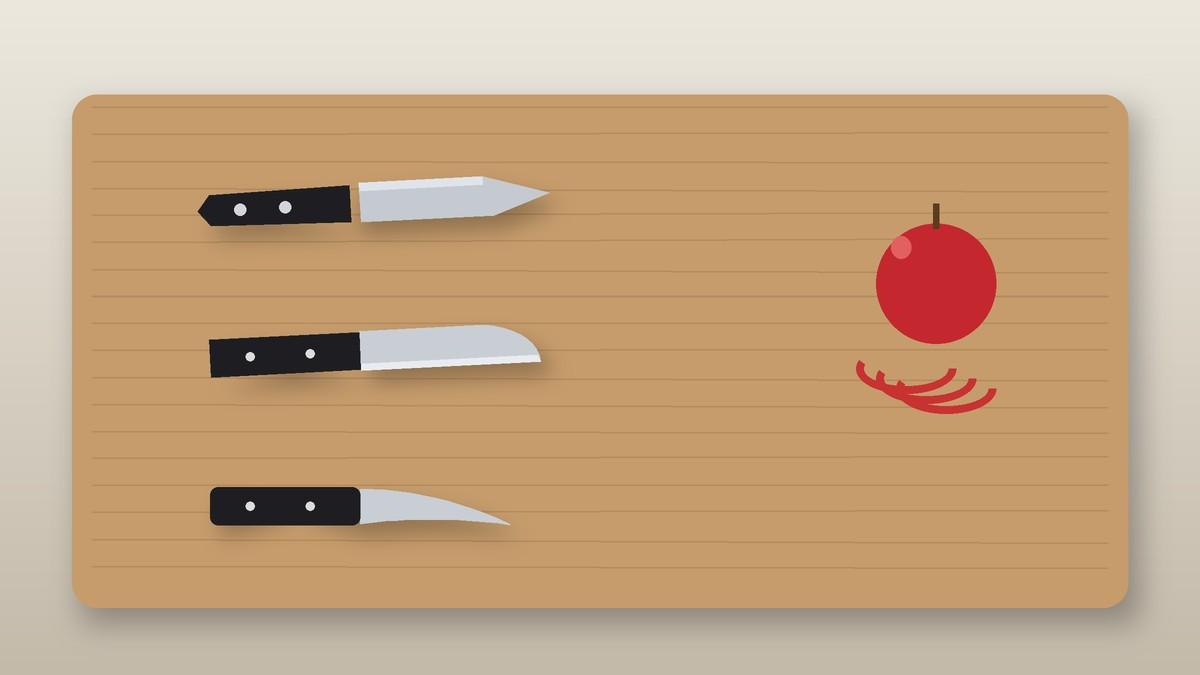
- Best everyday type: a 3 to 3.5-inch spear point paring knife with a straight edge.
- Sheep’s foot: a straight edge and blunt tip, great for board work and safer for beginners.
- Bird’s beak: a curved blade for peeling round fruit and garnishes; a specialist, not an all-rounder.
- Serrated paring: handy for tomatoes and citrus, but hard to sharpen at home.
- Steel matters less than shape: a sharp, comfortable budget knife beats a dull premium one.
Knives Task is reader-supported: if you buy through a link on this page, we may earn a small Amazon commission at no extra cost to you. That never changes which knives we recommend.
A paring knife is the small knife you reach for when a chef’s knife feels too big. University of Illinois Extension describes it as a 2 to 4-inch knife for peeling, coring and removing bruises and stems.
Paring knives come in several shapes, though, and they don’t all suit everyday cooking equally well. This guide explains each type and which one most home cooks should buy first.
For where a paring knife fits among your other blades, see our guide to types of kitchen knives and their uses.
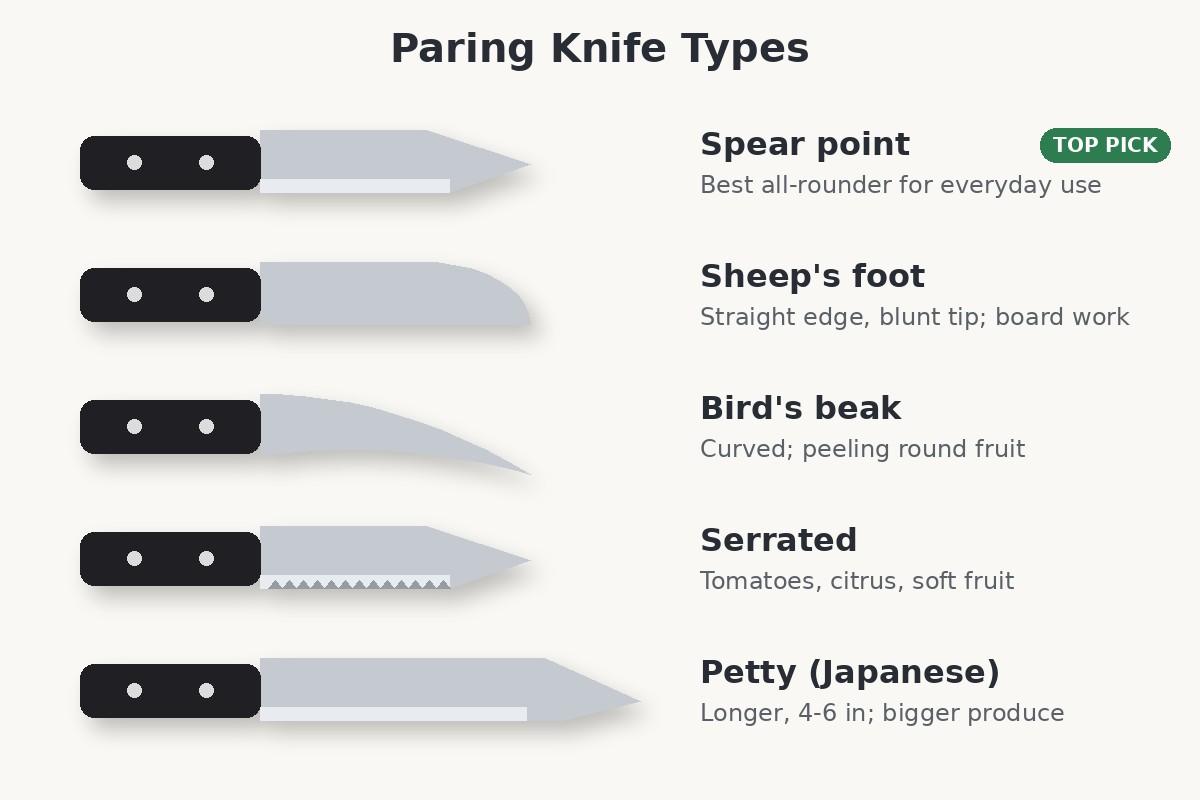
Paring Knife Types at a Glance
| Type | Blade shape | Best for | Everyday pick? |
|---|---|---|---|
| Spear point | Straight edge rising to a centered point | Peeling, trimming, coring, in-hand and board work | Yes, the best all-rounder |
| Sheep’s foot | Straight edge, rounded spine down to a blunt tip | Slicing and dicing on the board, safer for beginners | Good second choice |
| Bird’s beak (tourné) | Short, curved, hooked blade | Peeling round fruit, garnishes, tourné cuts | No, specialist |
| Serrated paring | Spear point with a toothed edge | Tomatoes, citrus, soft fruit | Useful extra |
| Petty (Japanese) | Longer, slimmer, 4–6 inches | Bigger produce, small meat jobs | For cooks who want one size up |
Spear Point: The Best Everyday Paring Knife
The spear point is the classic paring knife. Its edge is mostly straight, then curves gently up to a point centered between edge and spine.
That shape makes it the most versatile type. The straight section handles slicing on the board, while the point lets you core tomatoes, remove eyes from potatoes and score pastry.
It also works well in the hand. You can peel an apple in a spiral, trim green beans or segment an orange without reaching for another knife.
Why It Wins for Everyday Use
- Most versatile: one shape covers peeling, trimming, coring and small slicing.
- Easy to sharpen: the straight edge and simple curve suit any stone or sharpener.
- Widely available: almost every brand makes one, at every price.
- Good point control for detail work like deveining shrimp.
A good, inexpensive example is the Victorinox Swiss Classic 3.25-inch spear point paring knife, made in Switzerland. The Mercer Millennia 3.5-inch paring knife is another popular choice with a grippy handle.
Sheep’s Foot: The Safe, Board-Friendly Option
A sheep’s foot paring knife has a straight edge with a spine that curves down to meet it, leaving a blunt, rounded tip. Some brands simply call this style a “straight paring knife”.
Because the whole edge sits flat on the board, it slices and dices small items neatly. The blunt tip is also less likely to stab your hand during in-hand cuts, which makes it a good choice for beginners and children learning to cook under supervision.
The trade-off is that it can’t pierce or core as easily. If you often hull strawberries or core tomatoes, you’ll miss the point of a spear point knife.
Bird’s Beak: A Specialist Peeler
The bird’s beak, or tourné knife, has a short blade that curves downward like a hook. It’s designed for peeling round fruit and vegetables and for the seven-sided “tourné” cut used in classic French cooking.
It’s excellent at those jobs, but the curved edge is awkward on a cutting board. It’s also harder to sharpen because of the inward curve.
Treat a bird’s beak as a second paring knife if you peel a lot of round produce or do garnish work. It’s not the best choice as your only small knife.
Serrated Paring Knives
A serrated paring knife has small teeth along the edge. The teeth grip slippery skins, so it’s good for tomatoes, citrus, kiwis and soft stone fruit.
Serrations stay working for a long time, but most home sharpeners can’t restore them properly. Many cooks keep a cheap serrated paring knife as a spare alongside a straight-edged one.
Japanese Petty Knives
A petty is a Japanese utility-paring knife, usually 4 to 6 inches long and slimmer than a Western paring knife. It handles larger produce, shallots and small pieces of boneless meat.
If you find 3-inch paring knives too short, a petty around 4.5 to 5 inches can replace both a paring knife and a small utility knife. Its thin, hard edge needs gentler handling than a Western knife.
How Long Should an Everyday Paring Knife Be?
| Length | Feels like | Best for |
|---|---|---|
| 2.5–3 in | Very nimble | Peeling, small fruit, detail work |
| 3–3.5 in | Balanced | Most everyday tasks; the best starting point |
| 4 in | A little more reach | Larger fruit and some board work |
| 4.5–6 in (petty) | Small utility knife | Bigger produce and light slicing |
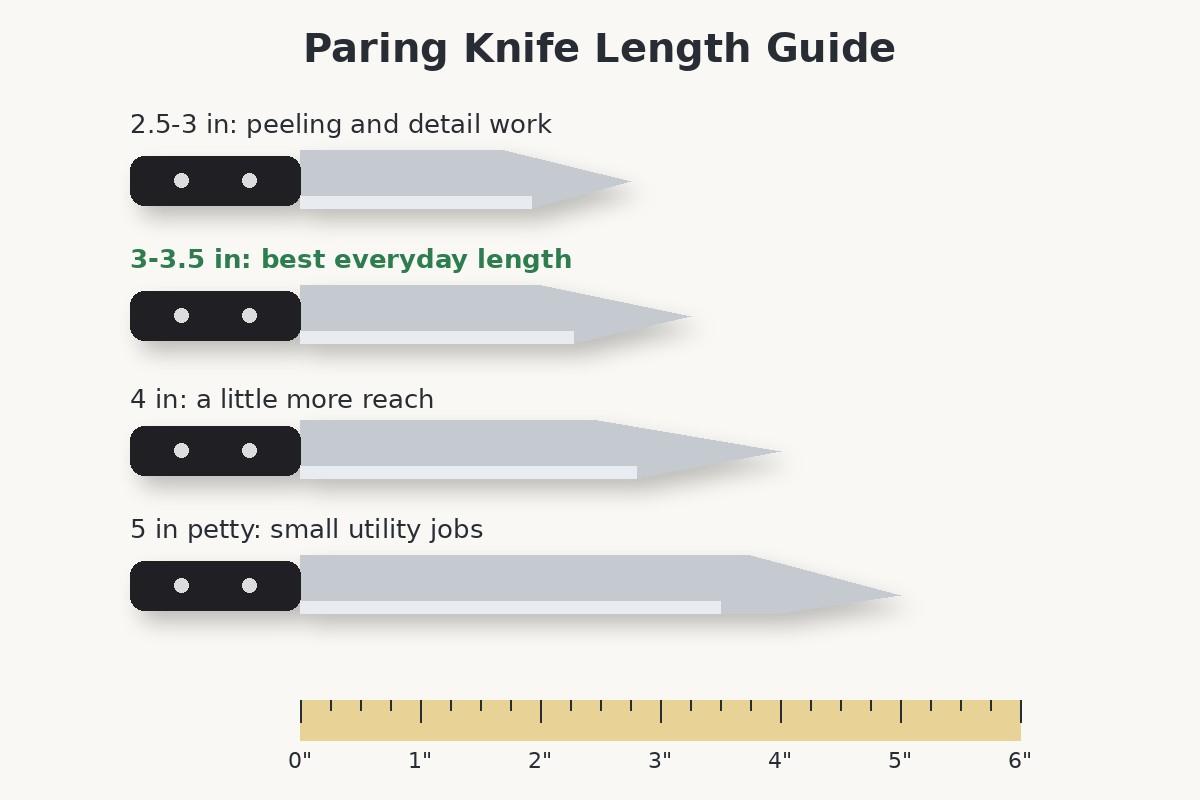
For most people, 3 to 3.5 inches is the sweet spot. It’s short enough for control in the hand and long enough for small board jobs.
Testers at America’s Test Kitchen reached the same conclusion, finding that 3 to 3.5-inch blades gave more control when slicing, peeling and hulling.
Straight or Serrated Edge?
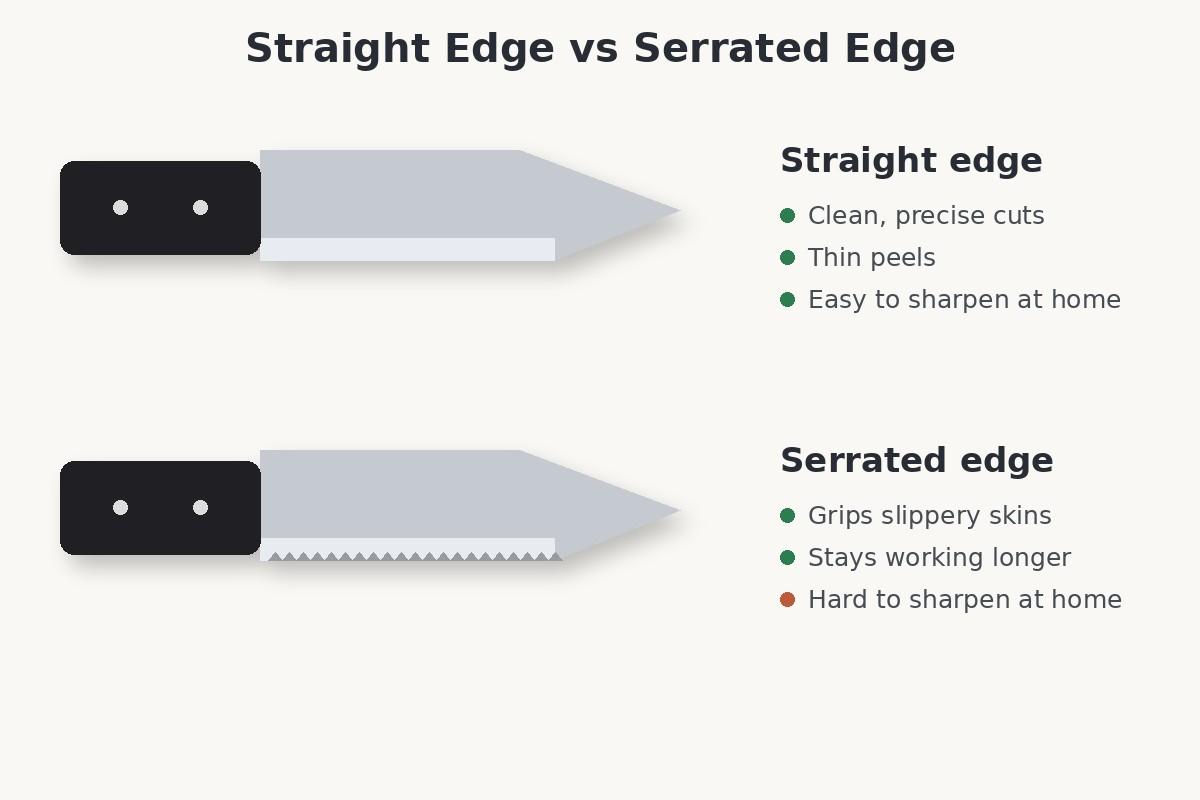
Choose a straight edge for your main paring knife. It gives clean cuts, peels thinly and is easy to sharpen at home.
Add a serrated paring knife later if you often cut tomatoes or citrus. Keeping both is inexpensive and covers almost every small job.
Does Steel and Price Matter?
Paring knives do light work, so you don’t need premium steel. A well-made budget knife that’s kept sharp will outperform an expensive one that’s dull.
Stamped knives are light and nimble, which suits paring. Forged paring knives feel more solid and usually last longer, but the difference is smaller than it is with chef’s knives.
Handle comfort matters more than steel for a knife you’ll hold in the air. Try to choose a handle that fills your fingers and doesn’t feel slippery when wet.
Which Paring Knife Type Should You Buy?
| If you… | Choose |
|---|---|
| Want one paring knife for everything | Spear point, 3–3.5 in, straight edge |
| Are a beginner or worry about the tip | Sheep’s foot |
| Peel lots of apples, potatoes or garnishes | Add a bird’s beak |
| Cut tomatoes and citrus daily | Add a serrated paring knife |
| Find paring knives too small | A Japanese petty, about 5 in |
For specific recommendations, see our guide to the best paring knives.
Using and Caring for a Paring Knife
- Peel toward your thumb carefully, with the thumb behind the food, not in the blade path.
- Use a cutting board for anything that doesn’t need to be cut in the hand.
- Hand wash and dry; small knives are easy to lose and chip in a dishwasher.
- Store it in a block or with a sheath, never loose in a drawer.
- Sharpen it regularly; small knives dull quickly because they’re used so often.
The UK Health and Safety Executive’s guide to safe use of knives in the kitchen adds sensible rules: keep knives sharp, store them securely and never try to catch a falling knife.
A small blade sharpens quickly on a stone. Our step-by-step guide on how to sharpen a small knife shows how.
Frequently Asked Questions
What is the most versatile type of paring knife?
A spear point paring knife with a straight edge, about 3 to 3.5 inches long.
What is a bird’s beak paring knife used for?
Peeling round fruit and vegetables and making decorative tourné cuts.
Is a serrated paring knife better?
It’s better for tomatoes and citrus, but a straight edge is more versatile and easier to sharpen.
What size paring knife is best?
3 to 3.5 inches suits most everyday tasks.
Is a petty knife the same as a paring knife?
No, a petty is a longer Japanese utility-paring knife, usually 4 to 6 inches.
Do I need more than one paring knife?
Not at first. Start with a spear point, then add a serrated or bird’s beak knife if you need one.