Quick Summary
- Shun knives are made by Kai in Seki, Japan, from hard steels at about 60–62 HRC.
- Most Kamikoto knives are made in China; its main Genten line uses soft 420J2 steel at about 53 HRC.
- Shun knives are mostly double-bevel; most Kamikoto knives are single-bevel.
- Shun offers free sharpening (you pay shipping); Kamikoto doesn’t.
- For cooking performance, Shun is the better buy; Kamikoto’s appeal is mainly its presentation.
Knives Task is reader-supported: if you buy through a link on this page, we may earn a small Amazon commission at no extra cost to you. That never changes which knives we recommend.
Kamikoto and Shun both sell elegant, Japanese-style knives that are popular as gifts. But behind the packaging, they’re very different products.
Our older version of this article repeated Kamikoto’s marketing, including a 1908 founding and a history of making swords for the Japanese navy. We couldn’t verify these claims, so this rewrite sticks to facts that can be checked.
Kamikoto at a Glance
Kamikoto sells minimalist, satin-finished knives in ash-wood boxes. Its marketing leans heavily on Japanese tradition, so many buyers assume the knives are made in Japan.
Kitchen review site Prudent Reviews’ Kamikoto review found that most Kamikoto knives are made in China and that the main Genten line uses 420J2 steel, rated at about 53 HRC. That’s a soft steel for a kitchen knife, so it dulls relatively quickly.
For a full look at the brand, read our Kamikoto knives review.
Shun at a Glance
Shun is made by the Kai Group in Seki, Japan, a city known for knife making. Its knives use hard Japanese steels such as VG-MAX, VG10 and SG2, and most are double-beveled at 16° per side.
The Premier chef’s knife, for example, uses VG-MAX steel at about 60–61 HRC, according to Knives and Stones’ Shun Premier listing. Read more in our Shun knives review.
Kamikoto vs Shun Compared
| Kamikoto | Shun | |
|---|---|---|
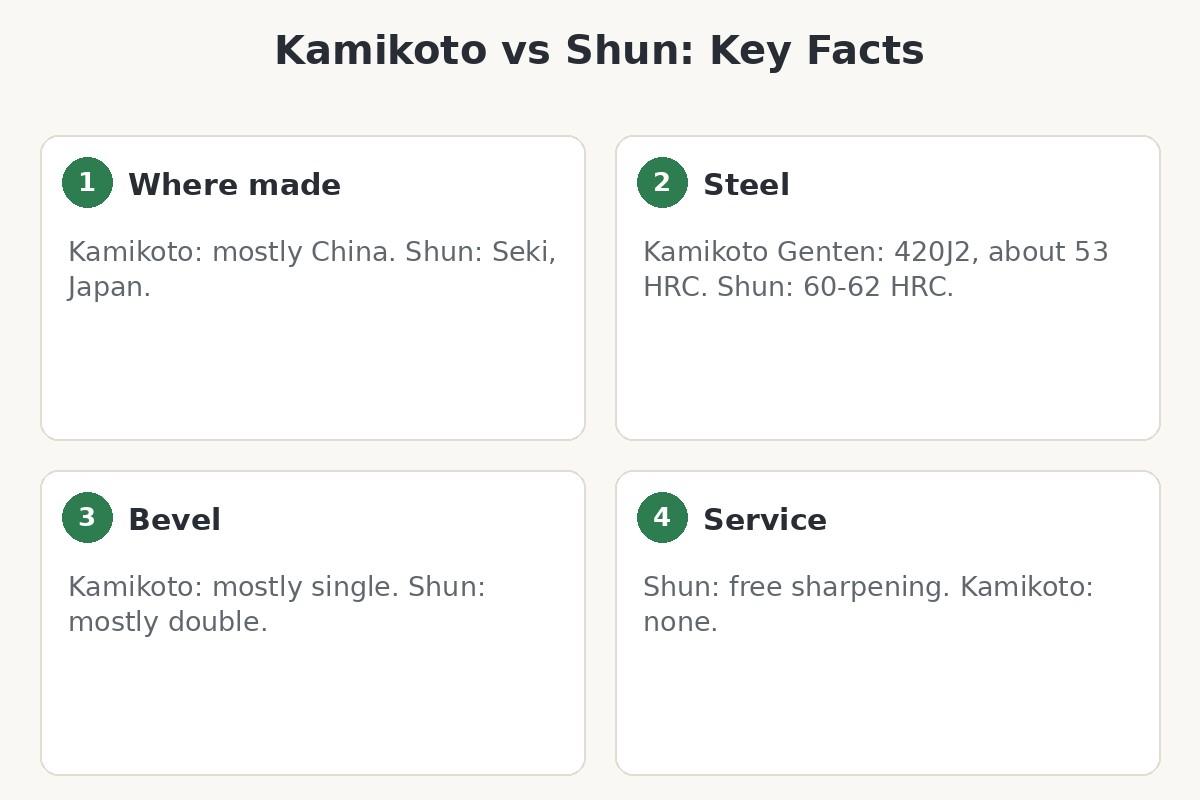
| Where made | Mostly China | Seki, Japan |
| Main steel | 420J2 (Genten line) | VG-MAX, VG10, SG2 |
| Hardness | About 53 HRC (Genten) | About 60–62 HRC |
| Bevel | Mostly single | Mostly double |
| Edge angle | Not published | 16° per side |
| Sharpening service | No | Free (you pay shipping) |
| Pricing | Frequent large discounts | Stable retail prices |
Prudent Reviews’ head-to-head Shun vs Kamikoto comparison reaches the same conclusion: Shun is the better choice for an authentic, high-performance Japanese knife.
Steel and Sharpness
Steel hardness matters a lot for Japanese-style knives. Harder steel can be sharpened to a thinner, keener edge that lasts longer between sharpenings.
Kamikoto’s soft 420J2 is very rust-resistant and easy to sharpen, but it won’t hold a fine edge for long. Shun’s harder steels keep their edge much longer, though they need gentler handling to avoid chips.
Single vs Double Bevel
Most Kamikoto knives are single-bevel, sharpened on one side only. This can give very clean slices, but the blade tends to steer in thick food and suits right-handed users unless you buy a left-handed version.
Most Shun knives are double-bevel, which cuts straight and works for both hands. For everyday home cooking, double-bevel knives are easier to use.
Three-Piece Sets Compared
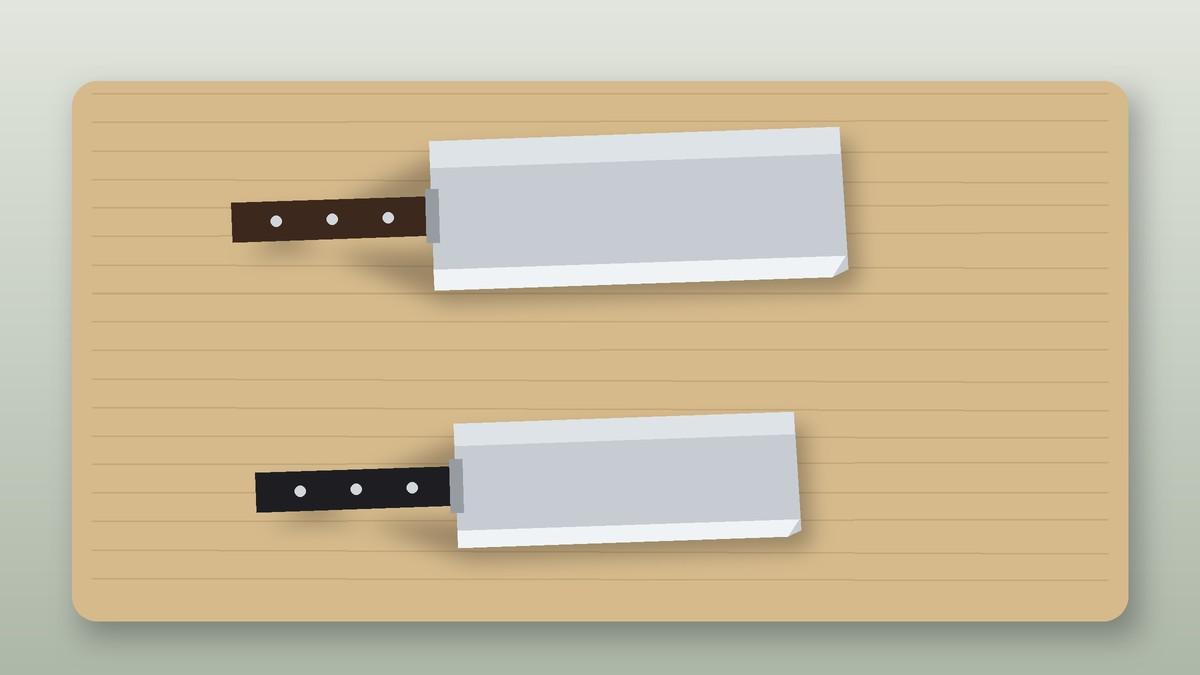
Both brands sell three-piece sets popular as gifts. The Kamikoto Kanpeki set comes in an ash-wood box with a utility knife, a nakiri-style vegetable knife and a slicer.
Shun’s equivalent sets include knives from lines like Premier or Classic, with hard steel and a sharpening service. If you’re giving a knife to someone who cooks a lot, the Shun will serve them better.
Price and Discounts
Kamikoto often shows high list prices alongside very large discounts. Reviewers have criticized this, because the discounted price is often closer to the knife’s real value.
Judge any knife by its actual selling price and compare what the same money buys elsewhere. Shun prices are more stable and match what you get.
Which Should You Choose?
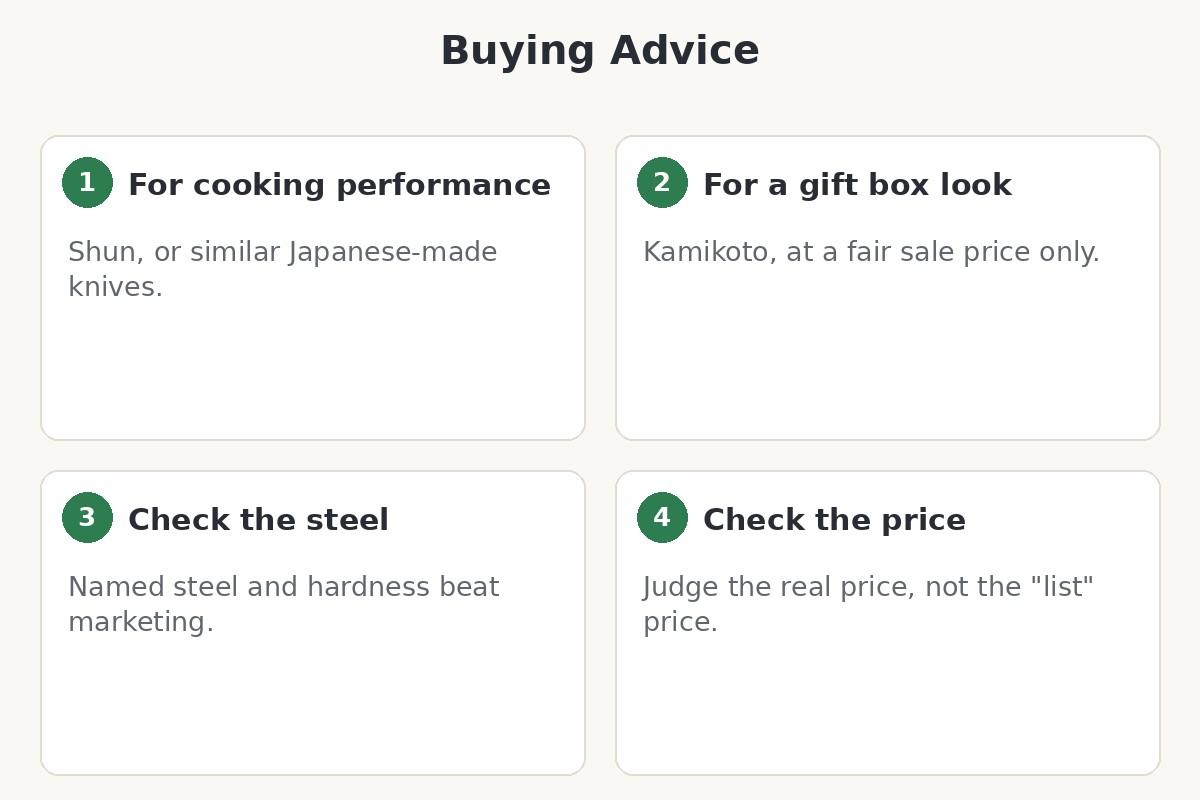
Choose Shun if you want a knife that performs well for years, with hard steel and a sharpening service. It’s the better choice for most cooks.
Choose Kamikoto only if presentation is your priority and you can buy at a genuinely fair price. Even then, consider other Japanese brands with harder steel at similar prices.
Care Tips
Hand-wash and dry both brands straight away. For Shun, avoid bones and twisting cuts that can chip the hard edge.
For single-bevel Kamikoto knives, sharpen the bevel side at the existing angle and only lightly deburr the flat back.
What to Look for in a Japanese Knife
A reputable brand names its steel, states the hardness and says clearly where its knives are made. Vague phrases like “premium Japanese steel” with no grade are a warning sign.
Also check the warranty, the sharpening options and whether the bevel suits your hand. These details matter far more than the box the knife arrives in.
Alternatives at Similar Prices
If you like the look of Japanese knives but want better steel for your money, compare Shun with Miyabi in our Shun vs Miyabi guide. Both are made in Japan and name their steels clearly.
Budget-friendly Japanese makers such as Tojiro also offer hard steel at lower prices than either brand.
Who Should Buy Kamikoto?
Kamikoto may suit someone who mainly wants an attractive display set and will rarely cook with it. The soft steel is forgiving and rust-resistant, and it sharpens easily.
For anyone who cooks regularly, a knife with harder steel and a clearer origin is a better use of money.
Who Should Buy Shun?
Shun suits home cooks who want a genuine Japanese knife with a sharp, long-lasting edge and good after-sales support. Its matching lines make it easy to build a set over time.
Be aware that hard steel can chip if you twist the blade or cut bone, so use a German knife for heavy jobs.
Our Verdict
Shun is the clear winner for performance, transparency and support. Kamikoto’s strength is its presentation, which matters less than the knife itself for anyone who cooks.
Sharpening Each Brand
Shun sharpens its knives to 16° per side and offers a sharpening service, or you can use whetstones at home. Take care to keep the angle steady on such hard steel.
Kamikoto doesn’t publish an edge angle, so match the existing bevel when sharpening. The soft steel sharpens quickly but will need it more often.
Packaging vs Performance
Kamikoto’s boxes are undeniably attractive, and they’re part of why the knives sell so well as gifts. But the box doesn’t affect how the knife cuts or how long the edge lasts.
Final Buying Tip
Before buying any premium-looking knife, check three things: the named steel, its hardness and where it’s made. If a brand can’t tell you clearly, look elsewhere.
That simple check protects you from paying a premium for packaging rather than performance.
Frequently Asked Questions
Is Kamikoto made in Japan?
Most Kamikoto knives are made in China, according to independent reviewers.
Is Shun better than Kamikoto?
For cooking performance, yes; Shun uses harder steel and offers free sharpening.
What steel does Kamikoto use?
Its main Genten line uses 420J2 stainless steel, at about 53 HRC.
Is Kamikoto a good gift?
It looks impressive, but a Shun knife will perform better for a keen cook.
Are Kamikoto knives single-bevel?
Most are, though a few double-bevel models exist.