This ESEE knife comparison puts the Izula II, ESEE-3, ESEE-4, ESEE-5 and ESEE-6 side by side. You will see how they differ in blade length, thickness and weight, and which one fits backpacking, camp work or hard use.
Table of Contents
Table of Contents
Quick Summary
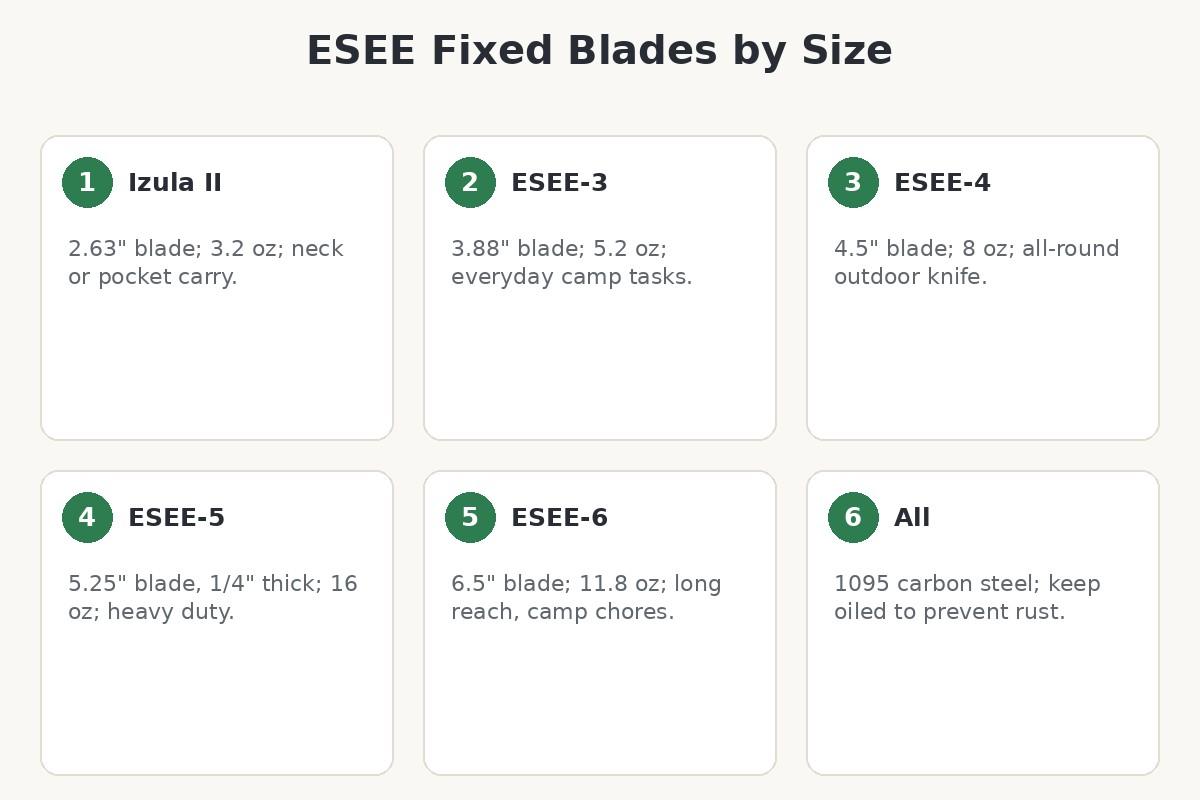
- All the main ESEE fixed blades use 1095 carbon steel, which is tough and easy to sharpen but needs oiling to prevent rust.
- Izula II (2.63″ blade, 3.2 oz) is for light carry and backpacking.
- ESEE-3 and ESEE-4 (3.88″ and 4.5″ blades) are the all-round camp and outdoor sizes.
- ESEE-5 (5.25″ blade, 1/4″ thick, 16 oz) is built for heavy use like batoning.
- ESEE-6 (6.5″ blade, 11.8 oz) gives extra reach for bushcraft and camp chores.
ESEE knives are popular with campers, hunters and bushcraft enthusiasts for their simple, tough designs. The models look similar, so choosing between them mostly comes down to size, thickness and weight.
This guide compares the main fixed blades side by side. For the brand overall, read our ESEE knives review.
ESEE Knife Comparison: Models Side by Side
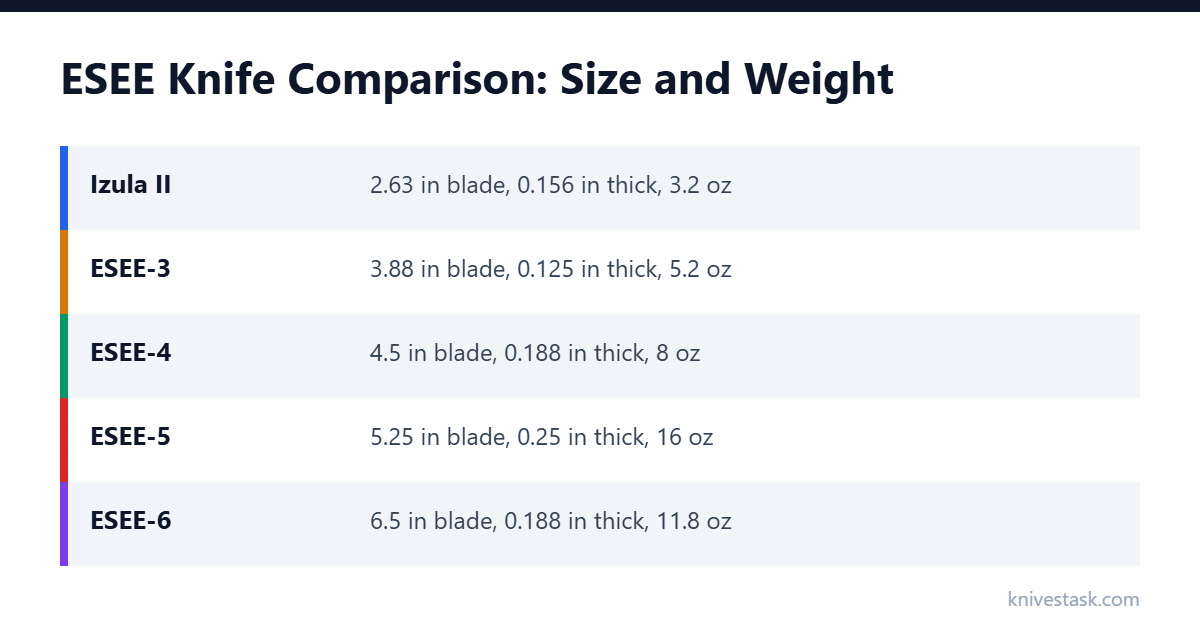
| Model | Blade length | Overall length | Thickness | Weight |
|---|---|---|---|---|
| Izula II | 2.63″ | 6.75″ | 0.156″ | 3.2 oz |
| ESEE-3 | 3.88″ | 8.31″ | 0.125″ | 5.2 oz |
| ESEE-4 | 4.5″ | 9″ | 0.188″ | 8 oz |
| ESEE-5 | 5.25″ | 11″ | 0.25″ | 16 oz |
| ESEE-6 | 6.5″ | 11.75″ | 0.188″ | 11.8 oz |
Specifications come from knife retailer DLT Trading’s product pages, including the ESEE-4 and ESEE-6 listings. Weights are for the knife alone and vary slightly by handle option.
Our older article listed the ESEE-6 at 5.75″ and claimed it was lighter than the ESEE-5 while also saying it was heavier. The ESEE-6 has a 6.5″ blade (5.75″ of sharpened edge) and weighs less than the thicker ESEE-5.
Izula II
The Izula II is ESEE’s tiny skeletonized knife with handle scales. At just 3.2 ounces, it’s easy to carry on a neck cord, belt or pack strap.
It’s great for food prep, cutting cord and small camp jobs, but too small for wood processing. Choose it if weight matters most.
ESEE-3
The ESEE-3 has a 3.88″ blade and weighs 5.2 ounces. Its thinner stock makes it a good slicer for food prep and fine work.
It’s an excellent everyday outdoor knife for hiking and camping, and many people use it for hunting and skinning.
ESEE-4
The ESEE-4 is the brand’s best-known model, with a 4.5″ blade and 0.188″ stock. It’s big enough for light batoning and feather sticks but still easy to carry.
If you want one ESEE that does a bit of everything, the ESEE-4 is the usual recommendation. See our fixed blade EDC guide for smaller alternatives.
ESEE-5
The ESEE-5 is the heavyweight, with a 5.25″ blade and 1/4″ thick stock. Military survival instructors helped design it, according to SOFREP’s ESEE-5 review.
It’s built for hard use: batoning, prying and splitting wood. The trade-off is weight, at about a pound, and a thick edge that’s less suited to fine slicing.
ESEE-6
The ESEE-6 has the longest blade of the group at 6.5″, but thinner stock than the ESEE-5. That makes it lighter and better at slicing while still offering good reach for chopping and camp chores.
It’s a favorite for bushcraft, where a longer blade helps with wood work and food prep around camp.
Which ESEE Should You Buy?
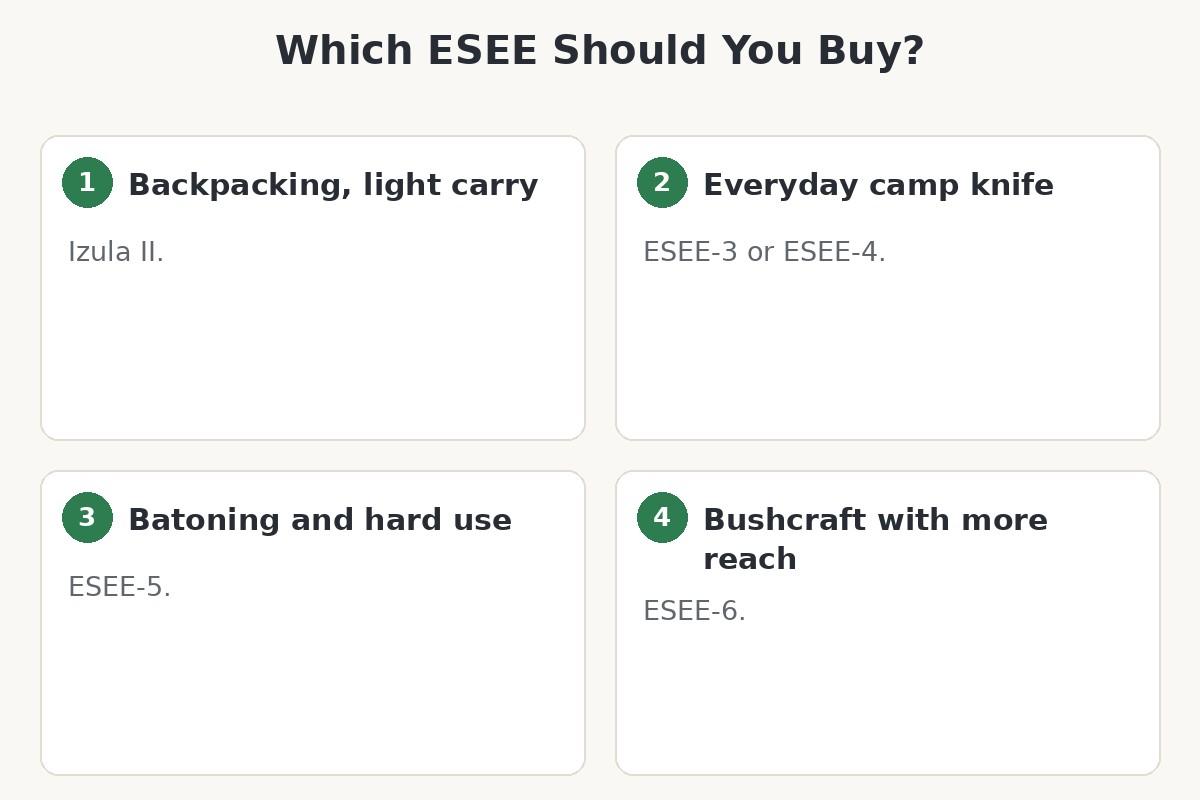
| Main use | Best choice |
|---|---|
| Ultralight backpacking | Izula II |
| Hiking, hunting, food prep | ESEE-3 |
| All-round camping | ESEE-4 |
| Batoning and hard use | ESEE-5 |
| Bushcraft and longer reach | ESEE-6 |
For more bushcraft options, see our best bushcraft knives under $100.

For another view of the range, Knife Informer picks the best ESEE knife for each job, and Knives and Tools has a detailed ESEE buyer’s guide.
Caring for 1095 Carbon Steel
1095 is a tough, simple carbon steel that takes a keen edge and is easy to sharpen in the field. ESEE blades have a coating to help resist rust, but the edge and any worn areas are bare steel.
Wipe the blade dry after use, especially after cutting food or in wet weather, and apply a thin coat of oil before storing. A light patina on bare steel is normal and helps protect it.
Sheaths and Carry Options
Most ESEE models come with a molded polymer sheath that accepts a clip plate or MOLLE back. The Izula II often comes with a cord and clip for neck or belt carry.
Check what’s included when you buy, since sheath and accessory options vary by retailer.
Plain or Serrated?
Several ESEE models come in plain or partly serrated versions. Our older article said the ESEE-4 is partly serrated by default; both versions exist, so choose the edge you prefer.
A plain edge is easier to sharpen in the field and better for woodwork and food prep.
Warranty
ESEE is known for a generous lifetime warranty that covers its knives even when broken through hard use. Check the current terms on ESEE’s website, since warranty details can change.
Sharpening in the Field
1095 steel sharpens quickly on a small diamond plate or ceramic rod. A few strokes at about 20° per side keep the edge working on a trip.
At home, a medium whetstone followed by a fine stone or strop restores a keen edge in minutes.
ESEE vs Other Outdoor Knives
ESEE knives are known for simple, tough designs and thick stock rather than fancy steels. That makes them reliable for hard use but heavier than many modern outdoor knives.
If you want a lighter knife for camping, a Mora or similar Scandinavian blade can do many of the same jobs at a lower price. ESEE’s strength is durability and its warranty.
Handle Options
Most ESEE models come with canvas Micarta handle scales, which grip well even when wet or cold. Some versions offer G-10 scales in different colors.
The scales are bolted on, so they can be replaced or swapped if they wear or crack.
Choosing the Right Size
Smaller knives are easier to carry and better for fine work, while larger knives handle chopping and batoning more easily. Think about the jobs you’ll do most often rather than the toughest job you might ever face.
For most hikers and campers, a 4- to 4.5-inch blade is the sweet spot between carry and capability.
Final Buying Tip
If you’re unsure, the ESEE-4 is the most versatile choice for most outdoor users. Add an Izula II later if you want a tiny backup knife.
Whatever size you choose, keep it sharp and dry, and it will last for many years of hard use.
Who ESEE Suits
ESEE suits people who want a tough, simple fixed blade they won’t worry about damaging. Its thick stock and warranty make it popular for survival training and hard camp use.
If you want a lighter, slicier knife for food prep or whittling, a thinner blade may suit you better.
Batoning Safely
Batoning means striking the spine of the knife with a wooden baton to split small logs. Thick, full-tang knives like the ESEE-4, ESEE-5 and ESEE-6 handle it well.
Use wood no thicker than the blade is long, keep your body out of the path and never strike the handle. The Izula II and ESEE-3 are too small for heavy batoning.

Frequently Asked Questions
What steel do ESEE knives use?
The main fixed blades use 1095 high-carbon steel.
Which ESEE is best for bushcraft?
The ESEE-4 or ESEE-6, depending on how much reach you want.
Is the ESEE-5 too heavy?
At about a pound, it’s heavy for carry but excellent for hard use.
Do ESEE knives rust?
1095 can rust, so dry the blade and keep it lightly oiled.
What’s the smallest ESEE knife?
The Izula and Izula II, with 2.63″ blades.