This guide shows how to sharpen kitchen knives with a rod the right way. A honing rod does not grind a new edge, but a few light strokes straighten the existing one and make a knife cut like new again. Below are the rod types, the correct angle and two safe techniques.
Table of Contents
Table of Contents
Quick Summary
- What a rod does: mostly realigns a rolled edge; it doesn’t replace real sharpening.
- Best all-round rod: a fine ceramic rod — it realigns and gently refines.
- Angle: match your knife — about 20° for German, about 15° for many Japanese knives.
- Safest method: rod tip down on a towel, draw the knife down and toward you.
- How often: a few light strokes every few uses; sharpen on a stone every few months.
A honing rod is the quickest way to keep a knife cutting well between sharpenings. A few light strokes take seconds and can make a dull-feeling knife slice cleanly again.
But a rod has limits. Knowing what it does — and doesn’t do — is the key to using it well, so this guide covers rod types, angles, technique and when to move on to a stone.
Honing vs. Sharpening
As you cut, the very thin edge of a knife bends and rolls slightly to one side. Honing pushes that edge back into line, which is why the knife suddenly feels sharper.
Sharpening is different: it grinds away metal to form a new edge. When honing stops helping, the edge is worn rather than bent, and it’s time for a stone.
Why Do Edges Roll?
A sharp edge is extremely thin, so contact with the board, bones or hard vegetables bends it slightly. Over time, these tiny bends make the knife feel dull even though plenty of metal remains.
Softer German steels roll more readily but straighten easily on a rod. Harder Japanese steels resist rolling but are more prone to tiny chips.
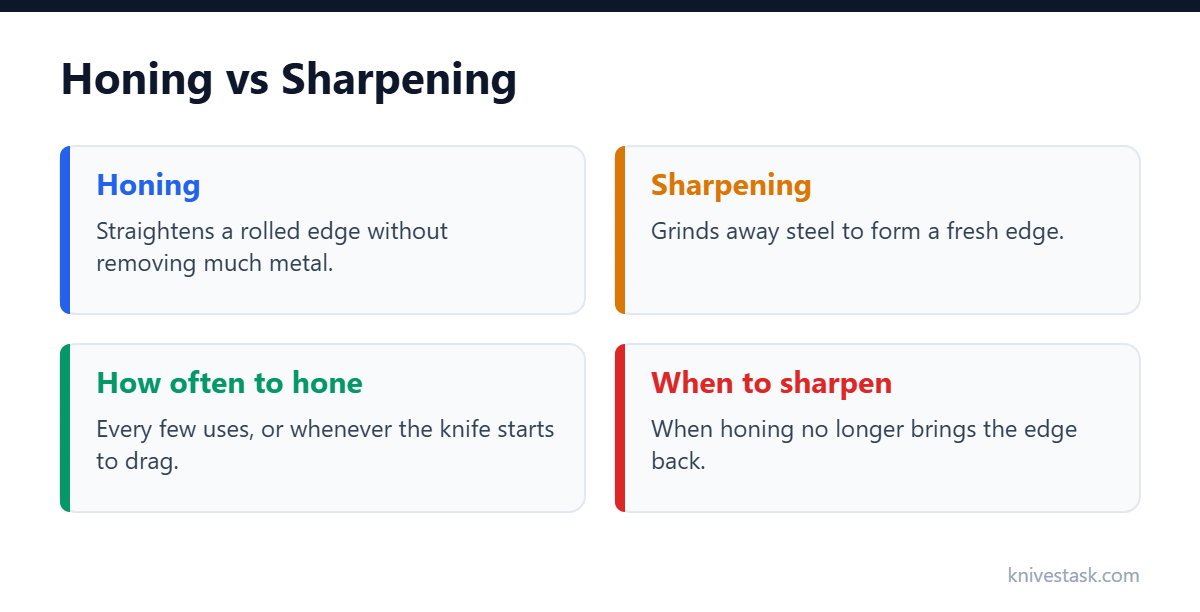
MasterClass draws the same line in its guide to honing versus sharpening: hone regularly and sharpen only when needed.
Types of Honing Rods
| Rod type | What it does | Best for | Watch out for |
|---|---|---|---|
| Smooth or grooved steel | Realigns the edge; removes almost no metal | Softer German knives | Grooved steels can be rough on fine edges |
| Ceramic | Realigns and lightly refines the edge | Most kitchen knives, including harder steels | Can chip or snap if dropped |
| Diamond-coated | Removes metal quickly — closer to sharpening | Very dull or hard knives, occasionally | Too aggressive for everyday honing |
For most home kitchens, a fine ceramic rod is the best single choice. It works on German and Japanese knives and gives a slightly keener edge than plain steel.

Cutlery and More compares steel and ceramic rods in detail in its guide on how to hone a knife, and KaTom’s knife sharpening guide explains why very hard Japanese blades are better maintained on stones. For the edge angle itself, see our guide on what angle to sharpen kitchen knives.
How to Choose a Rod
- Length: pick a rod at least as long as your longest knife blade, ideally a little longer.
- Material: ceramic for most kitchens; steel for soft German knives; diamond only for occasional repair.
- Handle and guard: a solid hand guard protects your fingers if the knife slips.
- Hard knives: very hard Japanese blades can chip on grooved steel — use ceramic.
Finding the Right Angle
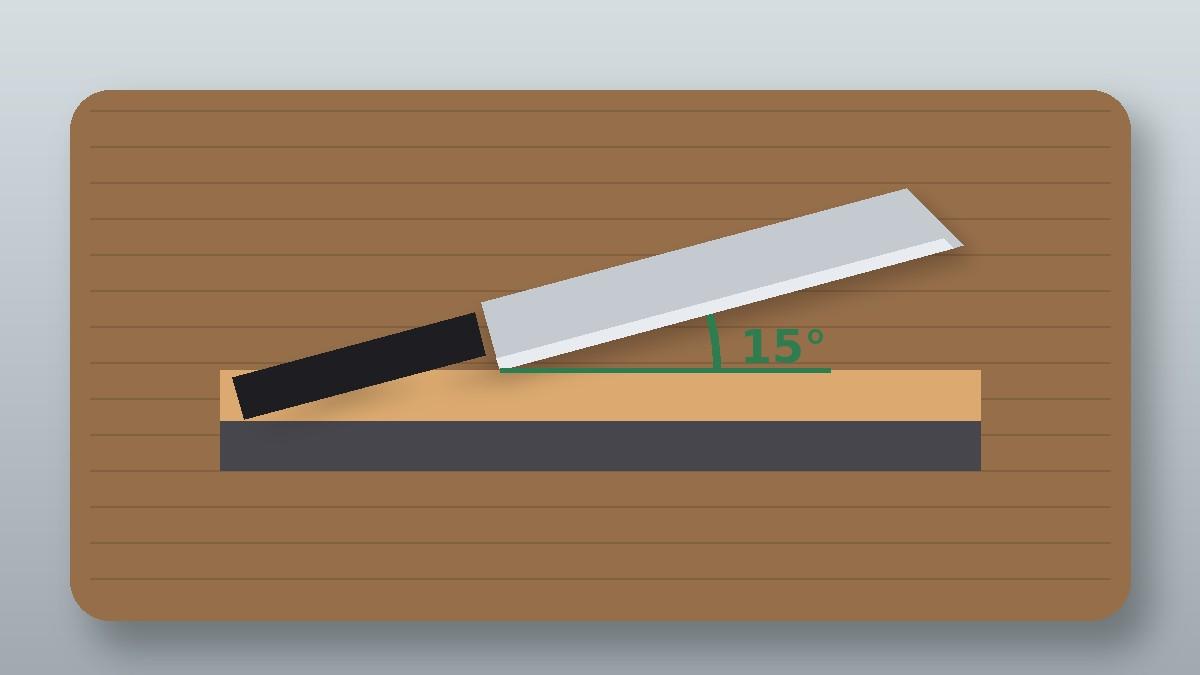
Hone at the same angle the knife was sharpened. That’s usually about 20° per side for German-style knives and around 15° for many Japanese knives.
To find 20°, hold the blade at 90° to the rod, halve it to 45°, then halve again to about 22°. Tilt very slightly lower from there.
How to Sharpen Kitchen Knives With a Rod: Tip-Down Method
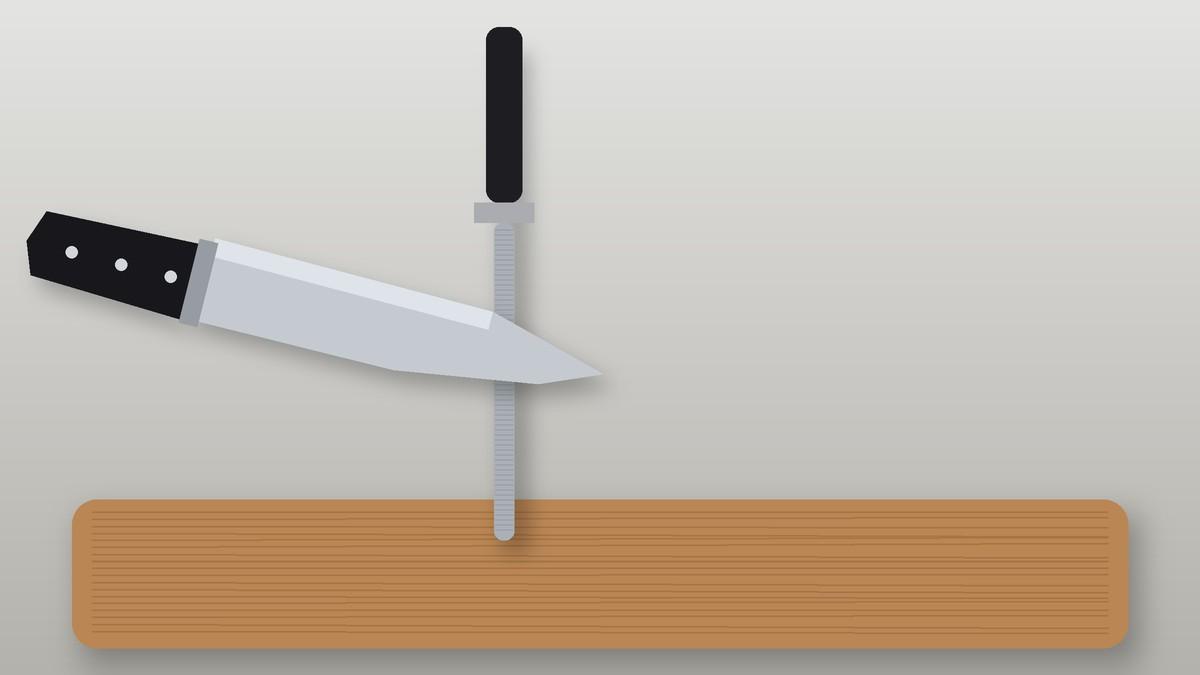
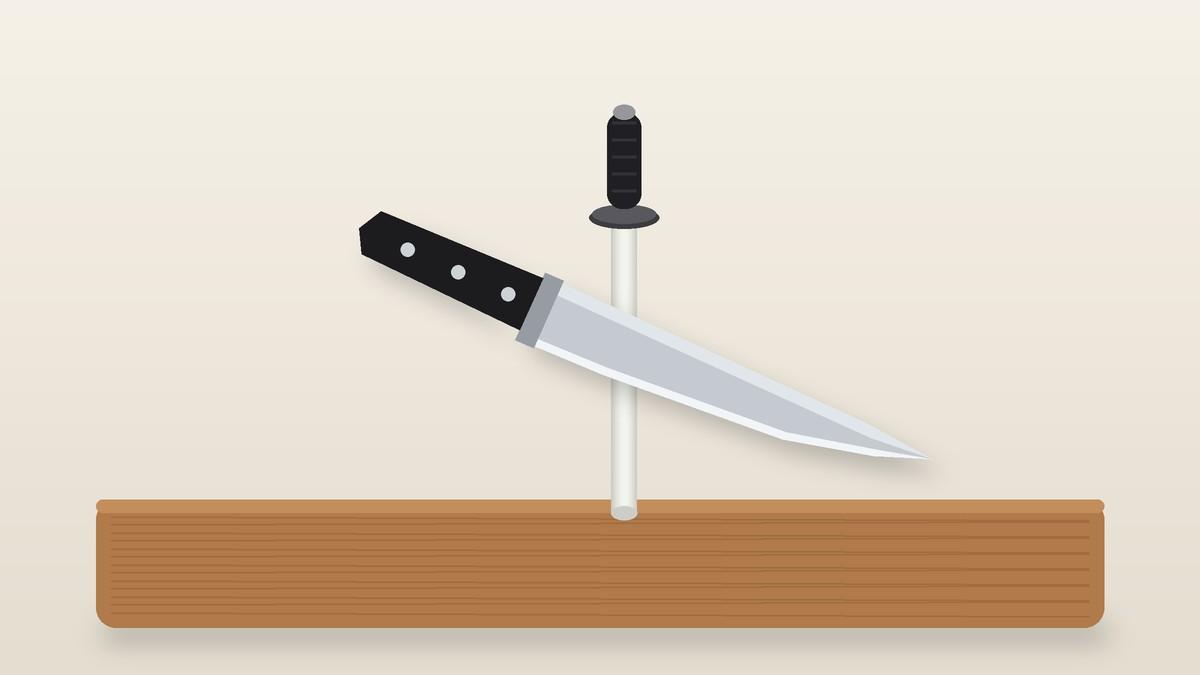
- Stand the rod vertically with its tip on a damp towel or cutting board.
- Hold the knife with the heel of the blade near the top of the rod at your chosen angle.
- Draw the knife down and toward you in one smooth stroke, so the whole edge from heel to tip meets the rod.
- Switch to the other side of the rod and repeat for the opposite side of the blade.
- Do 4–6 light strokes per side, alternating each time.
Because the rod is anchored and the blade moves away from your hands, this is the safest technique. It’s the one we recommend for everyone starting out.

Method 2: Held in the Air
Many chefs hold the rod horizontally in front of them and stroke the knife along it toward the tip. It’s faster, but it needs good control, a rod with a proper guard and plenty of practice.
If you’re not confident, stick with tip-down. There’s no prize for speed.
German vs. Japanese Knives
German knives respond well to frequent honing, often every time you cook. A steel or ceramic rod at about 20° keeps them in great shape.
Harder Japanese knives need honing less often and only on a fine ceramic rod. Use a lower angle and the lightest possible touch to avoid chipping.
How Much Pressure?
Use about the weight of the knife itself — very light. Heavy pressure can bend the edge further or chip harder steels.
How to Tell It Worked
Slice a sheet of printer paper held in the air, or the skin of a ripe tomato. If the knife now bites cleanly where it skated before, the edge was simply rolled.
If nothing changes after a dozen light strokes, the edge is worn and needs a stone — see how to sharpen with a whetstone.
Honing Serrated Knives
A regular rod can’t reach inside serrations. Use a thin tapered ceramic or diamond rod that fits each scallop, working only on the beveled side.
Push the rod through each serration a few times at the existing angle, then remove the burr from the flat side with one light pass.
How Often Should You Hone?
| How you cook | Hone | Sharpen on a stone |
|---|---|---|
| Daily cooking | Every day or two | Every 2–3 months |
| A few times a week | Weekly | Every 3–4 months |
| Occasionally | Before each use | Every 6 months or so |
Common Mistakes
- Pressing hard: light strokes are all you need.
- Changing the angle: keep it steady for every stroke.
- Only honing the middle: sweep from heel to tip each time.
- Using a rod forever: eventually the edge wears out and needs a stone.
- Hacking quickly: fast, flashy strokes cause cuts and uneven edges.
Safety Tips
- Always use a rod with a hand guard between the handle and the rod.
- Keep the knife moving away from the hand that holds the rod.
- Work slowly; consistency matters more than speed.
- Never hone while someone is standing right next to you.
- Wipe the blade from spine to edge, not along the edge, when cleaning.
Caring for Your Rod
Wipe the rod after use to remove fine metal particles. Clean ceramic rods occasionally with a mild abrasive cleaner or eraser to remove grey streaks, which can slow their action.
Store the rod where it won’t be knocked over or dropped, since ceramic can crack. For a full overview of sharpening, see how to sharpen kitchen knives.
Frequently Asked Questions
Does a honing rod sharpen a knife?
Mostly no. It realigns the edge; ceramic and diamond rods remove a little metal, but real sharpening needs a stone.
Which honing rod is best for Japanese knives?
A fine ceramic rod. Grooved steel rods can chip very hard Japanese edges.
How many strokes should I use?
Four to six light strokes per side is usually enough.
Should I hone before or after cooking?
Before is most useful, so you start with a straight edge. A quick hone after heavy use, such as breaking down chicken, also helps.
Is a honing steel the same as a sharpening steel?
The names are used interchangeably. Most so-called sharpening steels are really honing tools.
Can I hone a knife too much?
With light pressure, not really. With heavy pressure or a diamond rod, you can wear the edge unnecessarily.