Quick Summary
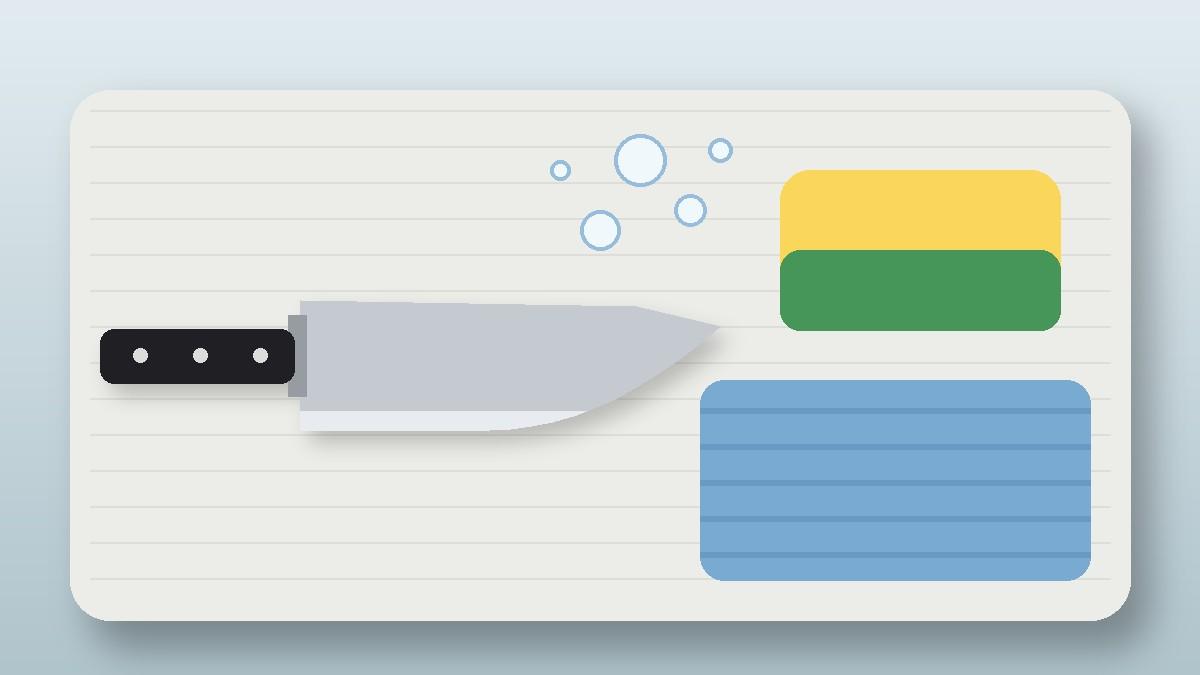
- Every day: wash by hand in warm, soapy water with a soft sponge, then dry immediately.
- Never: use the dishwasher, soak knives in the sink, or scrub with steel wool.
- After raw meat: wash the knife and board in hot, soapy water before using them again.
- Light stains: a paste of baking soda and water usually lifts them.
- Stainless isn’t stain-proof: salt, acids and moisture can still cause spots.
Stainless steel knives resist rust far better than carbon steel, but they aren’t completely stain-proof. Salt, acidic foods and water left on the blade can still cause spots and dull the finish.
The good news is that cleaning them properly takes less than a minute. This guide covers everyday washing, removing stains and the habits that keep knives in good condition.
Why Stainless Knives Still Stain
Stainless steel contains chromium, which forms a thin protective layer on the surface. Salt, acidic juices and long contact with water can break that layer down locally, leading to small spots or pitting.
Our older article recommended soaking knives in lemon juice or vinegar overnight to remove stains. Long acid soaks can etch and pit the blade, so we no longer recommend them.
Everyday Cleaning Step by Step
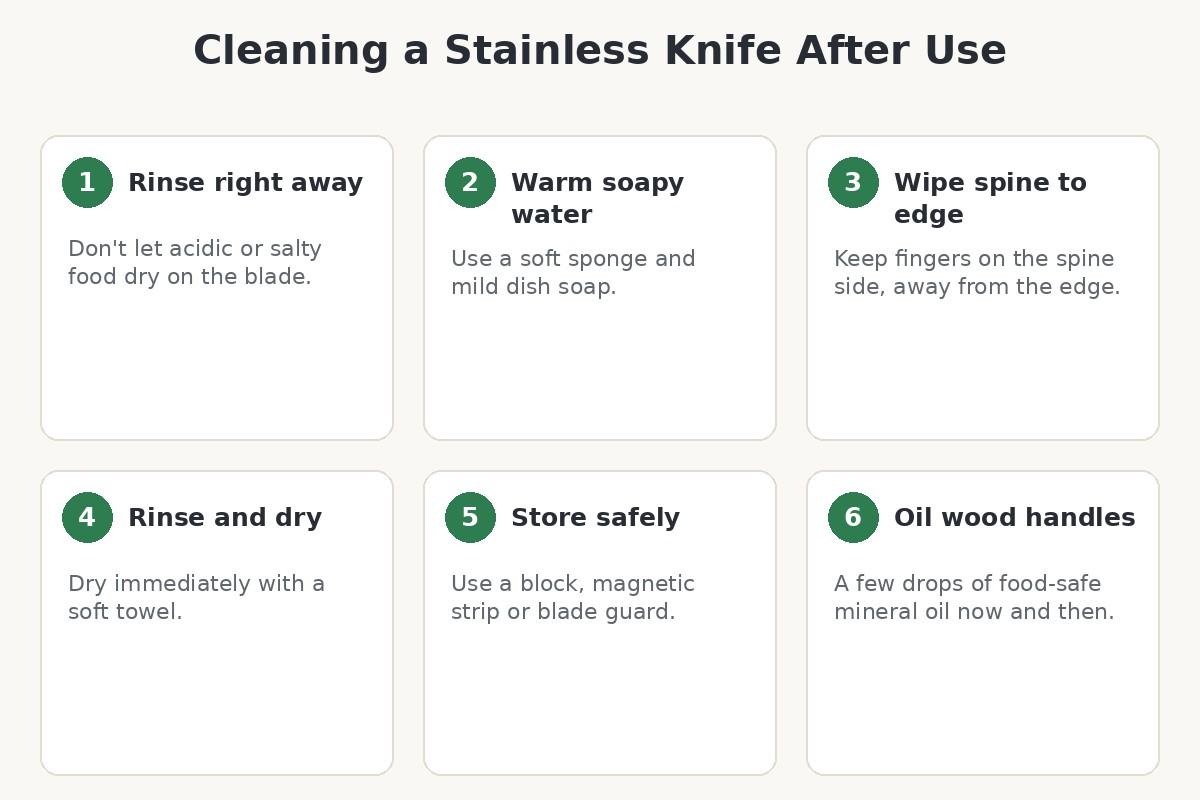
1. Rinse Soon After Use
Rinse the knife as soon as you finish cutting, especially after tomatoes, citrus, onions or salty foods. Dried-on food is harder to remove and more likely to stain.
2. Wash in Warm, Soapy Water
Use warm water, mild dish soap and a soft sponge or cloth. Wipe from the spine toward the edge, keeping your fingers on the spine side.
3. Rinse and Dry Immediately
Rinse off the soap and dry the knife straight away with a soft towel. Leaving it to air-dry on a rack is a common cause of water spots.
4. Store It Safely
Put the knife back in a block, on a magnetic strip or in a blade guard. Our guide on how to store kitchen knives compares the options.
Wüsthof’s own advice on how to clean knives matches these steps: warm water, mild soap, immediate drying and no dishwasher.
What Not to Do
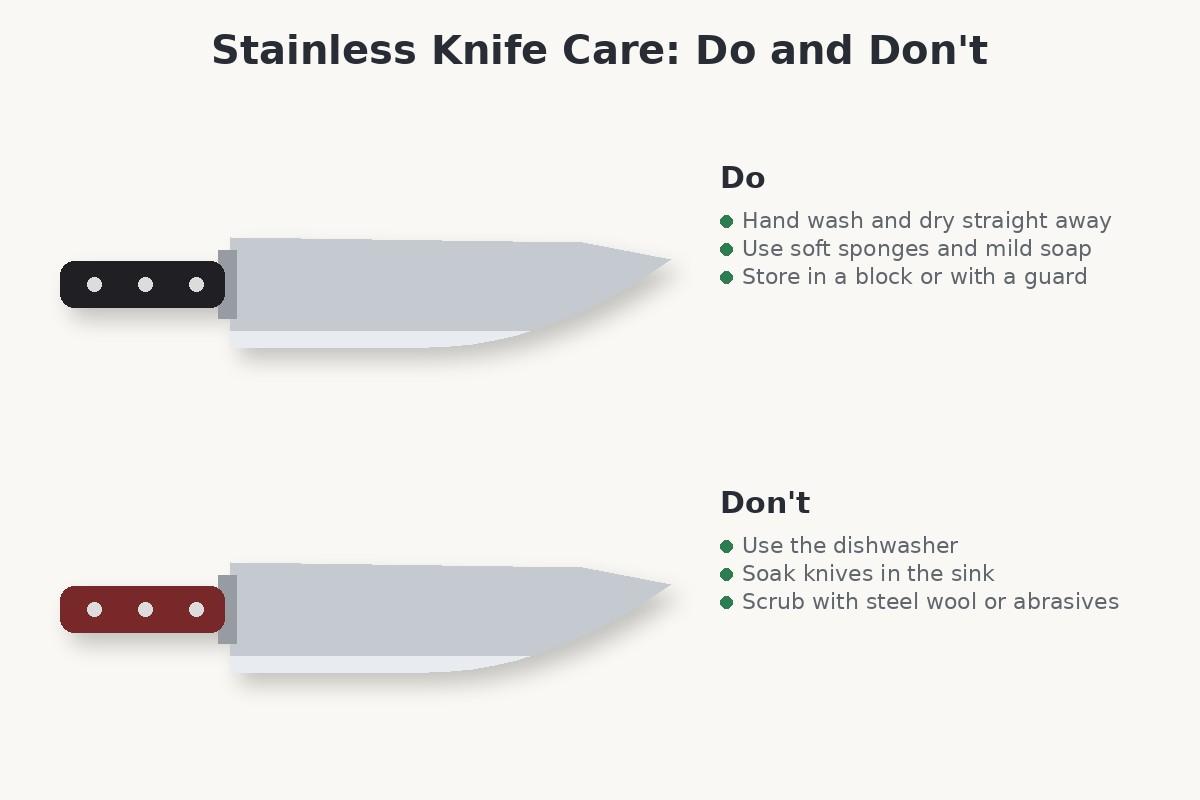
| Habit | Why it’s a problem |
|---|---|
| Dishwasher | Heat, harsh detergent and knocks dull the edge and damage handles |
| Soaking in the sink | Food acids and salts cause spots; hidden blades are a safety hazard |
| Steel wool or abrasive pads | Scratches the finish and can leave particles that rust |
| Bleach or chlorine cleaners | Chlorides attack stainless steel and cause pitting |
| Air-drying | Leaves water spots and mineral marks |
A knife hidden under soapy water is also a cut waiting to happen. The UK Health and Safety Executive’s guide to safe use of knives specifically warns to take care with knives in the sink.
Cleaning After Raw Meat, Poultry or Fish
Raw meat, poultry and fish can carry bacteria, so clean the knife and cutting board before using them for anything else. Wash them in hot, soapy water, rinse and dry.
FoodSafety.gov’s four steps to food safety recommend washing cutting boards, dishes, utensils and countertops with hot, soapy water.
Keep separate boards for raw meat and ready-to-eat foods if you can, to avoid cross-contamination.
Foods That Stain Blades Fastest
Acidic and salty foods are the main culprits. Tomatoes, citrus, onions, pickles, mustard and salted meats can all leave marks if they dry on the blade.
Starchy foods like potatoes can leave a cloudy film, and sticky sauces can trap salt against the steel. A quick rinse between ingredients prevents most of these marks and keeps flavors from transferring.
If you’re cutting a lot of acidic food, wipe the blade with a damp cloth every few minutes as you work. It takes seconds and keeps the finish bright for years.
Removing Light Stains and Spots
Baking Soda Paste
Mix baking soda with a little water to make a paste. Rub it gently on the spot with a soft cloth, following the direction of the grain, then rinse and dry.
Stainless Steel Cleaner or Polish
A non-abrasive stainless steel cleaner can restore the shine on a dull blade. Choose one that’s food-safe or rinse the knife thoroughly afterward.
Quick Vinegar Wipe
For light water marks, a cloth dampened with white vinegar, wiped on and rinsed off within a minute or two, can help. Don’t soak the knife.
For heavier rust, see our dedicated guide on how to get rust off kitchen knives.
Cleaning Your Knife Storage
A clean knife put into a dirty block picks up crumbs and moisture again. Turn a wooden block upside down and shake it out every few weeks, and clean the slots with a pipe cleaner or narrow brush.
Wash the block with warm, soapy water if it’s removable or washable, then let it dry completely before putting knives back. Moisture trapped in slots can cause spots and mildew.
Wipe magnetic strips with a damp cloth and dry them, and wash blade guards and sheaths in warm, soapy water. Always make sure a knife is completely dry before it goes into any storage.
A Simple Weekly Routine
- Check each knife for spots, stains or loose handles.
- Polish away any marks with baking soda paste or a stainless cleaner.
- Oil wooden handles if they look dry.
- Hone your most-used knives to keep the edges aligned.
Doing this once a week takes a few minutes and stops small marks from turning into pitting.
When Cleaning Isn’t Enough
If a knife has deep pitting, a loose or cracked handle, or rust that returns quickly, cleaning won’t fix it. Cracked handles can harbor bacteria and should be repaired or replaced.
Many premium brands offer warranties against manufacturing defects, so contact the maker if a handle fails early. Damage from dishwashers or soaking usually isn’t covered.
Cleaning Handles
| Handle | How to clean |
|---|---|
| Synthetic (POM, polypropylene) | Wash with the blade; dry well |
| Wood | Wash quickly, dry at once; oil occasionally |
| Pakkawood or Micarta | Wash and dry; very water-resistant |
| Stainless steel | Wash and dry; watch for water spots |
Rub a few drops of food-safe mineral oil into wooden handles now and then to stop them drying out and cracking.
Pocket and Multi-Tools
Folding knives need extra care around the pivot, where grit and moisture collect. Our guide on how to clean a Swiss Army knife explains how to flush and oil the joints.
Recommended Tools
- Soft sponge or microfiber cloth rather than scouring pads.
- Mild dish soap without bleach.
- Dedicated soft towel for drying knives.
- Food-safe mineral oil for wooden handles.
Frequently Asked Questions
Can stainless steel knives go in the dishwasher?
It’s best not to. Heat, detergent and contact with other items dull the edge and damage handles.
Why does my stainless knife have rust spots?
Salt, acidic food or water left on the blade can break down its protective layer. Wash and dry promptly.
How do I sanitize a knife after raw chicken?
Wash it and the cutting board in hot, soapy water, then rinse and dry before further use.
Is it OK to soak knives?
No. Soaking encourages spots and makes the knife a hazard in the sink.
What removes stains from stainless knives?
A baking soda paste or a non-abrasive stainless cleaner, followed by rinsing and drying.