The Victorinox Fibrox Pro 8-inch chef’s knife is the most recommended budget chef’s knife in the world — the knife culinary schools hand students on day one and test kitchens keep naming “best value.” It’s a stamped, Swiss-made blade of high-carbon stainless steel with a non-slip TPE handle, NSF certification and a price that makes forged German knives look expensive. This Victorinox Fibrox Pro review covers the steel, edge angle, weight, handle, real-world cutting performance, care and whether it’s the right chef’s knife for you.
Quick Verdict
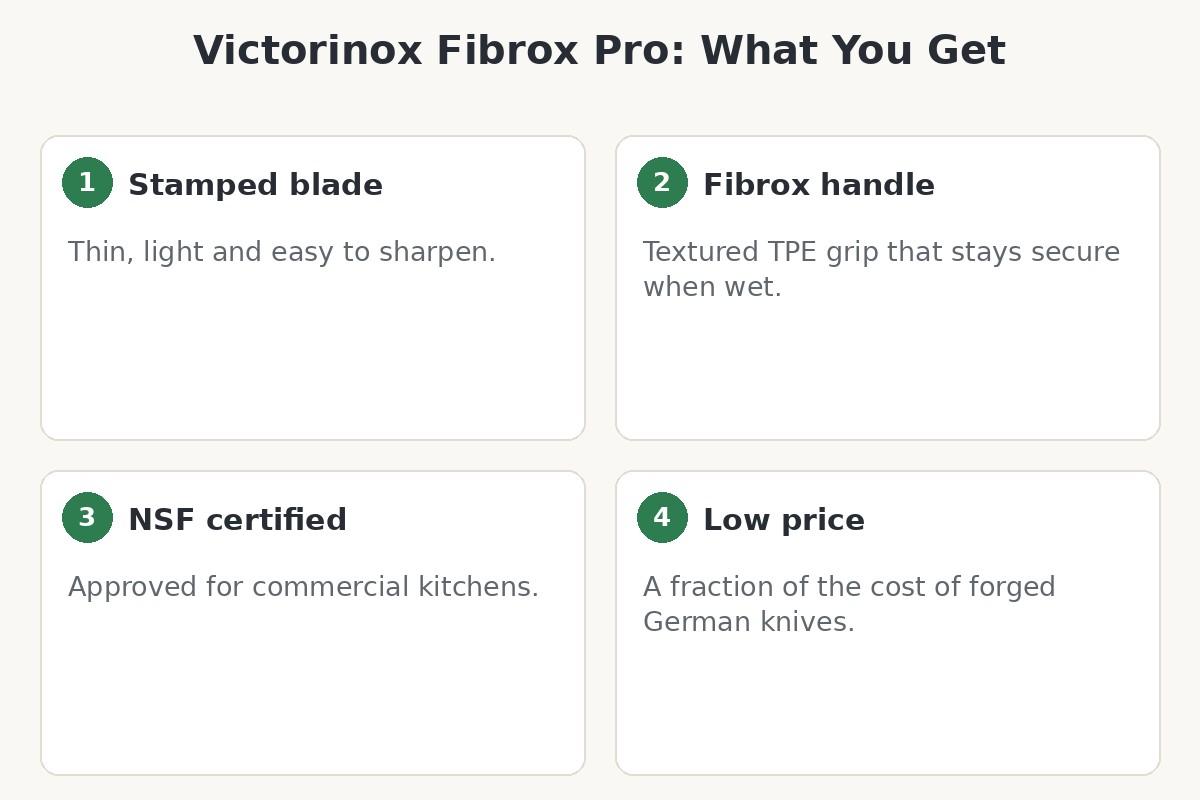
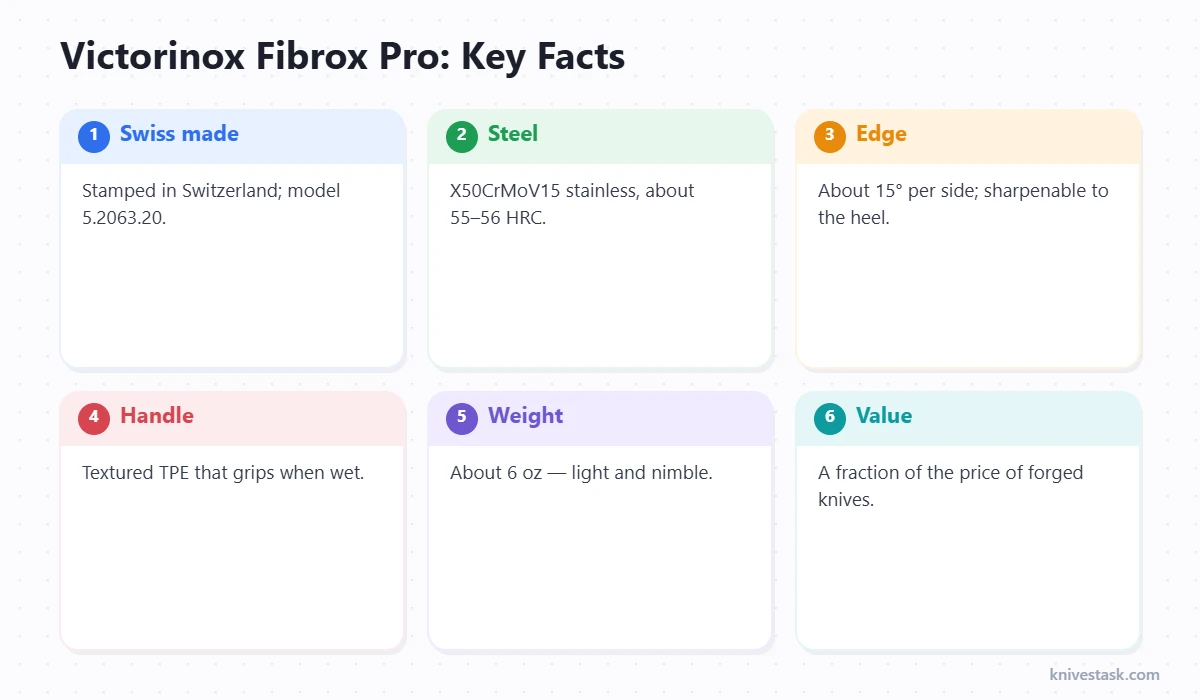
- What it is: a stamped 8-inch chef’s knife made in Ibach, Switzerland, with a textured, slip-resistant Fibrox (TPE) handle.
- Steel: X50CrMoV15 high-carbon stainless, about 55–56 HRC, sharpened to roughly 15° per side.
- Why it’s loved: light, sharp out of the box, comfortable, easy to sharpen to the heel — and inexpensive.
- Trade-offs: plain looks, no bolster, softer steel that needs frequent honing.
- Best for: home cooks, students, professional kitchens and anyone who wants one great-value knife.
Knives Task is reader-supported: if you buy through a link on this page, we may earn a small Amazon commission at no extra cost to you. That never changes which knives we recommend.
About Victorinox
Victorinox is the Swiss company behind the Swiss Army Knife, founded in 1884 by Karl Elsener (see Victorinox’s company history). Alongside pocket knives, it makes professional kitchen cutlery used in restaurants, butcher shops and culinary schools. Fibrox Pro is its best-known kitchen range.
Fibrox Pro 8-Inch at a Glance
| Feature | Victorinox Fibrox Pro 8″ |
|---|---|
| Model | 5.2063.20 (US #40520) |
| Blade length | 8 inches |
| Construction | Stamped, no bolster |
| Steel | X50CrMoV15 high-carbon stainless |
| Hardness | About 55–56 HRC |
| Edge | About 15° per side, double bevel |
| Handle | Textured TPE (Fibrox), ergonomic |
| Weight | About 6 oz |
| Certification | NSF |
| Made in | Switzerland |
Restaurant supplier KaTom’s Fibrox Pro 5.2063.20 listing confirms the 8-inch stamped blade, TPE handle and NSF certification.
Blade, Steel and Sharpness
The Fibrox Pro has a thin, stamped blade with a gentle belly that suits both rocking and slicing. It arrives very sharp and glides through onions, carrots and herbs. Because it’s stamped and has no bolster, you can sharpen the entire edge right to the heel — no finger guard getting in the way.
X50CrMoV15 at about 56 HRC is relatively soft compared with Japanese steels (60+ HRC). That’s a trade-off: it’s tough, rarely chips and is very quick to sharpen, but the edge rolls sooner, so regular honing keeps it keen. Our guide to honing and sharpening with a rod shows how.
Handle, Weight and Balance
The textured Fibrox handle is the knife’s standout feature: it stays secure even with wet or greasy hands, which is why it’s a fixture in commercial kitchens. The simple shape fits most hand sizes and stays comfortable for long prep sessions.
At around 6 ounces, the Fibrox Pro is noticeably lighter than forged German knives, which reduces wrist fatigue and makes it nimble. Cooks who like the heft of a forged knife for hard squash may find it too light. The balance point sits just in front of the handle, encouraging a pinch grip.
What Testers Say
America’s Test Kitchen has rated the Victorinox Fibrox Pro its top budget chef’s knife for years, praising sharpness, comfort and value. Owner reviews echo the same strengths: sharp out of the box, comfortable, easy to sharpen and outstanding value per dollar.
Real-World Performance
- Onions, carrots, celery: clean, effortless cuts; the curve makes rock-chopping herbs easy.
- Boneless chicken and steak: slices well; thin enough for trimming silver skin.
- Tomatoes: a freshly honed edge cuts skin without tearing.
- Winter squash and dense roots: works, but the light blade can twist if forced — use a rocking or sawing motion.
Fibrox Pro vs More Expensive Knives
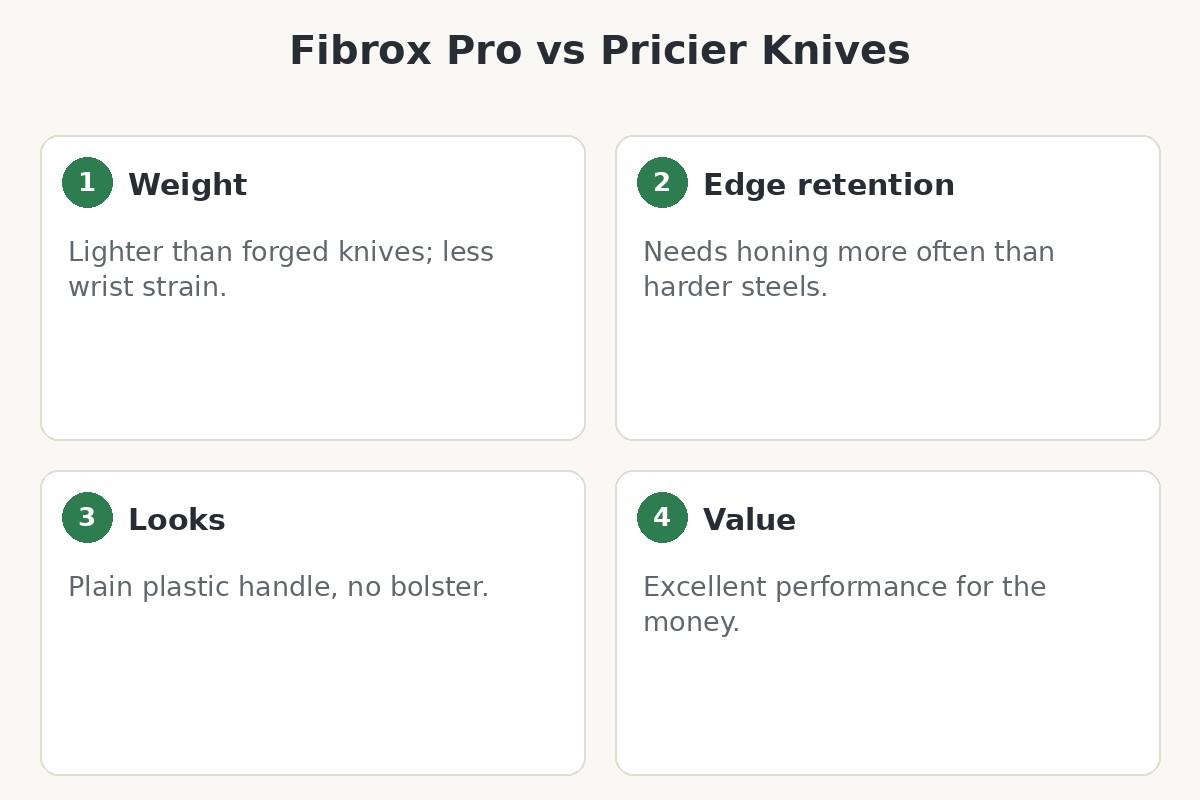
| Victorinox Fibrox Pro | Forged German (e.g. Wüsthof Classic) | |
|---|---|---|
| Construction | Stamped | Forged |
| Weight | Light | Heavier |
| Bolster | None | Full |
| Handle | Textured TPE | Riveted synthetic |
| Hardness | ~56 HRC | ~58 HRC |
| Price | Budget | Several times more |
A forged knife like the Wüsthof Classic chef’s knife feels more solid and looks more refined, but in everyday cutting the Fibrox Pro performs remarkably close for far less. See Wüsthof vs Victorinox, Mercer vs Victorinox and our explainer on forged vs stamped knives.
Pros and Cons
- Pros: sharp out of the box, secure non-slip handle, light and agile, sharpenable to the heel, NSF certified, excellent value
- Cons: utilitarian look, light feel won’t suit everyone, softer steel needs frequent honing, no bolster for finger protection
Find it here: Victorinox Fibrox Pro 8-inch chef’s knife.
Care and Maintenance
- Hand wash and dry immediately. Victorinox says the knife is dishwasher safe, but dishwashers dull edges and knock blades against other utensils.
- Hone before each use with a steel or ceramic rod at about 15°.
- Sharpen on a whetstone or quality sharpener when honing no longer restores the edge.
- Use wood or plastic boards, never glass or stone.
- Store in a block, on a magnetic strip or with a blade guard.
Other Sizes and Fibrox Pro Knives
The Fibrox Pro chef’s knife comes in roughly 6- to 12-inch lengths; 8 inches suits most home cooks, while 10 inches adds reach for large vegetables and roasts. Victorinox also sells matching paring, serrated bread, boning, santoku and slicing knives, so you can build a practical set cheaply.
How to Get the Most From a Victorinox Fibrox Pro
The Victorinox Fibrox Pro is cheap, but a few habits make it feel like a far more expensive knife. Because the blade is thin and fairly soft, the edge rolls rather than chips, so a few strokes on a honing rod every couple of cooking sessions straighten it back out. Do this before you think the knife is dull, and you will need to sharpen it only a few times a year.
When it is time to sharpen, a medium whetstone or a good manual sharpener set to around 15 to 20 degrees per side brings the edge back quickly. The lack of a bolster means you can sharpen right to the heel, so the blade keeps its straight profile for years. Use a wood or plastic board, never glass or stone, and wash the knife by hand even though the handle can survive a dishwasher. With that care, many cooks keep the same Fibrox Pro for a decade or more.
Who Should Buy It?
The Fibrox Pro is ideal for home cooks who want one reliable chef’s knife, students setting up a first kitchen, professionals who need a tough line knife, and keen cooks who want a beater backup. If you want a heavier bolstered knife or something beautiful to display, see forged German and Japanese picks in our best chef’s knives under $100.
Final Verdict
The Victorinox Fibrox Pro remains one of the best-value chef’s knives you can buy. It won’t win a beauty contest, but it cuts beautifully, feels secure in the hand and is easy to keep sharp. If you’re unsure which chef’s knife to start with, this is the safest choice there is.
Frequently Asked Questions
Is the Victorinox Fibrox Pro good?
Yes. It’s widely regarded as the best budget chef’s knife and a long-time test-kitchen favorite.
Is the Fibrox Pro forged or stamped?
Stamped, which keeps it light, affordable and sharpenable to the heel.
What steel is the Victorinox Fibrox Pro?
X50CrMoV15 high-carbon stainless steel, hardened to about 55–56 HRC.
What angle is the Fibrox Pro sharpened at?
About 15° per side.
Can the Fibrox Pro go in the dishwasher?
Victorinox allows it, but hand washing keeps the edge sharper for longer.
Where is the Victorinox Fibrox Pro made?
In Switzerland.