
Great sushi and sashimi depend on clean cuts: a long, razor-sharp blade drawn through raw fish in one smooth pull leaves a glossy surface instead of torn, mushy flesh. The traditional sushi knife is the yanagiba — a long, narrow, single-bevel slicer with a hollow-ground back — while the double-bevel sujihiki is an easier option for beginners and left-handers. This guide helps you find the best sushi knife for your level, with picks in carbon and stainless steel, plus how to choose length, bevel and steel, slice sashimi and care for a single-bevel edge.
Quick Picks
- Best traditional: Yoshihiro Shiroko yanagiba — white carbon steel, single bevel, magnolia saya.
- Best stainless traditional: Yoshihiro Hongasumi VG-10 yanagiba.
- Best for beginners and left-handers: Tojiro DP sujihiki — double bevel.
- Best premium: Shun Dual Core yanagiba — VG-10/VG2 layers, made in Seki.
- Length: 10–11 inches (270–300 mm) lets you slice in one pull.
Knives Task is reader-supported: if you buy through a link on this page, we may earn a small Amazon commission at no extra cost to you. That never changes which knives we recommend.
Our Picks at a Glance
| Knife | Type | Steel | Best for |
|---|---|---|---|
| Yoshihiro Shiroko 10.5″ Yanagiba | Yanagiba, single bevel | White #2 carbon (shirogami) | Traditional |
| Yoshihiro Hongasumi VG-10 Yanagiba | Yanagiba, single bevel | VG-10 stainless | Stainless traditional |
| Tojiro DP 10.5″ Sujihiki | Sujihiki, double bevel | VG-10 core | Beginners, lefties |
| Shun Dual Core 10.5″ Yanagiba | Yanagiba | VG-10 + VG2 | Premium |
| Global G-47 10″ Sashimi Knife | Slicer | CROMOVA 18 stainless | All-steel, easy care |
| Dalstrong Shogun 10.5″ Yanagiba | Yanagiba, single bevel | AUS-10V | Budget |
How we chose: we haven’t lab-tested these knives side by side. We compared steel, hardness, bevel, blade length, grind quality, handle (wa vs Western), saya, published specs and long-term owner feedback.
Types of Japanese Fish Knives
| Knife | Bevel | Main use |
|---|---|---|
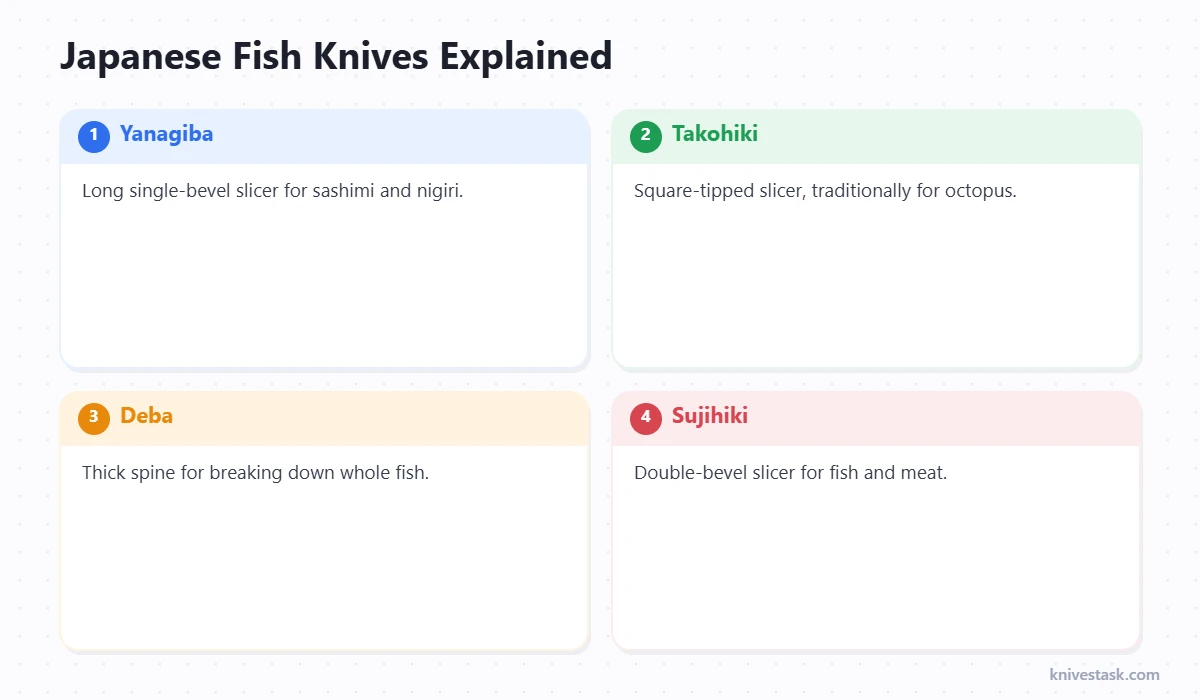
| Yanagiba | Single | Slicing sashimi and nigiri fish |
| Takohiki | Single | Slicing; square tip, traditionally for octopus |
| Fuguhiki | Single | Ultra-thin slices of fugu (pufferfish) |
| Sujihiki | Double | Slicing fish and meat; beginner-friendly |
| Deba | Single | Breaking down whole fish, small bones |
| Usuba | Single | Fine vegetable cuts and garnishes |
Most home sushi makers need only a yanagiba or sujihiki; add a deba if you fillet whole fish. Wikipedia’s overview of Japanese kitchen knives covers the full family.
The Best Sushi Knives
1. Yoshihiro Shiroko 10.5-Inch Yanagiba — Best Traditional
Best for: authentic, traditional sushi work by cooks who’ll care for carbon steel.
Forged from shirogami (white #2) carbon steel at about 62–63 HRC, with a single bevel for right-handers, a D-shaped magnolia handle with buffalo-horn ferrule and a magnolia saya. White steel takes an exceptionally fine edge and sharpens easily on water stones — the classic itamae choice. Wipe it dry during use and oil before storage.
- Pros: authentic traditional knife, exceptionally sharp, saya included
- Cons: rusts if left wet, right-handed only
Check the current price of the Yoshihiro Shiroko yanagiba on Amazon →
2. Yoshihiro Hongasumi VG-10 Yanagiba — Best Stainless Traditional
Best for: a traditional single-bevel yanagiba without carbon-steel upkeep.
The same traditional profile and hollow-ground urasuki back, in VG-10 stainless at about 62–63 HRC. It resists stains far better than carbon steel. A longer 11.8-inch version is also available.
- Pros: stainless, traditional single bevel, very sharp
- Cons: single-bevel sharpening takes practice, right-handed only
Check the current price of the Yoshihiro Hongasumi VG-10 yanagiba on Amazon →
3. Tojiro DP 10.5-Inch Sujihiki — Best for Beginners and Left-Handers
Best for: beginners, lefties and anyone who also slices roasts.
A VG-10 core clad in softer stainless (about 60 HRC), double-beveled so it sharpens like a Western knife and works in either hand. It slices fish beautifully and doubles as a carving knife for brisket and roast beef — more versatile than a yanagiba.
- Pros: either hand, versatile, excellent value
- Cons: not a traditional single bevel, plain Western handle
Check the current price of the Tojiro DP sujihiki on Amazon →
4. Shun Dual Core 10.5-Inch Yanagiba — Best Premium
Best for: enthusiasts who want a striking made-in-Seki yanagiba.
71 alternating layers of VG-10 and VG2 stainless create a dramatic pattern and an edge that keeps its bite. Octagonal PakkaWood handle, Shun’s warranty and free sharpening service.
- Pros: beautiful layered blade, stainless, made in Seki
- Cons: premium price, delicate edge
Check the current price of the Shun Dual Core yanagiba on Amazon →
5. Global G-47 10-Inch Sashimi Knife — Best Easy-Care Slicer
Best for: a stainless, seamless, low-maintenance slicer.
Global’s one-piece CROMOVA 18 stainless construction with a dimpled hollow handle leaves no seams for fish oils to collect. Light and modern; some cooks love the steel handle, others find it slippery when wet.
- Pros: easy care, seamless design, made in Japan
- Cons: steel handle can feel slippery, very light
Check the current price of the Global G-47 sashimi knife on Amazon →
6. Dalstrong Shogun 10.5-Inch Yanagiba — Best Budget
Best for: learning single-bevel slicing without a big outlay.
A single-bevel AUS-10V blade with layered cladding and a protective guard. Japanese steel, but not made in Japan — a starter knife to learn on before investing in a traditional maker.
- Pros: low price, single bevel to learn on, guard included
- Cons: not made in Japan, less refined grind
Check the current price of the Dalstrong Shogun yanagiba on Amazon →
Single Bevel or Double Bevel?
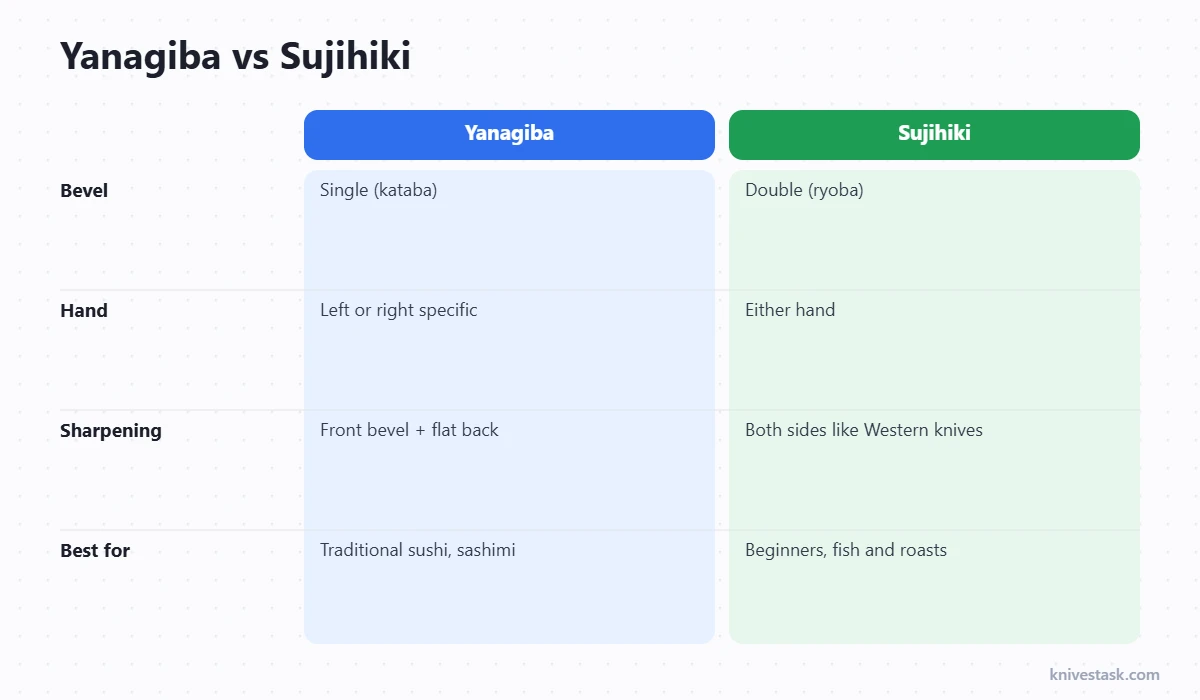
| Feature | Single bevel (yanagiba) | Double bevel (sujihiki) |
|---|---|---|
| Cut quality | Exceptionally clean | Very clean |
| Handedness | Left- or right-specific | Either hand |
| Sharpening | Specialist technique | Like a Western knife |
| Best for | Traditional sushi and sashimi | Beginners, mixed use |
Anatomy of a Yanagiba
| Part | What it is |
|---|---|
| Shinogi | Line on the front face where the bevel begins |
| Kireha | The wide front bevel |
| Urasuki | Shallow hollow ground into the back |
| Uraoshi | Thin flat rim around the hollow |
| Kissaki / Ago | Tip / heel |
The hollow back reduces friction so fish releases cleanly; the flat rim keeps the edge straight. Traditional wa handles (D-shaped or octagonal magnolia) are light and shift balance toward the blade.
Choosing Length and Steel
- Length: 10–11 inches (270–300 mm) suits most home cooks; professionals use 300–330 mm.
- Carbon steel (shirogami, aogami): keenest edges, easy to sharpen, but rusts and develops patina.
- Stainless (VG-10, AUS-10, Ginsan): much easier care, still very sharp — the practical home choice.
How to Slice Fish for Sashimi
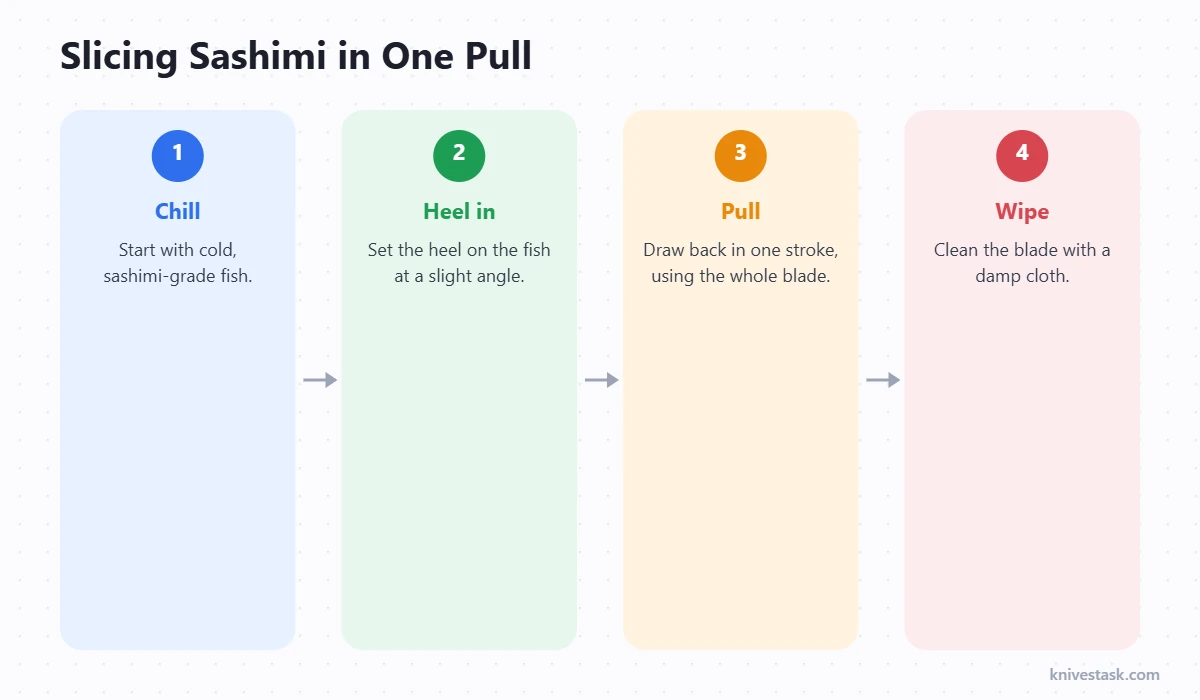
- Start with very fresh, well-chilled fish sold for raw eating from a trusted fishmonger (see the FDA’s guidance on selecting and serving seafood safely).
- Place the heel on the fish at a slight angle.
- Draw the knife toward you in one smooth stroke using the full blade length (hiki-giri).
- Never saw back and forth — it tears the flesh.
- Wipe the blade with a damp cloth between cuts.
Learn more about sashimi cuts such as hira-zukuri and usu-zukuri.
Caring for a Sushi Knife
- Hand wash and dry immediately; never use a dishwasher.
- Use a soft board — hinoki, softwood or rubber; avoid bamboo, glass and stone.
- Never cut bones or frozen fish; use a deba for bones.
- Sharpen on water stones — mostly the front bevel, lightly flattening the back. See how to sharpen a sushi knife.
- Store in a saya or on a magnetic strip.
Best Sushi Knife for Beginners
If you’re starting out, a double-bevel sujihiki like the Tojiro DP is the easiest way in. Once you’re making sushi regularly, a traditional yanagiba is a rewarding upgrade. For more options, see the best Japanese kitchen knives and our nakiri vs usuba guide for vegetable garnishes.
Three things make a sushi knife easy for a beginner. A double bevel cuts straight without special skill. Stainless steel forgives a wet blade. A length of about 10 inches (270 mm) is long enough to slice in one pull but still easy to control.
A single-bevel yanagiba pulls to one side until you learn to correct it, and it needs its own sharpening method. That is why we suggest learning on a sujihiki first.
Best Sushi Knife for Cutting Rolls
Cutting rolls is different from slicing fish. The knife must pass through nori, rice and filling without crushing the roll.
A long, thin blade works best, so a sujihiki or a yanagiba will both do the job. For home use we suggest the double-bevel Tojiro DP sujihiki, because it cuts straight down through the roll.
- Wet the blade before each cut so the rice does not stick.
- Use one long pull stroke. Do not press down.
- Wipe the blade with a damp cloth after each cut.
- Cut the roll in half first, then cut each half into equal pieces.
Which Sushi Knife Should You Pick?
| Your need | Pick | Why |
|---|---|---|
| Beginner | Tojiro DP sujihiki | Double bevel, works in either hand |
| Cutting rolls | Tojiro DP sujihiki | Cuts straight through the roll |
| Traditional sashimi | Yoshihiro Shiroko yanagiba | Single bevel in white carbon steel |
| Easy care | Yoshihiro Hongasumi VG-10 or Global G-47 | Stainless steel |
| Left-handed | Tojiro DP sujihiki | Works in either hand |
| Tight budget | Dalstrong Shogun yanagiba | Our budget pick with a single bevel |
Frequently Asked Questions
What knife is used for sushi?
A yanagiba — a long, single-bevel slicer. A double-bevel sujihiki is a good beginner alternative.
What length should a sushi knife be?
About 10–11 inches (270–300 mm) for most home cooks.
Can left-handed cooks use a yanagiba?
Only a left-handed version. A sujihiki works in either hand.
Is carbon or stainless better for a sushi knife?
Carbon takes the keenest edge but rusts; stainless is easier to care for and still very sharp.
Can I use a chef’s knife for sushi?
You can, but a long slicer gives cleaner cuts in a single stroke.
Why are sushi knives expensive?
Traditional yanagiba are often hand-forged and hand-sharpened from premium steels by skilled craftsmen.
What is the best sushi knife for beginners?
A double-bevel sujihiki such as the Tojiro DP. It cuts straight, works in either hand and sharpens like a Western knife.
What is the best sushi knife for rolls?
A long, thin slicer. A sujihiki or a yanagiba both work; wet the blade and cut in one pull.
Can I cut sushi rolls with a yanagiba?
Yes. Keep the blade wet and use one smooth pull stroke for each cut.