Quick Summary
- ESEE grew out of Randall’s Adventure and Training, a survival-training school founded by Jeff Randall and Mike Perrin.
- Best overall: ESEE-4, a 4.5-inch all-rounder for camping and bushcraft.
- Best for hard use: ESEE-5, with quarter-inch-thick stock and a 5.25-inch blade.
- Best lightweight pick: Izula II, at about 3.2 ounces.
- ESEE’s warranty is lifetime and transferable, but doesn’t cover rust, so keep 1095 steel dry and oiled.
Knives Task is reader-supported: if you buy through a link on this page, we may earn a small Amazon commission at no extra cost to you. That never changes which knives we recommend.
ESEE knives have a loyal following among campers, hunters and survival instructors. They’re simple, thick-bladed fixed knives designed by people who teach wilderness survival for a living.
This review covers the brand’s history, its steel and warranty, and the best ESEE models for different jobs.
About ESEE
ESEE’s roots are in Randall’s Adventure and Training, a survival-training school run by Jeff Randall and Mike Perrin. Their knives were shaped by years of teaching in demanding conditions, including the jungles of South America.
The knives are known for practical designs, thick 1095 carbon steel and a strong warranty. Our older review contained several garbled product descriptions; we’ve rewritten every pick using verified specifications.
ESEE Steel: 1095 Carbon
ESEE’s main fixed blades use 1095 high-carbon steel with a protective coating. 1095 is tough, takes a keen edge and is easy to sharpen in the field.
The trade-off is rust. ESEE itself warns that 1095 will rust and stain if not cared for, so wipe the blade dry after use and keep exposed steel lightly oiled.
ESEE Models at a Glance
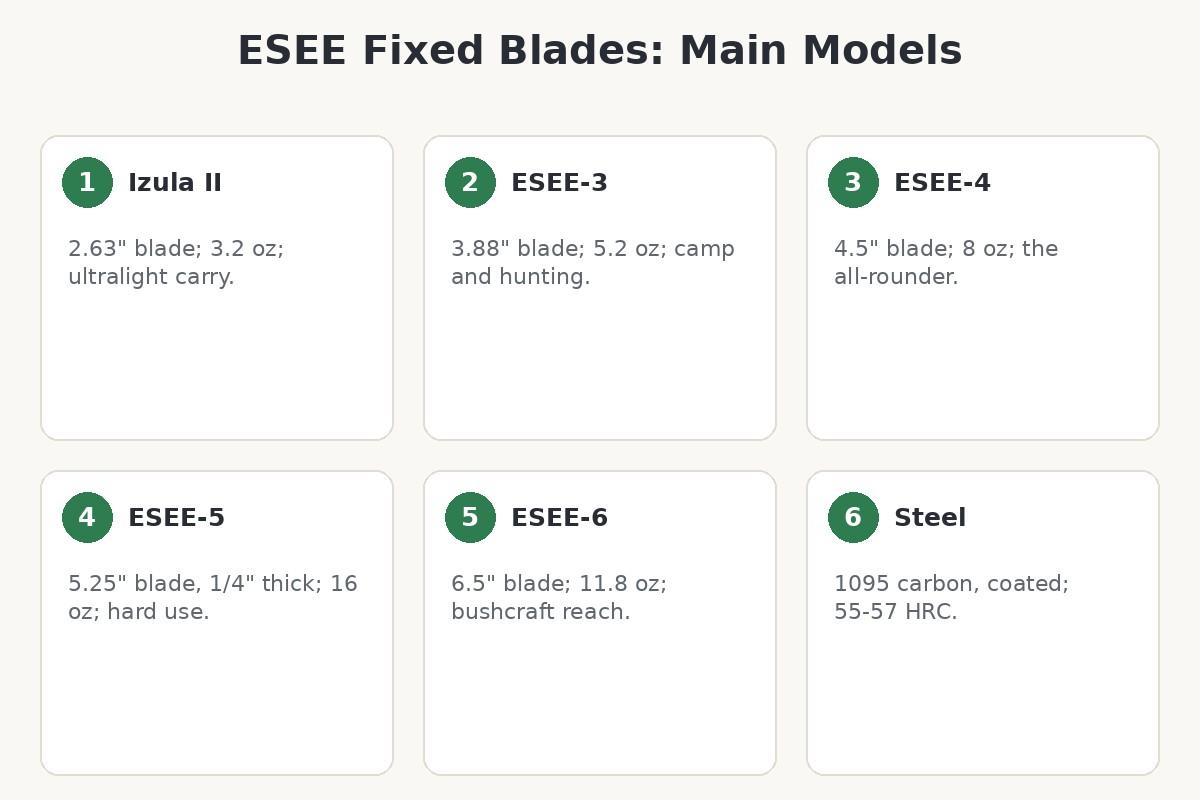
| Model | Blade | Thickness | Weight | Best for |
|---|---|---|---|---|
| Izula II | 2.63″ | 0.156″ | 3.2 oz | Light carry |
| ESEE-3 | 3.88″ | 0.125″ | 5.2 oz | Camp, hunting, food prep |
| ESEE-4 | 4.5″ | 0.188″ | 8 oz | All-round outdoor use |
| ESEE-5 | 5.25″ | 0.25″ | 16 oz | Hard use, batoning |
| ESEE-6 | 6.5″ | 0.188″ | 11.8 oz | Bushcraft, reach |
Specifications come from retailer listings, including DLT Trading’s ESEE-4 listing. For a detailed side-by-side, see our ESEE knife comparison.
How we chose: we haven’t lab-tested these knives side by side. We compared blade length and shape, steel, construction (forged or stamped), handle design and the makers’ published specifications, and we favored models with a long track record and consistent owner feedback over newer, unproven listings.
The Best ESEE Knives
1. ESEE-4 — Best Overall
Best for: campers, hikers and bushcrafters who want one do-it-all fixed blade.
The ESEE-4 has a 4.5-inch drop-point blade in 0.188-inch-thick 1095 steel and weighs about 8 ounces. It comes in plain or partly serrated versions, with a molded sheath.
It’s big enough for light batoning, feather sticks and camp chores, yet small enough for food prep and carving. That balance is why it’s ESEE’s best-known knife.
The canvas Micarta handle grips well in wet or cold conditions.
What we like:
- Ideal all-round size
- Thick, tough blade
- Grippy Micarta handle
What to consider:
- 1095 needs rust care
- Heavier than thin-bladed camp knives
Check ESEE-4 prices on Amazon →
2. ESEE-3 — Best for Hunting and Camp Food Prep
Best for: hunters and campers who want a smaller, slicier knife.
The ESEE-3 has a 3.88-inch blade in thinner 0.125-inch stock and weighs about 5.2 ounces. The thinner blade slices better than the larger ESEE models.
It’s well suited to skinning, food prep and fine carving, and easy to carry all day.
It’s not meant for heavy batoning; choose the ESEE-4 or ESEE-5 for that.
What we like:
- Thin, slicey blade
- Light and compact
- Great for food and game
What to consider:
- Too small for heavy wood work
- Rust care needed
Check ESEE-3 prices on Amazon →
3. ESEE-5 — Best for Hard Use
Best for: anyone who wants a near-indestructible survival knife.
The ESEE-5 has a 5.25-inch blade in quarter-inch-thick 1095 steel and weighs about a pound. Military survival instructors helped design it, according to SOFREP’s ESEE-5 review.
Its thickness makes it excellent for batoning, prying and splitting wood. The handle includes a glass breaker and a bow-drill divot.
The weight and thick edge make it less suited to fine slicing and everyday carry.
What we like:
- Extremely tough
- Built for batoning and prying
- Survival features in the handle
What to consider:
- Heavy at about a pound
- Thick edge for slicing
Check ESEE-5 prices on Amazon →
4. ESEE-6 — Best for Bushcraft Reach
Best for: bushcrafters who want a longer blade without the ESEE-5’s weight.
The ESEE-6 has the longest blade of the core range at 6.5 inches, in 0.188-inch stock, and weighs about 11.8 ounces. It’s lighter and slicier than the ESEE-5.
The extra length helps with chopping, batoning larger pieces and general camp chores.
It’s a large knife for everyday carry, so think of it as a camp tool.
What we like:
- Longest core ESEE blade
- Good balance of reach and weight
- Versatile camp knife
What to consider:
- Large for daily carry
- Rust care needed
Check ESEE-6 prices on Amazon →
5. ESEE Izula II — Best Lightweight Knife
Best for: backpackers and anyone who wants a tiny, tough backup knife.
The Izula II has a 2.63-inch blade and weighs about 3.2 ounces with Micarta handle scales. It adds half an inch of handle length to the original Izula for a fuller grip.
It’s small enough to carry on a neck cord, belt or pack strap, and handles food prep, cordage and small camp tasks.
It’s too small for wood processing, so pair it with a larger knife or saw.
What we like:
- Very light
- Tough for its size
- Flexible carry options
What to consider:
- Small for heavy tasks
- Short handle for big hands
Check ESEE Izula II prices on Amazon →
6. ESEE Junglas — Best Large Chopper
Best for: jungle and backcountry users who want a machete-like chopper.
The Junglas is ESEE’s big chopper, the next step up in size from the ESEE-6. It’s designed for clearing brush and heavy chopping in thick vegetation.
Its size and weight make it more of a tool than a carry knife. Pair it with a smaller knife for fine work.
Check the current version and specifications on the listing, as ESEE has updated the design over time.
What we like:
- Serious chopping power
- Tough 1095 steel
- Covered by ESEE’s warranty
What to consider:
- Large and heavy
- Overkill for most campers
Check ESEE Junglas prices on Amazon →
ESEE’s Warranty
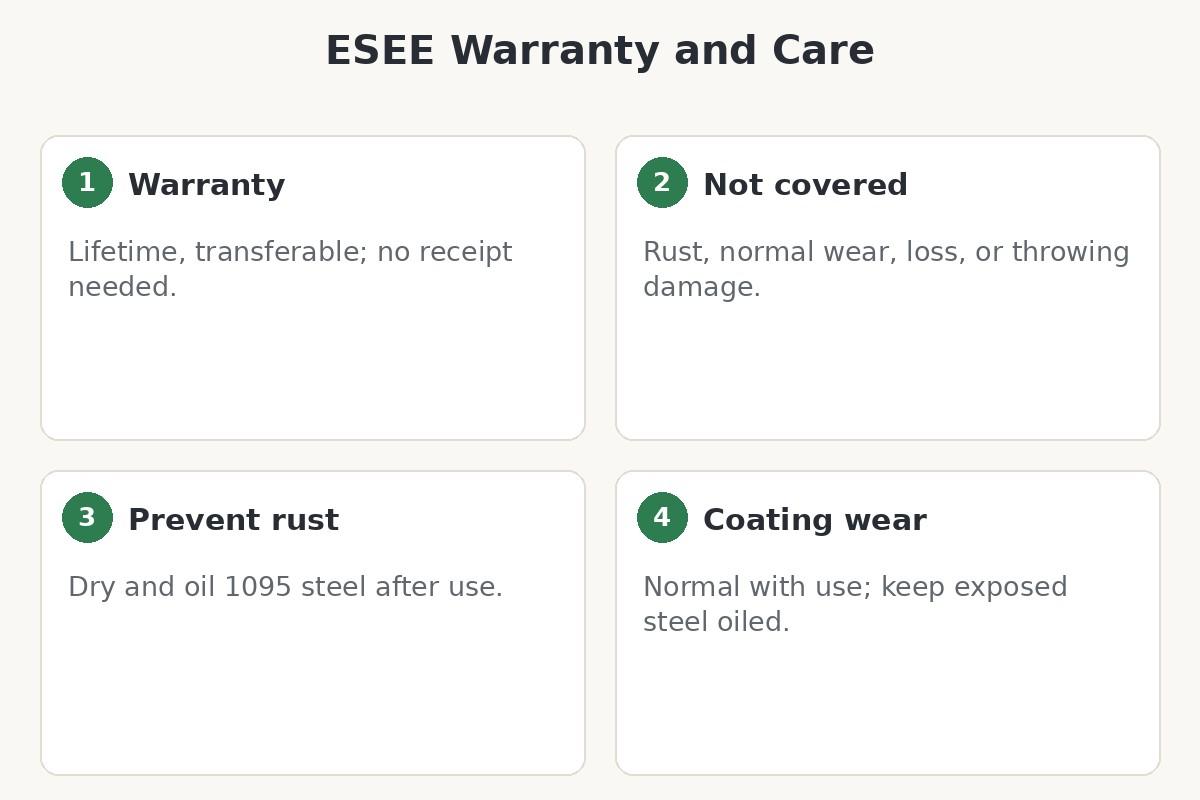
ESEE’s warranty is one of the best in the industry. If you break the knife, ESEE says it will repair or replace it, and the warranty is lifetime and transferable, with no receipt needed.
It doesn’t cover rust, normal wear, loss or coating wear, and ESEE warns against throwing its knives. You’ll need to return the knife to make a claim.
How to Choose an ESEE Knife
Blade Length
Blades of 3–4.5 inches suit everyday camp tasks, hunting and food prep. Blades of 5–6.5 inches handle batoning and heavier wood work but are bulkier to carry.
Thickness
Thicker stock, like the ESEE-5’s quarter inch, is extremely strong but slices less cleanly. Thinner stock, like the ESEE-3’s eighth inch, slices better but isn’t for prying or heavy batoning.
Plain or Partly Serrated?
Most ESEE models come in both. A plain edge is easier to sharpen in the field and better for carving and food prep; serrations help with rope and fibrous material.
Sheath
ESEE’s molded sheaths are durable and can take clip plates or MOLLE backs. Check what’s included with your knife, since options vary by version and retailer.
Caring for ESEE Knives
- Wipe the blade dry after use, especially after food or wet weather.
- Oil exposed steel lightly before storing.
- Expect coating wear with use; keep worn areas oiled.
- Sharpen at about 20° per side on a diamond plate or ceramic rod in the field.
- Never throw the knife; ESEE warns it can break and cause injury.
Batoning Safely
Batoning means striking the spine of a fixed blade with a wooden baton to split small logs. The ESEE-4, ESEE-5 and ESEE-6 handle it well thanks to their thick stock and full tangs.
Use wood no thicker than the blade is long, keep your hands and legs out of the path and strike only the spine near the tip. Never hit the handle, and never baton with a folding knife.
Sharpening 1095 in the Field
1095 is easy to sharpen, which is a big advantage outdoors. A small diamond plate or ceramic rod restores the edge in a few minutes.
At home, a medium whetstone followed by a fine stone or leather strop gives a very keen edge. Our guide to sharpening a small knife covers the basics.
Building a Kit Around an ESEE
Many campers pair a mid-size ESEE with a folding saw and a small fire-starting kit. The saw handles larger wood, saving the knife for carving, food prep and kindling.
ESEE also sells accessory pouches and clip plates that attach to its sheaths, which helps keep a small kit together.
What Owners Say
Owners praise ESEE knives for toughness, comfortable Micarta handles and the reassurance of the warranty. The most common complaints are rust on exposed 1095 steel and the weight of the larger models.
Many owners also mention that the coating wears with use, which ESEE says is normal.
ESEE vs Other Outdoor Knife Brands
ESEE knives are thicker and heavier than many outdoor knives, which makes them tougher but less nimble. For lighter camp knives at lower prices, see our Mora knife review.
For more fixed blades across brands, read our guides to the best bushcraft knives under $100 and best fixed-blade EDC knives under $100.
Are ESEE Knives Worth the Price?
For people who use their knives hard, yes. The combination of tough 1095 steel, practical designs and a lifetime, transferable warranty is hard to beat.
If you mainly need a light knife for food and small tasks, a cheaper, thinner knife may suit you better. ESEE’s value shows when you rely on a knife in tough conditions.
Who Should Buy ESEE?
ESEE suits campers, hunters, bushcrafters and survival-training students who want a dependable fixed blade. It’s less suited to people who want a stainless, low-maintenance knife.
Local Laws
Knife laws vary by country, state and city, including rules on blade length and fixed-blade carry. Check the rules where you live and travel before carrying any knife.
Corrections from Our Older Article
Our previous review mislabeled several products, describing folding knives as the Junglas and an Izula as an ESEE-6. It also stated weights such as “16 Lb” and “5,2 lbs” for knives that weigh 16 ounces and 5.2 ounces.
Handle Options
Most ESEE knives come with canvas Micarta handle scales, which grip well when wet or cold and are easy to clean. Some versions offer contoured 3D G-10 scales in different colors.
The scales are bolted on, so they can be replaced or upgraded if they wear or crack. Aftermarket scales are also available for several models.
Final Buying Tip
If you’re unsure which ESEE to buy, start with the ESEE-4. It handles most camping, hunting and bushcraft tasks well, and you can add an Izula II as a light backup later.
Whatever you choose, keep the blade dry and oiled, and it will last for many years of hard use.
Buy from authorized dealers so you get a genuine ESEE and an easy warranty claim if you ever need one. Prices vary by blade coating, handle and sheath options.
Frequently Asked Questions
Are ESEE knives good?
Yes, they’re tough, practical fixed blades with an excellent warranty.
What steel do ESEE knives use?
The main fixed blades use 1095 high-carbon steel.
Which ESEE knife is best?
The ESEE-4 is the best all-rounder for most people.
Does ESEE’s warranty cover rust?
No; it covers breakage but not rust, wear or loss.
Are ESEE knives made in the USA?
ESEE’s core fixed blades are made in the USA; check each listing for details.