
Finding the best nakiri knife makes vegetable prep faster and cleaner. A nakiri is the Japanese vegetable knife: a thin, rectangular blade with a dead-flat edge that meets the board along its whole length, so carrots, cabbage and scallions separate cleanly in one downward stroke. The best nakiri knives combine a hard, keen steel (VG-10, VG-MAX or SG2), a double-bevel edge around 12–16° per side and a tall blade for knuckle clearance and scooping. Below are seven of the best nakiri knives for every budget — Japanese and German — plus how to choose, use and sharpen one.
Quick Picks
- Best overall: Enso HD 6.5″ — VG-10 Damascus, made in Seki, Japan.
- Best premium: Shun Classic 6.5″ — VG-MAX core, 68-layer Damascus.
- Best edge retention: Miyabi Birchwood SG2 — 63 HRC powder steel.
- Best budget: Kai Wasabi Black 6.5″ — light, inexpensive, easy to sharpen.
- Best German: Zwilling Pro or Wüsthof Classic — tougher and more forgiving.
Knives Task is reader-supported: if you buy through a link on this page, we may earn a small Amazon commission at no extra cost to you. That never changes which knives we recommend.
What Is a Nakiri Knife?
The nakiri bōchō (“leaf-cutting knife”) is a double-bevel vegetable knife traditionally used in Japanese home kitchens. Its flat edge and square tip make it ideal for push cuts and straight-down chopping rather than rocking. Because it’s sharpened on both sides (ryoba), it cuts straight and works for left- and right-handed cooks — unlike the single-bevel usuba used by professionals.
Our Picks at a Glance
| Knife | Steel | Hardness | Made in | Best for |
|---|---|---|---|---|
| Enso HD 6.5″ Nakiri | VG-10, 37-layer Damascus | ~61 HRC | Japan | Best overall |
| Shun Classic 6.5″ Nakiri | VG-MAX Damascus | 60–61 HRC | Japan | Premium |
| Miyabi Birchwood SG2 Nakiri | SG2, 101 layers | ~63 HRC | Japan | Edge retention |
| Yoshihiro VG-10 Hammered Nakiri | VG-10, 16 layers | ~60 HRC | Japan | Hammered finish |
| Kai Wasabi Black 6.5″ Nakiri | Daido 1K6 stainless | ~58 HRC | Japan | Budget |
| Zwilling Pro 6.5″ Nakiri | FRIODUR German stainless | ~57 HRC | Germany | German toughness |
| Wüsthof Classic 7″ Hollow Edge Nakiri | X50CrMoV15 | ~58 HRC | Germany | Forged durability |
How we chose: we haven’t lab-tested these knives side by side. We compared steel, hardness, edge angle, blade height and length, finish, handle design, published specifications and long-term owner feedback. Prices change often.
The Best Nakiri Knives
1. Enso HD 6.5-Inch Nakiri — Best Overall
Best for: home cooks who want a genuine Japanese nakiri at a fair price.
Made in Seki by Yaxell, the Enso HD has a VG-10 core clad in 37 layers of stainless Damascus, hardened to about 61 HRC with a hammered finish. The black canvas-Micarta handle is durable and comfortable, with three rivets and a full tang, and the double-bevel edge suits either hand.
- Pros: made in Seki, VG-10 core, durable Micarta handle
- Cons: hard edge can chip on very hard squash
Check the current price of the Enso HD nakiri on Amazon →
2. Shun Classic 6.5-Inch Nakiri — Best Premium
Best for: cooks who want a beautiful, razor-sharp vegetable knife.
Shun’s VG-MAX core with 68-layer Damascus cladding and a 16° edge makes paper-thin cabbage and onion slices effortless. The D-shaped ebony PakkaWood handle locks into a right-handed pinch grip; it’s light, nimble and backed by Shun’s free sharpening service.
- Pros: very sharp, gorgeous finish, light
- Cons: premium price, D-handle favors right-handers
Check the current price of the Shun Classic nakiri on Amazon →
3. Miyabi Birchwood SG2 Nakiri — Best Edge Retention
Best for: enthusiasts who want the finest powder-steel nakiri.
An SG2 micro-carbide core in a 101-layer Damascus blade, ice-hardened to about 63 HRC and hand-honed to 9.5–12° per side, with a Karelian birch handle. It’s exceptionally sharp and holds that edge for months — but treat it gently.
- Pros: exceptionally sharp, long-lasting edge, beautiful handle
- Cons: high price, very hard edge needs care
Check the current price of the Miyabi Birchwood nakiri on Amazon →
4. Yoshihiro VG-10 Hammered Damascus Nakiri — Best Hammered Finish
Best for: cooks who want a Western-handled Japanese nakiri that releases food.
A VG-10 core clad in 16 layers of hammered Damascus with a Western-style wooden handle and full tang. The tsuchime dimples create air pockets so potato, cucumber and zucchini slices fall away instead of sticking.
- Pros: reduces sticking, VG-10 core, comfortable handle
- Cons: wood handle needs drying, fewer reviews
Check the current price of the Yoshihiro hammered Damascus nakiri on Amazon →
5. Kai Wasabi Black 6.5-Inch Nakiri — Best Budget
Best for: trying a nakiri without spending much.
From Kai, the company behind Shun, the Wasabi Black uses Daido 1K6 high-carbon stainless with a light polypropylene handle. The thin blade chops cleanly and sharpens easily — a great way to find out if you like the nakiri shape.
- Pros: very affordable, light, easy-clean handle
- Cons: plain look, edge fades sooner than premium steels
Check the current price of the Kai Wasabi Black nakiri on Amazon →
6. Zwilling Pro 6.5-Inch Nakiri — Best German Toughness
Best for: a tougher nakiri that tolerates heavier use.
Forged in Germany from Zwilling’s ice-hardened FRIODUR steel, with a curved bolster that supports a pinch grip. Softer German steel (about 57 HRC) is less likely to chip on butternut squash and is quick to hone.
- Pros: tough and forgiving, comfortable grip, easy to maintain
- Cons: heavier, less keen than Japanese nakiri
Check the current price of the Zwilling Pro nakiri on Amazon →
7. Wüsthof Classic 7-Inch Hollow Edge Nakiri — Best Forged Durability
Best for: Wüsthof owners and busy family kitchens.
Forged in Solingen with a full tang, triple-riveted handle and hollow-ground scallops (Granton edge) that help vegetables release. The 7-inch length handles big cabbages and leeks.
- Pros: forged and durable, hollow edge, longer blade
- Cons: heavier, full bolster complicates heel sharpening
Check the current price of the Wüsthof Classic nakiri on Amazon →
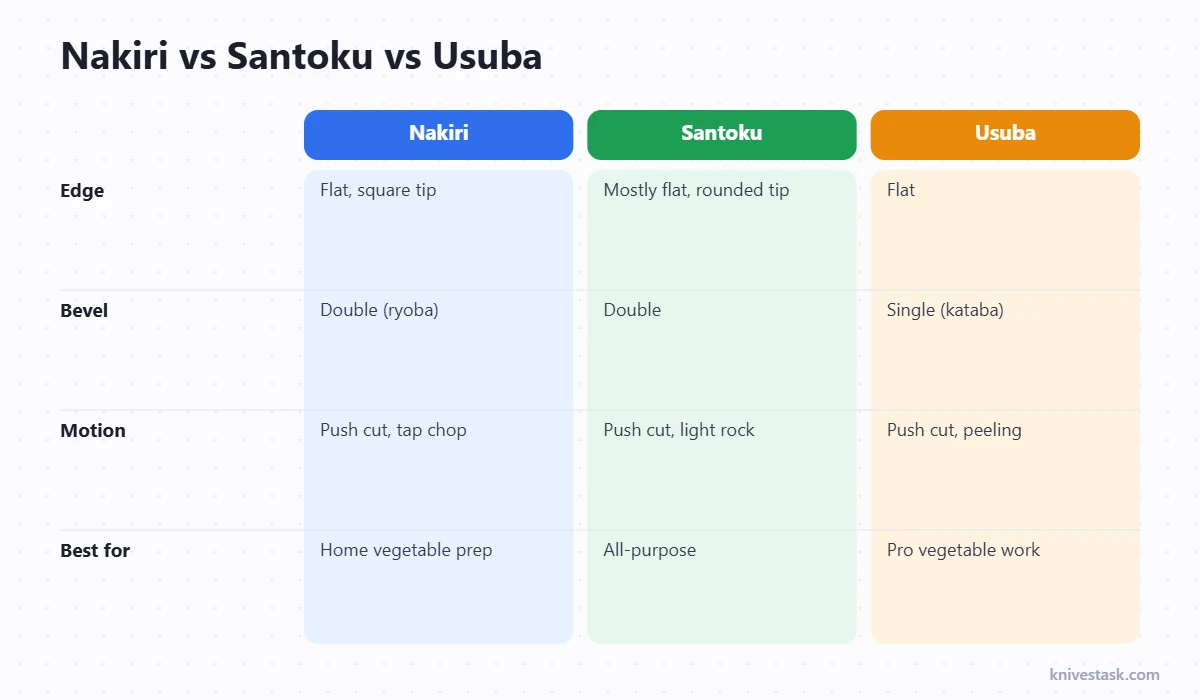
Nakiri vs Santoku vs Usuba
| Knife | Edge profile | Bevel | Best for |
|---|---|---|---|
| Nakiri | Flat, square tip | Double | Home vegetable chopping |
| Usuba | Flat, square or rounded tip | Single | Professional vegetable work, katsuramuki |
| Santoku | Mostly flat, sheepsfoot tip | Double | All-purpose: vegetables, meat, fish |
See nakiri vs usuba and nakiri vs santoku for detailed comparisons. For broader context on Japanese kitchen knife types, Wikipedia’s overview is a good primer.
How to Choose a Nakiri
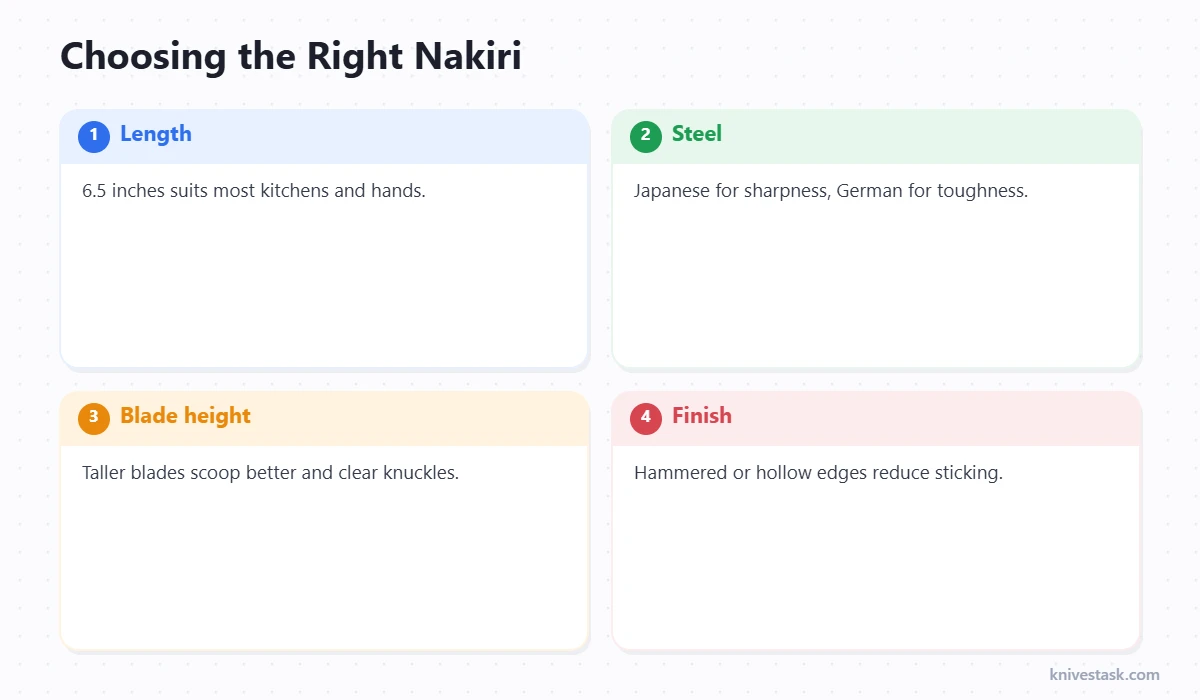
- Length: 6–7 inches (165–180 mm); 6.5 inches is the sweet spot for most cooks.
- Steel: Japanese steels (60–63 HRC) are sharper and hold an edge longer; German steels (56–58 HRC) are tougher.
- Blade height: taller blades give more knuckle clearance and scoop food better.
- Finish: hammered or hollow-ground edges reduce sticking.
- Handle: D-shaped wa handles favor right-handers; round, octagonal and Western handles suit anyone.
- Weight: light knives are less tiring; heavier ones power through dense roots.
How to Chop With a Nakiri
- Push cut: slide forward and down so the whole edge meets the board.
- Tap chop: lift and bring the blade straight down for herbs and scallions.
- Don’t rock: the flat edge leaves vegetables joined if you rock it.
- Claw grip: curl fingertips so your knuckles guide the blade face.
- Scoop: use the tall blade to carry food to the pan.
More technique in how to use a nakiri knife.
Japanese or German Nakiri?
Japanese nakiri knives such as the Enso, Shun and Miyabi take a very fine edge and keep it, but hardness makes them more prone to chipping. German nakiri from Zwilling and Wüsthof are less sharp out of the box but flex rather than chip and respond quickly to a honing rod. Careful cooks who enjoy sharpening will love a Japanese nakiri; busy kitchens may prefer German forgiveness.
Sharpening and Caring for a Nakiri
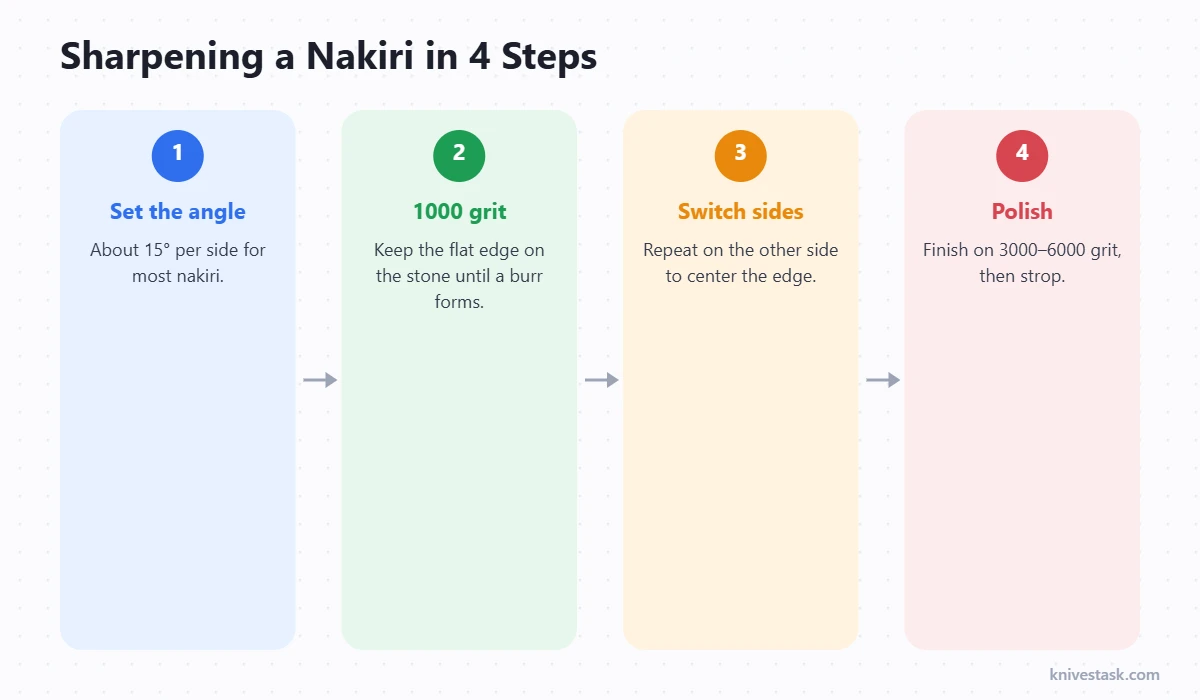
Most double-bevel nakiri knives are sharpened at 15–16° per side (Miyabi at 9.5–12°). Work through a 1000-grit whetstone, then 3000–6000 grit, keeping the whole flat edge on the stone. With no curve to follow, a nakiri is one of the easiest knives to learn sharpening on — see which whetstone grit to use.
- Hand wash and dry immediately.
- Use end-grain wood or soft plastic boards.
- Avoid bones, frozen food and twisting cuts in hard squash.
- Store in a block, saya or on a magnetic strip.
Common Nakiri Mistakes
- Rocking the knife, which lifts the flat edge and leaves accordion cuts.
- Cutting bone-in meat, which chips thin edges.
- Twisting in hard vegetables — push straight down and lift straight up.
- Letting it go dull: a dull nakiri crushes tomatoes instead of slicing them.
Do You Need a Nakiri?
If you cook lots of vegetables — especially vegetarian or vegan meals — a nakiri speeds up prep and makes it more enjoyable. Knife retailer Knifewear notes that some chefs teach knife skills almost entirely with a nakiri (Knifewear’s nakiri picks). If you mostly cook meat, a chef’s knife or santoku may be all you need — see our best santoku knives.
Frequently Asked Questions
What is a nakiri knife used for?
Chopping, slicing and dicing vegetables with clean, straight-down cuts.
Is a nakiri better than a santoku?
For vegetables, often yes. A santoku is more versatile for meat and fish.
Can you cut meat with a nakiri?
Boneless meat, yes, but it’s designed for vegetables. Avoid bones.
What size nakiri should I buy?
A 6.5-inch (165 mm) blade suits most cooks.
Is a nakiri single or double bevel?
Double bevel. The single-bevel professional version is the usuba.
Are nakiri knives good for beginners?
Yes. The straight chopping motion is simple, and the flat edge is easy to sharpen.