Quick Summary
- We judge knives on steel, edge, handle, balance and value, using specs, independent tests and owner feedback.
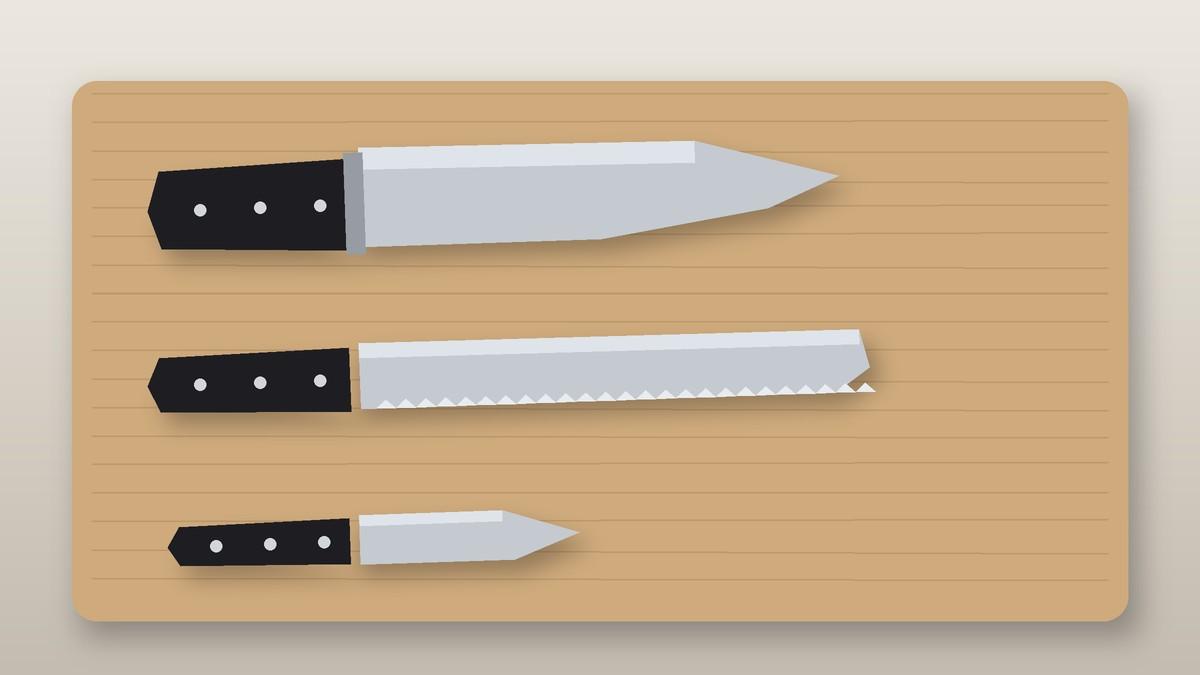
- Most kitchens need just three knives: a chef’s knife, a paring knife and a bread knife.
- Best budget chef’s knife: Victorinox Fibrox Pro, a long-time favorite of cooking testers.
- Best German pick: Wüsthof Classic; best Japanese pick: Shun Classic or Premier.
- Look after any knife by hand-washing, honing often and storing it safely.
Knives Task is reader-supported: if you buy through a link on this page, we may earn a small Amazon commission at no extra cost to you. That never changes which knives we recommend.
Knives Task publishes reviews and guides to help you choose kitchen and outdoor knives. This page explains how we review knives, what we look for and where to start if you’re buying.
How We Review Knives
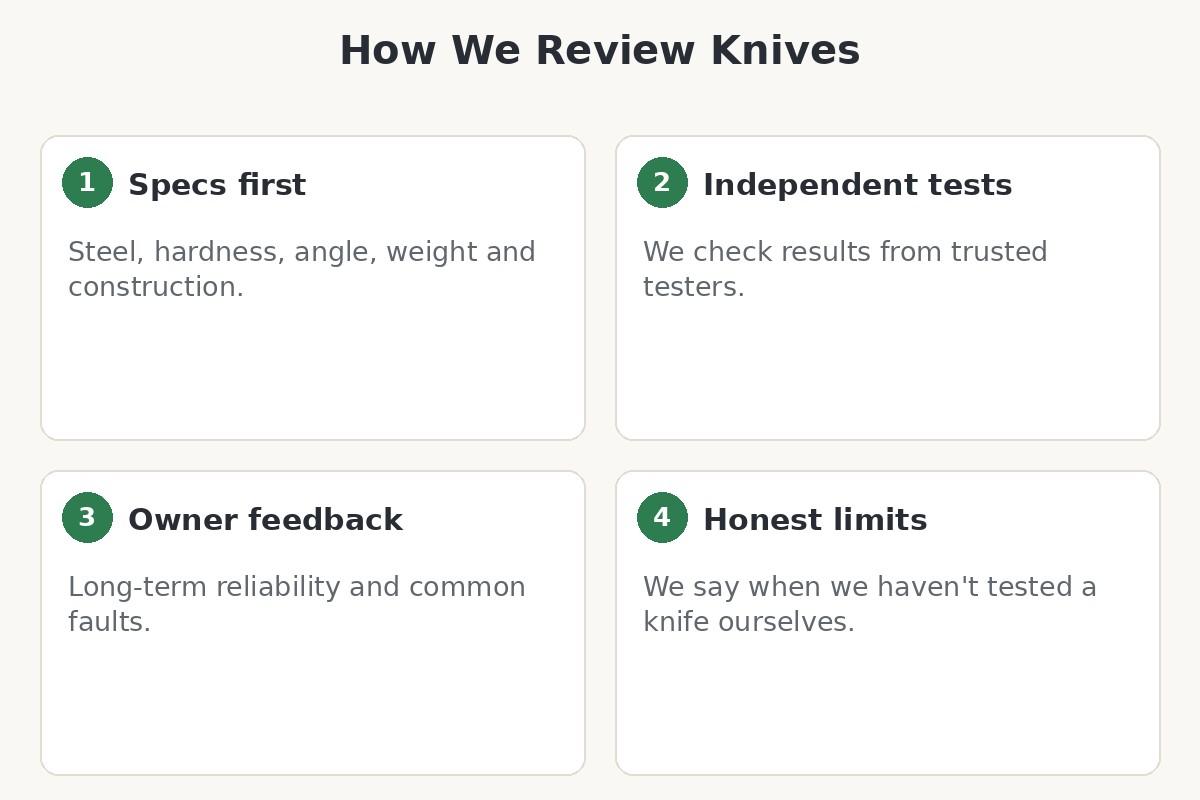
We haven’t lab-tested every knife side by side. Instead, we compare published specifications such as steel, hardness, edge angle, weight and construction, then check independent test results and long-term owner feedback.
When a claim can’t be verified, we leave it out or say so. We prefer knives with a long track record over new listings with little history.
What Matters in a Kitchen Knife
| Feature | Why it matters | What to look for |
|---|---|---|
| Steel | Affects sharpness, edge life and rust resistance | A named steel, such as X50CrMoV15 or VG-10 |
| Hardness | Harder holds an edge longer but can chip | About 56–58 HRC (German) or 60–62 HRC (Japanese) |
| Edge angle | Thinner edges cut more easily | About 15° per side for most modern kitchen knives |
| Handle | Comfort and safety | Secure grip, even when wet |
| Balance | Control and less fatigue | Balance near the bolster or heel |
| Construction | Weight and feel | Forged or stamped, both can be excellent |
Steel
German knives usually use softer, tougher stainless steels that are forgiving and easy to sharpen. Japanese knives use harder steels that take a finer edge but need more careful use.
Carbon steel takes a superb edge but rusts if left wet, while stainless steel is easier to look after.
Handle and Balance
Handle materials include wood, synthetic resins and textured plastics. The best handle is the one that feels secure in your hand, especially when it’s wet.
Our Top Chef’s Knife Picks
| Pick | Why we like it | Best for |
|---|---|---|
| Victorinox Fibrox Pro | Light, sharp, non-slip handle, great value | Budget and everyday use |
| Wüsthof Classic | Forged German knife with full bolster | Cooks who like weight and balance |
| Shun Classic | Hard VG-MAX core, very sharp, made in Japan | Precision cutting |
| Global G-2 | Light, one-piece stainless steel design | Cooks who like a slim, modern knife |
America’s Test Kitchen has long rated the Victorinox Fibrox Pro as its top budget chef’s knife. Find it as the Victorinox Fibrox Pro 8-inch chef’s knife, or read our Victorinox chef’s knife review.
For a forged German knife, see the Wüsthof Classic chef’s knife and our Wüsthof knives review. For Japanese steel, try the Shun Classic 8-inch chef’s knife and read our Shun knives review.
More options are in our best chef’s knives under $100 guide.
The Knives Most Kitchens Need
You don’t need a big block set. A chef’s knife, a paring knife and a bread knife handle almost every kitchen job.
Read our guides to the best paring knives and the best bread knives, or see what knives every kitchen should have.
Specialty Knives
Add specialty knives only when you need them. A boning knife helps with poultry and meat; a santoku or nakiri suits heavy vegetable prep.
See our guides to the best boning knives and the best santoku knives.
Buying Checklist
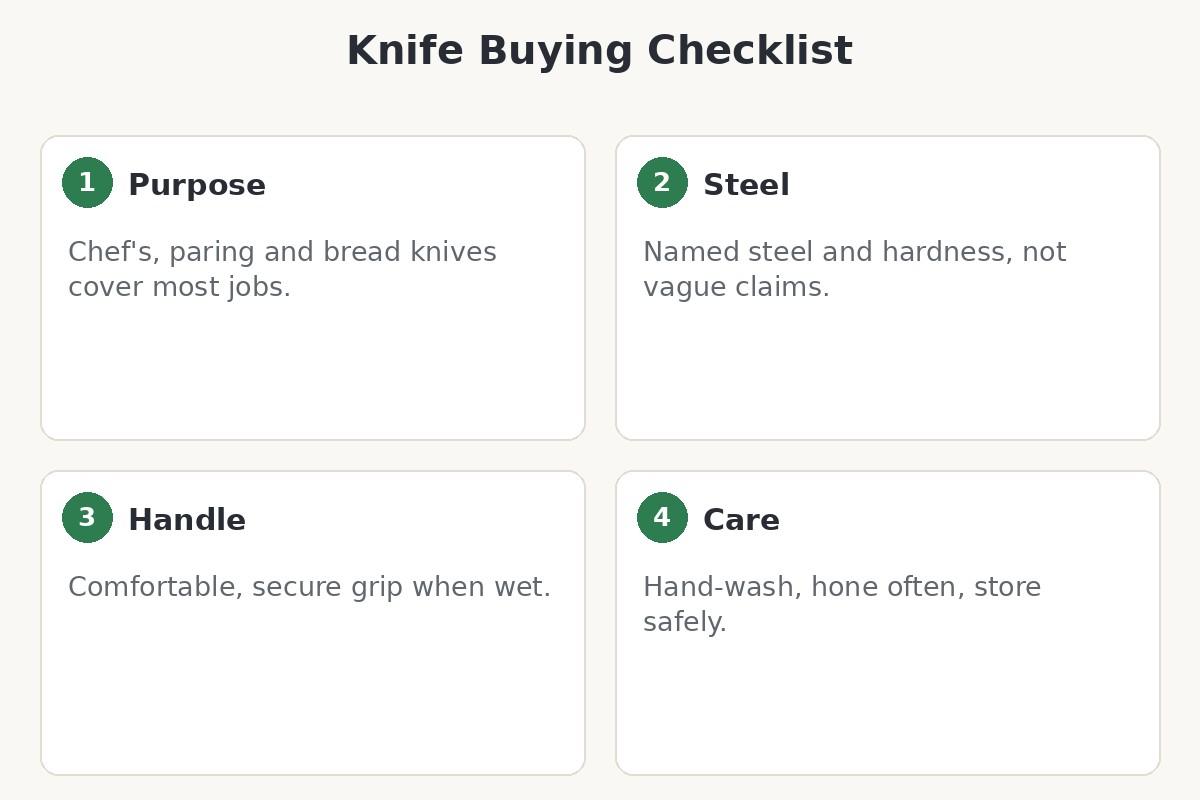
- Choose the knife for the job before choosing a brand.
- Check the steel and hardness on the maker’s page.
- Hold it if you can to judge handle comfort and balance.
- Check the warranty and whether a sharpening service is offered.
- Set a budget; a good single knife beats a cheap large set.
Looking After Your Knives
Hand-wash knives in warm, soapy water and dry them straight away; dishwashers dull edges and damage handles. Wüsthof’s own care guide gives the same advice.
Hone often and sharpen when honing no longer restores the edge. Kitchen review site The Rational Kitchen’s sharpener guide compares the main sharpening tools.
Corrections from Our Older Article
Our previous version said chef’s knives are “between six and twelve inches” and that the Global G-2’s blade “may be too short”. The G-2 is an 8-inch chef’s knife, a standard size; we’ve removed the claim.
Outdoor Knives
We also review outdoor and pocket knives, including fixed blades for camping and bushcraft. Browse our Outdoor Knives category for brand reviews and buying guides.
Forged vs Stamped
Forged knives are shaped from a heated steel bar and usually have a bolster and more weight. Stamped knives are cut from sheet steel, so they’re lighter and usually cheaper.
Both can be excellent. The steel, heat treatment and handle matter more than the manufacturing method.
How to Tell a Good Knife from a Bad One
A good knife names its steel, feels balanced and has a handle that sits flush with no gaps. The edge should be even from heel to tip, and the tip should be intact when it arrives.
Warning signs include vague claims like “premium steel” with no grade, very large discounts from inflated list prices and handles with visible gaps where water can collect.
Budget vs Premium
Budget knives like the Victorinox Fibrox Pro offer excellent value and are easy to sharpen. Premium knives offer better materials, finish and edge retention, and often last longer with good care.
If you’re starting out, buy one good budget chef’s knife and learn to keep it sharp before spending more.
Read Our Brand Comparisons
If you’re deciding between brands, our comparison guides set them side by side, covering steel, construction, handles and value. They include German brands like Wüsthof and Zwilling and Japanese brands like Shun and Miyabi.
Each guide ends with a clear recommendation for different types of cook.
Safety First
A sharp knife is safer than a dull one, because it needs less force and is less likely to slip. Always cut on a stable board and keep your guide hand in a claw grip.
Store knives where children can’t reach them, and never leave them in a sink full of water.
How Often We Update Reviews
Knife lines, prices and specifications change over time. We review and update our guides regularly, correcting older claims when we find better information.
If you spot something that looks out of date, the maker’s own product page is always the best place to check current details.
Frequently Asked Questions
What is the best all-round kitchen knife?
A good 8-inch chef’s knife, such as the Victorinox Fibrox Pro or Wüsthof Classic.
How do you review knives?
We compare specs, independent test results and owner feedback, and we leave out claims we can’t verify.
Are expensive knives worth it?
They can be, but a well-made budget knife kept sharp outperforms a neglected expensive one.
How many knives do I need?
Most cooks manage with a chef’s knife, a paring knife and a bread knife.
German or Japanese knives?
German knives are tougher; Japanese knives are harder and sharper.